

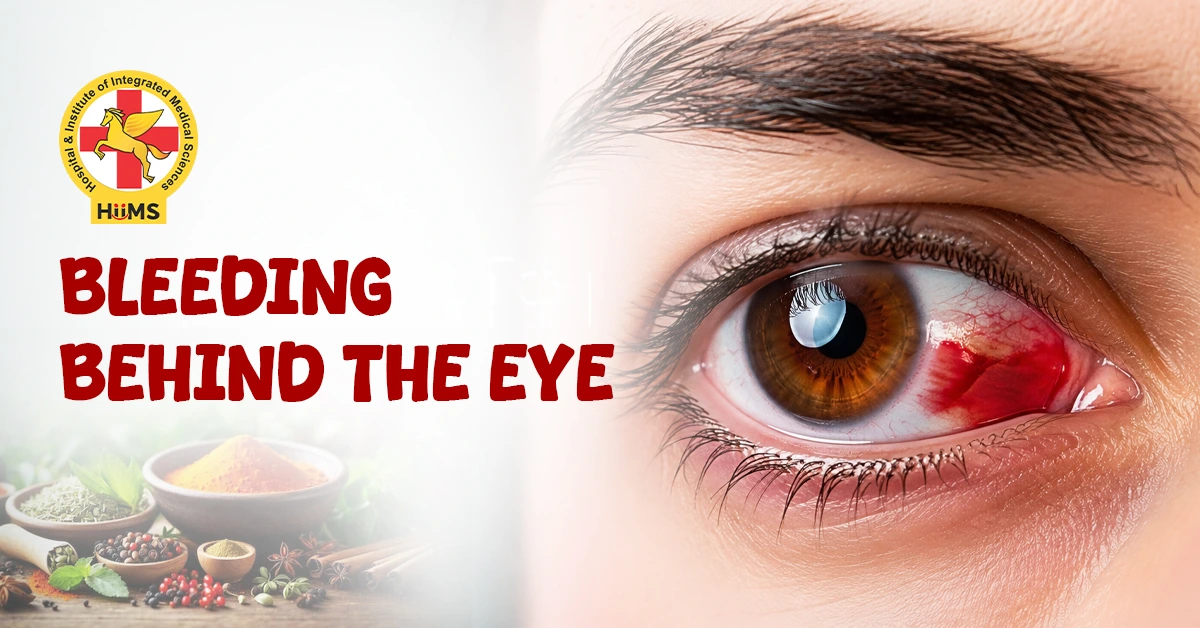
Sudden floaters, a shadow creeping across your vision, or a drop in clarity that came out of nowhere- these are often the first signs of bleeding behind the eye, and they deserve fast attention, not a wait-and-see approach. Unlike a bruise you can see on your skin, this kind of bleeding happens deep inside the eye, so there’s no visible red patch to alert you, just changes in how you see.
This blog walks through what actually causes it, how doctors treat it, and where Ayurveda can genuinely add support once the medical side is handled.
What Does Bleeding Behind the Eye Actually Mean?
When doctors talk about bleeding behind the eye, they’re usually referring to one of two things: a retinal hemorrhage, bleeding within the retina itself, or a vitreous hemorrhage, blood leaking into the gel-like substance filling the eye.
Both sit in the back portion of the eye, which is exactly why you won’t see anything on the surface, just symptoms affecting your vision instead.
Bleeding Behind the Eye Causes: What’s Usually Behind It
A handful of conditions show up repeatedly as bleeding behind the eye causes:
- Diabetic retinopathy, where high blood sugar damages and weakens tiny retinal blood vessels over time
- Hypertension, high blood pressure can rupture fragile retinal vessels
- Direct trauma to the eye or head
- Vein occlusion, a blockage in one of the eye’s blood vessels
- Blood-clotting disorders or the use of blood-thinning medication
- Age-related macular degeneration, particularly the wet form
Diabetes and high blood pressure account for a significant share of cases, which is exactly why regular eye exams matter so much for anyone managing these conditions long-term.
Bleeding Behind the Eye Symptoms to Watch For
Because the bleeding happens internally, bleeding behind the eye symptoms show up as changes in vision rather than anything visible externally:
- Sudden floaters or a hazy patch in your field of view
- Blurred or distorted central vision
- Dark spots or shadows appearing suddenly
- A reddish tint to your overall vision
- Sudden, painless vision loss in more severe cases
That last point matters; painless doesn’t mean harmless here. Don’t wait for discomfort as a signal to act; sudden vision changes on their own are reason enough to get checked immediately.
Is Bleeding Behind the Eye Always an Emergency?
Not always, but it should always be treated as urgent until an eye specialist examines you properly. Some small retinal hemorrhages are genuinely harmless and only need monitoring over time.
But bleeding that affects central vision, hides a retinal tear, or stems from something like diabetic retinopathy or a vein occlusion can genuinely threaten your sight if it’s not caught quickly. The safest approach is simple: treat any sudden change in vision as an emergency first, and let the specialist determine afterwards how serious it actually is.
Retinal Hemorrhage Treatment: What Actually Happens at the Doctor
Retinal hemorrhage treatment depends entirely on what’s causing it and how much bleeding has occurred. Many smaller hemorrhages don’t need active treatment at all, just regular monitoring to make sure they resolve on their own.
For hemorrhages affecting central vision or posing a risk to eyesight, doctors may recommend injections to reduce abnormal blood vessel growth, laser treatment to seal leaking vessels, or, in more advanced cases, surgery.
Managing the underlying cause matters just as much; tightening blood sugar control for diabetic patients or getting blood pressure under control genuinely reduces the risk of recurrence.
Vitreous Hemorrhage vs Retinal Hemorrhage: What’s the Actual Difference?
Both fall under the umbrella of eye hemorrhage in the back of the eye, but they’re not identical. A retinal hemorrhage stays within the layers of the retina itself.
A vitreous hemorrhage means blood has leaked into the clear gel that fills the eyeball, and this type more often causes a sudden, dramatic drop in vision because the blood directly blocks light from reaching the retina. Both need prompt evaluation, but a vitreous hemorrhage, in particular, tends to require faster action, since it can also signal a retinal tear or detachment beneath it.
Where Does Ayurveda Fit In After Medical Treatment?
This is worth being clear about: Ayurveda has no role in treating an active hemorrhage, which requires prompt medical care, injections, laser treatment, or surgery, all of which are decided entirely by your ophthalmologist. Where Ayurveda can genuinely support is afterwards, once the acute bleeding has been treated and stabilised, focusing on general eye strength, circulation, and recovery.
At Jeena Sikho HiiMS, this typically includes Akshi Tarpan, a classical therapy in which warm, medicated ghee is held around the eyes within a soft dough ring, traditionally used to support eye nouri
shment, ease strain, and aid the recovery of eye tissue over time. This is meant as supportive, post-medical care, never a substitute for urgent treatment during an active bleed.
Conclusion
Bleeding behind the eye is not something to monitor casually at home; sudden vision changes deserve immediate medical attention, since early treatment genuinely protects your eyesight in the long term.
Once the medical side is addressed and stabilised, supportive Ayurvedic care can play a role in your recovery and in your ongoing eye health. If you want to explore that kind of supportive care, Jeena Sikho HiiMS experts can walk you through what’s appropriate for your eyes. So, book a VOPD consultation with us today!

FAQs
Q1. Does bleeding behind the eye go away on its own without treatment?
Some small haemorrhages will resolve with just monitoring, but that should always be confirmed by an eye specialist and not assumed.
Q2. What is the most important risk factor for retinal haemorrhage?
The 2 most common underlying causes are poorly controlled diabetes and high blood pressure.
Q3. When do I go to the ER for sudden vision loss?
Yes. Loss of vision in one or both eyes is an emergency. It should be evaluated immediately.
Q4. Can Ayurveda treat an active eye hemorrhage?
No, active bleeding needs prompt medical treatment; Ayurveda’s role is limited to supportive care after medical stabilisation.
Q5. If you have diabetes, how can you lower your chances of retinal bleeding?
Blood sugar and blood pressure should be well controlled, and regular eye exams are important, and can significantly lower the risk.