Akshitarpan, An Ayurvedic Eye Rejuvenation Therapy
A Traditional Ayurvedic Therapy for Eye Nourishment and Vision Care
Start Your Natural Healing Journey Today
Start Your Healing Journey
What is Akshitarpan?
Akshitarpan (also called Netra Tarpana) is a classical Ayurvedic eye treatment focused on nourishing and strengthening the eyes.
A ring made of herbal dough is placed around the eyes and filled with warm, medicated ghee or oil, allowing the eyes to soak in it for a specific time.
It helps relieve eye strain, dryness, fatigue, and irritation, improves vision, and supports eye muscles and nerves.
The therapy rejuvenates eye tissues, provides antioxidants, and balances the doshas, promoting long-term eye health.
Process of Akshitarpan
Akshitarpan is a traditional Ayurvedic eye therapy that nourishes, soothes, and strengthens the eyes. The treatment is carried out in three well-defined stages to ensure safety, comfort, and effectiveness.
This is the preparatory stage where the body and mind are made ready for the main treatment.
First, an experienced Ayurvedic doctor examines the patient’s eye condition along with their overall health. Based on this assessment, the doctor decides the most suitable medicated ghee or oil and the duration of therapy.
Next, all materials are prepared. The medicated ghee, commonly Triphala Ghrita, is gently warmed to a lukewarm temperature. A soft but firm dough, usually made from black gram flour, is prepared to create a leak-proof boundary around the eyes.
The patient is then made to lie down comfortably in a clean, calm, and well-lit room. A gentle massage of the face and neck is done to relax the muscles, followed by mild steam to improve circulation. The patient is also advised to empty their bowels and bladder before the procedure for complete comfort.
Pradhanakarma
This is the core stage of Akshitarpan where the actual eye nourishment takes place.
The prepared dough is carefully shaped into a circular ring and placed around each eye, ensuring it fits securely and does not allow leakage. Once the seal is firm, the lukewarm medicated ghee is slowly poured into the ring. The eyes are completely immersed, and the ghee level is kept above the eyelashes.
During this time, the patient is asked to slowly open and close their eyes at intervals. This helps the medicated ghee reach all parts of the eye surface. The retention time depends on the condition being treated and the body constitution, usually ranging from ten to thirty minutes.
Paschatkarma
This final stage focuses on cleansing and protecting the eyes after treatment.
Once the required time is completed, the ghee is gently removed by creating a small opening in the dough ring near the outer corner of the eye. The area around the eyes is then cleaned softly using lukewarm water or herbal solutions.
To balance the Kapha that may increase due to the oily nature of ghee, supportive therapies like nasal drops or herbal fumigation may be advised. The patient is asked to rest and avoid bright lights, dust, wind, air conditioning, and screen exposure for some time. A light and easy-to-digest diet is also recommended to support healing.
Process of Akshitarpan
Purvakarma
This is the preparatory stage where the body and mind are made ready for the main treatment.
First, an experienced Ayurvedic doctor examines the patient’s eye condition along with their overall health. Based on this assessment, the doctor decides the most suitable medicated ghee or oil and the duration of therapy.
Next, all materials are prepared. The medicated ghee, commonly Triphala Ghrita, is gently warmed to a lukewarm temperature. A soft but firm dough, usually made from black gram flour, is prepared to create a leak-proof boundary around the eyes.
The patient is then made to lie down comfortably in a clean, calm, and well-lit room. A gentle massage of the face and neck is done to relax the muscles, followed by mild steam to improve circulation. The patient is also advised to empty their bowels and bladder before the procedure for complete comfort.
Pradhanakarma
This is the core stage of Akshitarpan where the actual eye nourishment takes place.
The prepared dough is carefully shaped into a circular ring and placed around each eye, ensuring it fits securely and does not allow leakage. Once the seal is firm, the lukewarm medicated ghee is slowly poured into the ring. The eyes are completely immersed, and the ghee level is kept above the eyelashes.
During this time, the patient is asked to slowly open and close their eyes at intervals. This helps the medicated ghee reach all parts of the eye surface. The retention time depends on the condition being treated and the body constitution, usually ranging from ten to thirty minutes.
Paschatkarma
This final stage focuses on cleansing and protecting the eyes after treatment.
Once the required time is completed, the ghee is gently removed by creating a small opening in the dough ring near the outer corner of the eye. The area around the eyes is then cleaned softly using lukewarm water or herbal solutions.
To balance the Kapha that may increase due to the oily nature of ghee, supportive therapies like nasal drops or herbal fumigation may be advised. The patient is asked to rest and avoid bright lights, dust, wind, air conditioning, and screen exposure for some time. A light and easy-to-digest diet is also recommended to support healing.
Types of Akshitarpan
Akshitarpan is classified into two types: Classification by Condition & Duration and Classification by Dosha (Vata, Pitta, Kapha)
Classification by Condition & Duration The application time varies based on the specific eye ailment:
Vartma Roga (Eyelid issues): It takes around 30-32 seconds.
Sandhi Roga (Eye junction issues): It takes around 90-95 seconds.
Sita Roga (Sclera/white of eye issues): It takes around 3.5 minutes.
Asita Roga (Cornea, iris, middle layers): It takes around 4 minutes.
Drishtigata Roga (Retina/Vision issues): It takes around 4.5 minutes.
Adhimantha (Glaucoma): It takes around 5 minutes.
Classification by Dosha (Vata, Pitta, Kapha)
The medicated substance (ghee/oil) is chosen based on the underlying imbalance:
Kapha-related issues (watering, cloudiness): Uses drying, decongesting herbs.
Key Benefits of Akshitarpan
Relieves Eye Strain & Fatigue
Soothes tired eyes from prolonged screen time, digital use, and stress.
Improves Vision
Strengthens optic nerves and muscles, enhancing visual clarity and acuity.
Hydrates & Soothes
Alleviates dryness, redness, itching, and burning sensations.
Prevents Eye Disorders
Helps delay age-related issues like cataracts, glaucoma, and macular degeneration.
Reduces Dark Circles & Puffiness
Improves circulation around the eyes, diminishing signs of fatigue.
Strengthens Eye Tissues
Nourishes eye muscles and nerves for better performance and longevity.
Mental & Emotional Benefits
Balances Doshas
Pacifies aggravated Vata and Pitta, often linked to eye problems.
Detoxifies
Draws out impurities, leaving eyes clearer and healthier.
Calms the Mind
Offers relaxation and reduces mental stress.
The History of Akshitarpan
Akshitarpan is an ancient Ayurvedic eye therapy described in classical texts such as the Charaka Samhita.
It involves immersing the eyes in warm, medicated ghee to nourish, rejuvenate, and strengthen ocular tissues.
The therapy was originally developed to counter eye strain caused by manual labor and prolonged sunlight exposure, and is equally relevant for modern screen-related strain.
A dough boundary (dam) is carefully created around the eye socket to retain the medicinal clarified butter during the procedure.
The treatment helps improve vision and strengthen eye structures by deeply soothing and nourishing the tissues.
Akshitarpan is effective in relieving dryness, fatigue, irritation, and discomfort of the eyes.
The term “Akshi” means eye, and “Tarpana” means nourishment or rejuvenation, reflecting the therapy’s core purpose.
It follows a holistic Ayurvedic approach, aiming to balance doshas and support conditions like eye fatigue, dryness, and myopia.
Conditions Reversed
Akshitarpan is used for both preventive and curative purposes. It helps in
Relieving Eye Strain and Dryness
Improving Vision Clarity
Strengthening the Eye Muscles
Minimising eye inflammation
FAQ’s
It is a traditional Ayurvedic treatment that nourishes and relaxes the eyes.
Warm medicated ghee is gently retained over the eyes using a soft dough ring.
Medicated ghee helps soothe, strengthen, and rejuvenate eye tissues.
Yes, it is beneficial for eye strain caused by screens, sunlight, and overuse.
It helps relieve dryness, tiredness, irritation, and discomfort of the eyes.
It literally means nourishment and rejuvenation of the eyes.
You have selected multiple
diseases. Please fill out the form below to to proceed further.
Thanks for providing your details.
Our health representative will connect with you shortly.
×
Talk to Our Care Expert
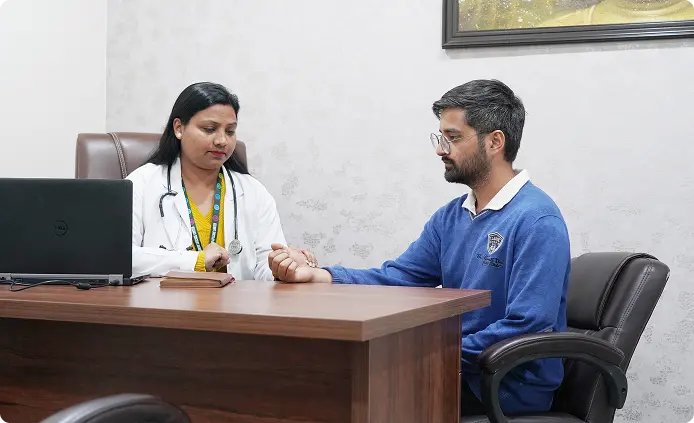
At Jeena Sikho HiiMS Outpatient Department (OPD), patients visit for medical consultations without being admitted.
Our mission is to empower you to become self-reliant and your own doctor so that you can lead a drug—and disease-free life. We don’t just offer consultations, we educate, guide, and support you in adopting healthy lifestyle practices, therapeutic protocols, and even diet charts and recipes to take control of your health independently.
What Sets Us Apart?
Personalised Care, Every Step of the Way-
Registration – Patients check in and provide personal and medical information.
Consultation – A doctor examines the patient, reviews symptoms, and may ask questions about medical history.
Diagnosis & Tests – If needed, the doctor recommends diagnostic tests (like blood tests or X-rays).
Treatment/Prescription – Based on the findings, the doctor provides treatment advice or prescribes medication.
Follow-up – Patients may be advised to return for a follow-up visit.
What Makes Our Services Better?
Therapeutic Learning: We teach you essential therapies like Panchakarma, Hot Water Immersion, Contrast Therapy, Head-Down Tilt Therapy, and other health protocols to cure fever, tuberculosis, blood pressure, and more, enabling you to manage your health independently.
Personalized Health Plans: Tailored treatment protocols that blend DIP diets with AYUSH therapies, including Ayurveda, Yoga, and Naturopathy.
Jeena Sikho HiiMS OPD aims to provide quick, adequate medical care without overnight stays.
VOPD (Virtual Out-Patient Department)
Our mission is to empower you to become your doctor. We don't just offer consultations — we educate, guide, and support you in adopting healthy lifestyle practices, therapeutic protocols, and even meal preparation techniques to take control of your health independently.
What Makes Our Services Better?
Expert Guidance Anywhere: Virtually access consultations with Jeena Sikho HiiMS doctors and healthcare specialists, eliminating the need for physical visits.
Therapeutic Learning: We teach you essential therapies like Panchakarma, Hot Water Immersion, Contrast Therapy, Head-Down Tilt Therapy, more health protocols to cure fever, tuberculosis, blood pressure and many more, enabling you to manage your health confidently at home.
Personalized Health Plans: Tailored treatment protocols that blend DIP diets with AYUSH therapies, including Ayurveda, Yoga, and Naturopathy.
Patient Benefits:
Convenient Access: Receive expert healthcare advice from wherever you are.
Holistic Treatment Plans: Comprehensive protocols to address chronic and lifestyle-related conditions.
Chronic Disease Support: Guidance for managing long-term conditions with a focus on lifestyle and dietary changes.
Follow-Up Consultations: Ongoing support to track your progress and adjust your health plan as needed.
Empowered Healing for Life:
At Jeena Sikho HiiMS, we believe that true healing begins with education and self-reliance. Through our VOPD services, we provide expert medical advice and guide you in mastering therapeutic practices and healthy meal preparation. Our goal is to make you the expert on your health journey.
Why Jeena Sikho HiiMS VOPD?
With our integrated, patient-first approach, Jeena Sikho HiiMS VOPD ensures you receive the care, guidance, and education needed to transform your health — all from the comfort of your home.
Jeena Sikho HiiMS IPD (In-Patient Department)
We provide all therapies under one roof, covering the entire AYUSH spectrum (Ayurveda, Yoga, Unani, Siddha, and Homeopathy) and modern healthcare practices.
What Makes Our Services Best?
Comprehensive Healing: Access to Panchakarma, Hot Water Immersion, Contrast Therapy, Head-Down Tilt Therapy, and more for a complete wellness experience.
Therapeutic Learning: We teach you essential therapies and health protocols like how to cure fever, tuberculosis, blood pressure and many more, so you can confidently continue your healing journey home.
Meal Preparation Guidance: Learn how to prepare wholesome, nutritious meals that align with your health and therapeutic needs and are made personalized DIP diet to you.
Patient Benefits:
Continuous Care: Round-the-clock monitoring and personalized support from expert doctors and compassionate Jeena Sikho HiiMS staff.
Comprehensive Diagnosis: Proper lab tests for accurate assessments and effective treatment planning.
Emergency Support: Prompt care for urgent medical needs.
Chronic Disease Management: Customized care and education for long-term health improvement.
Dedicated Nursing Support: 24/7 attentive and compassionate nursing care.
Empowered Healing for Life:
At Jeena Sikho HiiMS, lasting wellness starts with knowledge. We guide you in learning therapeutic techniques and preparing healthy meals and essential health protocols, empowering you to manage your health independently.
State-of-the-Art Facilities:
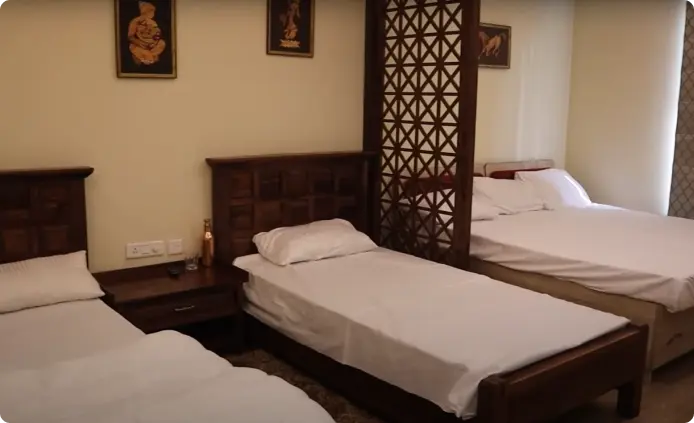
- Spacious, clean, and tranquil rooms are designed for healing and relaxation.
- A peaceful environment is conducive to recovery.
- Expert-led educational sessions and therapy demonstrations to support your learning journey.
Jeena Sikho HiiMS At Home
Our mission led us to develop this service because we wanted to provide medical care of high quality for any individual, regardless of their location.
The Purpose Behind Our Mission
The Jeena Sikho HiiMS organization exists to help people gain complete control of their health conditions through individualized natural therapeutic approaches. Patient journeys to hospital facilities become complicated because of physical mobility problems, ongoing medical conditions, and daily scheduling requirements. Through Jeena Sikho HiiMS at Home, we bring the expertise and treatment recommendations physicians offer to hospital patients right to their doorsteps.
How It Works
Video Consultation (VOPD): The doctors perform VOPD to evaluate your health before deciding whether Jeena Sikho HiiMS at Home suits your needs.
Personalized Treatment Plan: A tailored medical approach is developed after approval, considering your health state, life requirements, and individual needs.
Continuous Monitoring & Support: Our staff maintains continuous outreach to provide care guidance, including life recommendations that adjust your healthcare treatment as needed.
Empowering Patients: The Advantages of Our Services
Convenience: Receive expert medical care without travelling.
Personalized Attention: Tailored treatments based on your specific health concerns.
Continuous Guidance: Ongoing support and monitoring from our expert team.
Holistic & Natural Approach: Treatments based on Ayurveda, DIP diet, and lifestyle modifications.
Cost-Effective: Saves time and expenses associated with hospital visits.
Take control of your health today with Jeena Sikho HiiMS at Home! Experience expert healthcare, holistic treatments, and continuous support—all from the comfort of your home.
Connect with us today and start your journey towards better health!
Jeena Sikho HiiMS Webinars
At Jeena Sikho HiiMS (Hospital and Institute of Integrated Medical Sciences), we believe that knowledge is the key to healing. Our interactive webinars provide a unique platform where participants can directly engage with Acharya Ji and a team of expert doctors to address their health concerns, learn therapeutic protocols, and gain inspiration from real success stories.
What Makes Our Webinars Unique?
Direct Interaction: Get personalized advice from Acharya Ji and experienced doctors dedicated to solving your health issues.
Motivational Success Stories: Hear about patients who have successfully recovered and transformed their health, inspiring you to stay motivated.
Comprehensive Solutions: Receive holistic recommendations based on traditional therapies.
Therapeutic Learning: Gain insights into effective therapies and health protocols you can implement independently.
Patient Benefits:
Expert Health Advice: Personalized solutions to your health queries from a knowledgeable and compassionate team.
Holistic Insights: Learn how to integrate therapeutic practices into your daily routine for better health outcomes.
Empowered Healing: Understand how to become your doctor by adopting effective health strategies and protocols.
Inspiration to Succeed: Draw motivation from the recovery journeys of other patients.
Convenient Access: Join from anywhere and benefit from expert advice at your fingertips.
Empower Yourself Through Knowledge:
Jeena Sikho HiiMS webinars are designed to inspire, educate, and empower you to take control of your health. With expert guidance from Acharya Ji and real-life recovery stories, you’ll be motivated to transform your health journey and achieve long-lasting wellness.
After attending this webinar, you'll gain essential knowledge on how to take precautions and prevent major diseases, leading to a positive and lasting impact on your life.
Join Our Webinars for Just ₹49!
Access invaluable health insights and learning that will support your healthy lifestyle journey.
How to Join:
Download Our App: Get the Shuddhi App on the Play Store for Android.
Call Us: Contact us at 77 1037 1037 for detailed webinar information.