

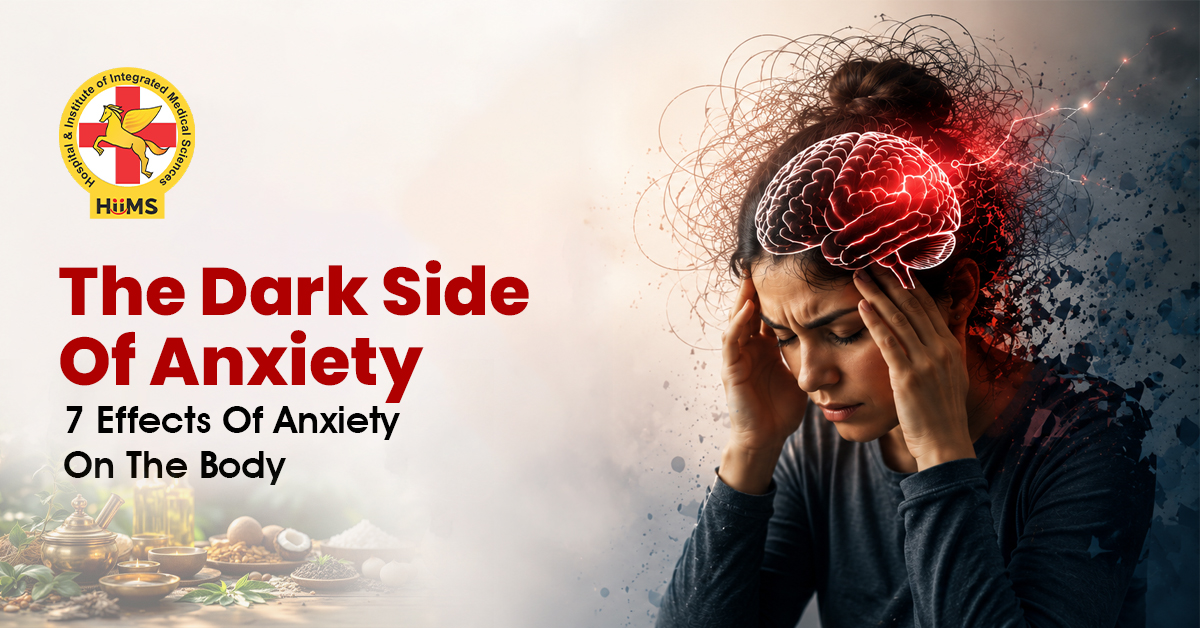
Your hands are trembling, your breaths become heavy, and your heart starts beating rapidly, so much so that you can even hear it. You try focusing your mind, but the surroundings begin to seem increasingly unbearable to you, and then comes the question, Why am I experiencing this? If you have ever felt your heart race for no reason, your stomach twist into knots, or your muscles stay tense even when nothing seems wrong, you are not alone. These are not just feelings but can be anxiety effects showing up in your body.
Many people search for what causes anxiety, look for an anxiety treatment, or even consider different forms of therapy for anxiety because the symptoms keep coming back. Medicines may help calm the mind for some time, but many people still struggle with recurring worry, poor sleep, and unexplained physical symptoms. Ayurveda looks at anxiety differently. It tries to understand why the mind and body have gone out of balance and works to correct the root cause rather than only managing the symptoms.
Why Do Anxiety Effects Show Up In The Body?
Anxiety is not only a mental health issue. It can affect almost every part of the body. When a person stays stressed for a long time, the body remains in a constant “fight or flight” state. Stress hormones continue to rise, and over time this can lead to several physical problems.
According to Ayurveda, many anxiety effects are linked to an imbalance of Vata dosha. Vata governs movement, the nervous system, and mental activity. When it becomes worse due to stress, irregular eating habits, lack of sleep, or excessive worrying, the mind becomes restless and the body starts showing symptoms. This is also why many people keep asking what causes anxiety to return again and again. The answer often lies deeper than temporary triggers.
How Anxiety Effects Slowly Start Affecting Different Parts Of The Body
Anxiety does not affect everyone in the same way. It can start with the beating of their hearts, while for others, it is associated with problems in the stomach area, headaches or inability to sleep well. As the body remains stressed all the time, various organs and systems within the body react to such stresses differently over time. Such changes will start occurring more often and can affect their everyday life. It is important to understand how these anxiety effects show themselves in order to recognise anxiety both in the mind and in the body.
1. Fast Heartbeat And Chest Discomfort: One Of The Common Anxiety Effects
A sudden increase in heart rate is one of the most common anxiety effects. Some people even think they are having a heart problem because their chest feels tight or heavy.
Modern approaches often focus on reducing the immediate symptoms and helping the person feel calmer. This can offer some short-term relief, but if the stress patterns and nervous system imbalance persist, the symptoms will most likely continue to recur. The Ayurvedic approach is to calm the severed Vata and support the mind through a routine of balancing activities.
2. Digestive Problems: How Anxiety Effects Reach The Gut
Do you find yourself experiencing stomach aches, bloating, nausea or lack of appetite when you are anxious?
There exists an intimate link between the gut and the brain. Disrupted digestion is one of the common anxiety effects. While some individuals may suffer from constipation, there are others who may experience loose motions and frequent acidity.
Many individuals try to get an anxiety treatment because of the fact that the problems related to their stomach always persist. Although drugs may provide temporary relief from symptoms such as acidity and nausea, they do not really address the stress issue.
In Ayurvedic philosophy, mental stress reduces agni (digestive capacity). It causes more digestion problems, and ultimately it impacts one’s mental health in a cycle. Proper digestion and eating at appropriate times are very important, and it’s equally important to soothe the nervous system as well.
3. Poor Sleep And Constant Fatigue: Hidden Anxiety Effects
Another major group of anxiety effects includes difficulty falling asleep, waking up repeatedly during the night, and feeling tired even after sleeping. A restless mind rarely allows the body to recover properly. Lack of sleep then increases irritability, poor concentration, and emotional exhaustion.
People often try different forms of therapy for anxiety or sleeping medications to get relief. These measures might prove helpful in addressing the problem; however, the underlying imbalance often causes disturbed sleep in most individuals.
Sleep is regarded as one of the basic foundations for good health in Ayurveda. Some techniques such as adopting a schedule, avoiding mental activity at bedtime, and employing soothing treatments might be useful in restoring emotional harmony and sleep.
4. Muscle Pain And Body Tension: Anxiety Effects You May Ignore
Do your shoulders always feel tight, or do you often suffer from headaches or neck pain? These can also be anxiety effects. The body tends to hold stress in the muscles. Long-term anxiety can leave a person feeling physically exhausted and sore.
People seeking therapy for anxiety often don’t realise that their body pain may be connected to emotional stress. They treat the pain separately while the real trigger remains unaddressed.
5. Breathing Problems And Feeling Short Of Breath
Many individuals with anxiety have mentioned that they are unable to breathe deeply. They may experience a sensation where it seems as if there is an obstruction within the chest. This is another example of how anxiety effects can become physical.
In many cases, people undergo repeated medical tests because they are worried something serious is wrong. Although the tests may appear normal, the symptoms continue because the body’s stress response is still active.
6. Weak Immunity And Frequent Illness
Stress may interfere with the body’s ability to defend itself against external agents. It may lead to an increased susceptibility to infections when people are stressed. Another anxiety effect that is less known is the effect on the immune system. Stress may wear down your body and make you less resistant to diseases. Speaking about the reasons for what causes anxiety, lifestyle is usually not considered.
7. Difficulty Concentrating And Emotional Exhaustion
Anxiety does not just make people worried. It can make simple tasks feel overwhelming. People often complain of forgetfulness, poor concentration, and mental fatigue. They feel tired all the time, even without doing much physical work.
An anxiety treatment that focuses only on immediate relief may not always address the factors that continue to disturb the mind. Ayurveda aims to support mental balance by improving daily routines, reducing stress triggers, and promoting overall harmony between the mind and body.
Why Does Anxiety Keep Coming Back?
Many find themselves feeling much better for a couple of weeks after which the same problems start reappearing because, in many cases, the underlying causes of their anxiety go unaddressed.
According to Ayurveda, treatment begins with finding out about the person’s lifestyle, his sleeping patterns, digestion process and emotions. Instead of just suppressing the symptoms, ayurvedic treatment works to bring harmony within the body and mind.
The Ayurvedic way of dealing with emotional wellness at Jeena Sikho HiiMS involves personalised guidance and therapies.
Conclusion
The anxiety effects on the body can be much bigger than most people realise. They can affect the heart, digestion, sleep, breathing, muscles, and even immunity. Though temporary remedies help with alleviating the symptoms, yet many people find themselves in the same condition, as their problem lies deeper. In case you are suffering from anxiety attacks and want to take a holistic approach towards your health, you can contact the experts at Jeena Sikho HiiMS via VOPD (Virtual OPD).
Contact Number: +91-82704-82704
Email: care@jeenasikho.com

FAQs
- What are the most common symptoms of anxiety in terms of physiology?
The physiological symptoms of anxiety consist of palpitations, stomach disorders, insomnia, muscular tensions, headaches, and tiredness. - Why is anxiety recurring?
It is because of a number of factors that anxiety keeps persisting, such as constant stress, unhealthy lifestyle choices, inadequate resting and mental suffering. It is important to find out what causes anxiety in order to deal with it successfully. - Is there a natural solution for anxiety?
In addition to getting professional advice, making changes in your way of life, meditating, coping with stress and using the principles of Ayurveda can help you improve your emotional well-being in case of anxiety. - Is it possible for anxiety therapy to affect one’s physical condition?
Different kinds of anxiety therapy may help people cope with their stress more effectively and thus reduce some physical aspects of anxiety. - Does anxiety affect digestion and sleep?
The digestive troubles and problems with sleeping are the most popular consequences of anxiety.