
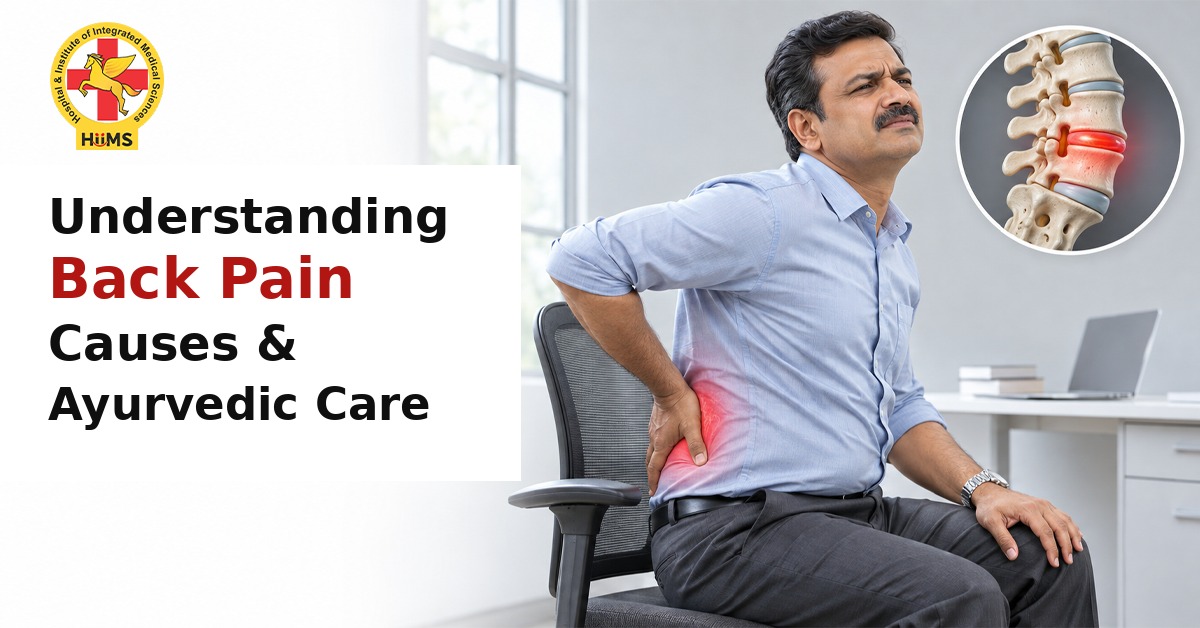

Back pain is one of the most common health problems in the world. Almost everyone feels it at some point in life. Some feel it after lifting a heavy bag. Others feel it after sitting at a desk for long hours.
The World Health Organization says 619 million people lived with low back pain in 2020. It is also the leading cause of disability across the world.
Many people ignore the first signs. They take a quick pill and go back to work. The pain returns, and often it returns stronger.
In clinical practice, doctors often observe that people wait for months before they ask for help. By then, a simple muscle strain may have become a long standing problem.
This blog explains the common causes and signs of back pain. It also shares how Ayurveda looks at the problem and why many people prefer its gentle, natural path for back pain support. By the end, you will know when to rest, when to move and when to seek help.
What Causes Back Pain?
Most back pain comes from daily habits, not from a rare disease. The WHO says about 90% of cases are nonspecific. This means doctors cannot trace the pain to one clear structural cause.
Common back pain causes include:
- Poor sitting posture and long desk hours
- Lifting heavy objects the wrong way
- Weak core and back muscles
- Extra body weight that strains the spine
- Age-related wear in the discs and joints
- Stress, which keeps the muscles tight
- Disc problems and sciatica
Most causes are tied to daily habits, so the good news is that many of them can be changed. If the pain keeps returning, get it checked early.
Back pain that refuses to go away? Book your appointment with our experts today.
Book your appointment with Our Experts
Common Symptoms of Back Pain
Symptoms differ from person to person. Watch for these signs:
- A dull ache or sharp pain in the lower back
- Stiffness, especially in the morning
- Pain that travels down the leg
- Tingling or numbness in the feet
- Pain that grows worse when you sit, bend or cough
- Weakness in the legs
Back pain can sometimes hide other trouble. For example, silent heart attack symptoms may include pain in the upper back, jaw or arm along with unusual tiredness. Sudden chest discomfort needs urgent care. Early care makes back pain support simpler and faster to plan.
Can Painkillers Address the Cause of Back Pain?
Painkillers calm the pain for a few hours. They do not fix the weak muscles or the poor habits behind it.
Regular use of strong painkillers may upset the stomach and strain the kidneys. WHO guidelines also list opioid painkillers, lumbar braces and traction among the options to avoid for chronic back pain.
So a long-term back pain support built only on tablets often leaves the root cause untouched.
How Ayurveda Approaches Back Pain Support
Ayurveda links most back pain to Vata dosha, the body energy that controls movement. It calls lower back stiffness Katigraha. The aim is to calm Vata and strengthen the spine from within.
Common Ayurvedic therapies include:
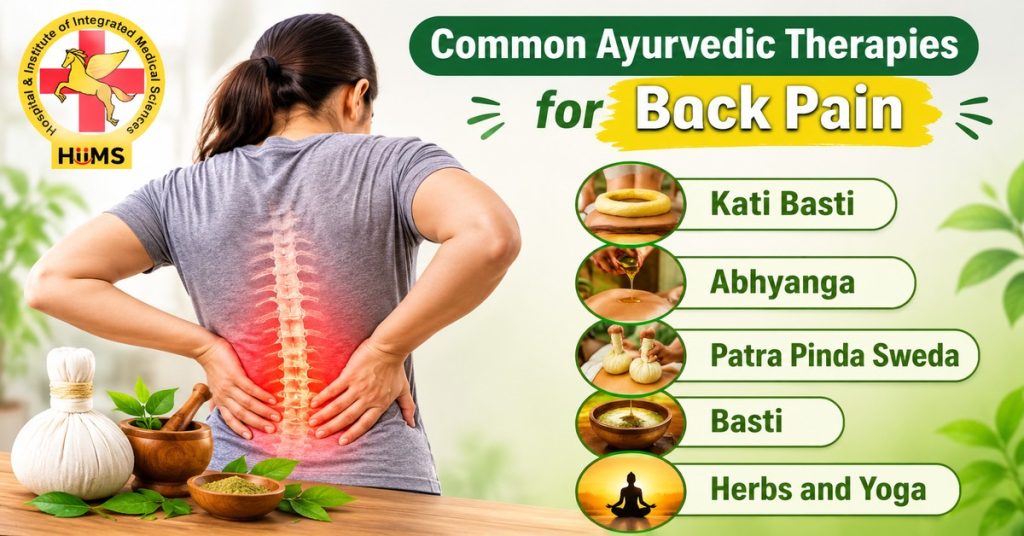
- Kati Basti: warm medicated oil is held over the lower back to ease stiffness.
- Abhyanga: gentle massage with herbal oils to relax tight muscles.
- Patra Pinda Sweda: warm herbal bundles that reduce pain and swelling.
- Basti: a medicated oil or herbal enema used to balance Vata.
- Herbs and yoga: Ashwagandha, Guggul and Shallaki, along with diet advice and gentle stretches.
Indian research looks encouraging. A clinical study of 35 patients found that Panchaprasrutik Basti gave significant relief in back pain scores over seven days.
Which Exercises Are Good for Back Pain?
Gentle movement helps many people with back pain, and long bed rest can leave the back stiffer. Check with a doctor first, then try these simple exercise for back pain,
- Pelvic tilt: Gently wakes up the core and lower back muscles, which may ease stiffness.
- Knee-to-chest stretch: Stretches the lower back and hips and may help relieve tightness.
- Cat-cow stretch: Keeps the spine moving and may reduce stiffness, especially in the morning.
- Child’s pose (Balasana): Relaxes the lower back and helps release muscle tension.
Regular movement, even for a few minutes, may help maintain back the strength and flexibility. Give your body time to adjust instead of pushing too hard.
How Jeena Sikho HiiMS Approaches Care
At Jeena Sikho HiiMS, doctors do not rush to a prescription. They begin by understanding the medical history, daily routine and the exact nature of your pain.
They then plan an Ayurvedic support for back pain around the cause. This may include Ayurvedic therapies, herbal medicines, diet changes and simple exercises. Every plan is personal, and results differ from person to person.
Simple Habits That Protect Your Back
Small changes in your daily routine can take a lot of strain off your back. Here are a few easy ones to start with:
- Sit with your feet flat and your back supported
- Walk for about 30 minutes each day
- Stand up and stretch every hour
- Lift with your knees, not your back
- Sleep on a firm mattress
- Eat fresh, warm food and drink enough water
Good habits support overall back health and help reduce the risk of recurring pain.
Conclusion
Back pain is common, but you do not have to live with it. Know the causes, watch the signs and act early. Choose a gentle back pain support that looks at the root and not only the pain.
At Jeena Sikho HiiMS, an Ayurvedic doctor for back pain guides you with natural and Ayurvedic care built around your health. Book a VOPD consultation to talk with an expert about your spine.

FAQs
1. How long does back pain usually last?
Many episodes ease within days to weeks, but pain lasting months needs a doctor’s check.
2. Can poor posture cause back pain?
Yes, slouching or staying in one position for long hours strains the muscles and spine.
3. When should I see a doctor for back pain?
See a doctor if the pain keeps returning, spreads down the leg or brings tingling or numbness.
4. How does Ayurveda view back pain?
It links most back pain to Vata dosha and aims to calm Vata and strengthen the spine.
5. Can diet help with back pain?
Fresh, warm food, enough water and a healthy weight can support the recovery alongside other care.