

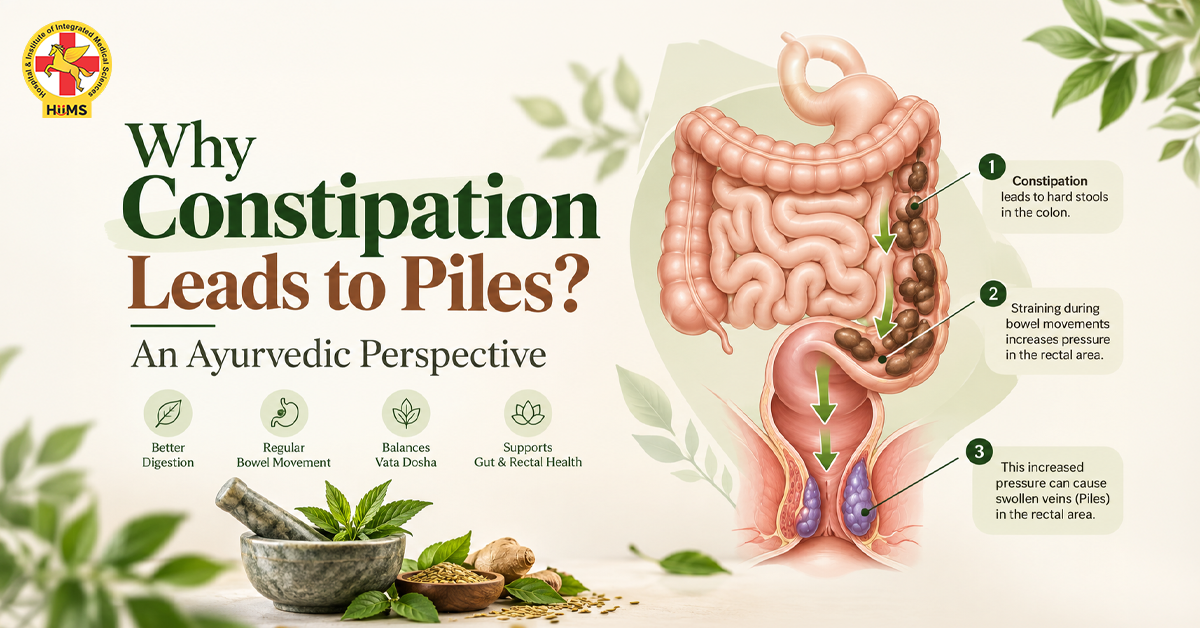
Your gut has a simple way of asking for care. When digestion slows down the body sends signals like hard stools or bloating. Listening early can prevent bigger problems later. A clear example is the link between constipation and piles. Hard, irregular stools are a common reason piles start or get worse.
Doctors see this link in everyday practice. A study from tertiary care hospitals in Mangalore reviewed the records of 220 people with piles. Almost one in three of them (30.9%) had a history of constipation. This blog explains how constipation leads to piles and how Ayurveda supports better bowel habits.
What Are Piles and Why Do They Happen
Piles, or haemorrhoids, are swollen veins in and around the anus. Everyone has these veins, but they cause trouble when they swell and stretch.
Internal piles form inside the rectum. You usually can’t see or feel them, but they may bleed. External piles form under the skin around the anus. As a result, they often cause itching, pain, or a small lump.
Common signs include bright red blood after passing stool, itching, and pain while sitting. Pregnancy, heavy lifting and long sitting can all trigger piles.
Feeling discomfort or noticing blood after passing stool? Talk to our experts and understand what your body is telling you.

Can Constipation Cause Piles? How Hard Stools Strain Your Veins
Yes, it can, and the reason is mostly pressure. Here is how constipation and piles are connected.
Straining Puts Pressure on Rectal Veins
Hard stool makes you push harder. This raises the pressure inside your belly which travels down to the veins near the anus. Over time, these veins stretch and swell into piles.
Hard, Dry Stools Irritate the Tissue
Dry stool rubs against the soft lining of the anal canal as it passes. This friction causes small tears, bleeding, and soreness.
Sitting Too Long on the Toilet
People with constipation often sit on the toilet for a long time. But sitting for a long time lets blood pool in the anal veins. As a result, the veins stay swollen for longer.
The Cycle That Keeps Piles Coming Back
Pain makes people delay going to the toilet. The delayed stool loses more water and gets harder. This means more straining next time, and the piles get worse.
Research supports this too. A 2024 matched case-control study from Mangalore compared people with and without piles. The study found a clear link between constipation and piles. Before the damage builds up, though, the body usually gives warning signs.
Signs Your Constipation Is Affecting Your Piles
Watch out for these signs:
- Fewer than three bowel movements a week: Stool that stays longer in the gut loses water. So, it becomes harder to pass.
- Hard or lumpy stools: Lumpy stool need more force to pass, this extra force adds direct pressure on the anal veins.
- A feeling of incomplete emptying: You may need to go again soon after. This leads to repeated straining.
- Bleeding or itching after straining: Fresh blood on the tissue often points to irritated piles, itching may also feel worse after a hard bowel movement.
Ayurveda looks at all these signs as one connected digestive imbalance, not separate problems.
How Ayurveda Explains Constipation and Piles
Ayurveda calls piles Arsha and constipation Vibandha. Ayurveda links both conditions to two main causes. The first is Mandagni, or weak digestive fire. When digestion is weak, stools become dry and heavy.
The second cause is a disturbed Apana Vata. This is the downward-moving energy that controls bowel movement. When Apana Vata is out of balance, stools get stuck and need force to pass. Therefore, Ayurveda works on digestion, diet and daily routine, not just the swelling.
Classic herbs support this approach. Triphala, a blend of Amla, Harad and Baheda is a good example. Still, herbs work best with the right food, habits, and expert guidance.
Ayurvedic Treatment for Constipation at Jeena Sikho HiiMS
Jeena Sikho HiiMS turns this root-cause idea into a complete digestive care plan. It is an integrated hospital that combines Ayurveda, Naturopathy and modern care. Doctors assess each patient first, then build a plan that fits them.
Panchakarma
Panchakarma is Ayurveda’s classical cleansing process. Basti, a medicated oil or herbal enema is traditionally used for Vata problems like constipation. It aims to soften the bowels and support their natural movement.
Herbal Support
Doctors may use these Ayurvedic remedies for piles and constipation under supervision.
- Triphala: It gently supports regular bowel movement and keeps stools soft.
- Haritaki: It supports smooth elimination and helps balance Apana Vata.
- Kutaj: It is traditionally used to support gut health and calm irritation.
- Nagkesar: It is traditionally used to support comfort in bleeding piles.
pH-Balanced Diet
Patients follow a fresh, plant-based diet rich in fibre and water. As a result, stools stay soft and digestion feels lighter.
Mind and Body Healing
Yoga, pranayama and a fixed daily routine help calm Vata. They also train the body to empty the bowels at the same time each day.
Pet Yakrit Pleeha Shuddhi Kit for Daily Gut Health Support
For daily care at home, Jeena Sikho offers the Pet Yakrit Pleeha Shuddhi Kit, a simple Ayurvedic routine for constipation, bloating and acidity. It brings together 13 classical herbs and spices, including Harad, Amla, Baheda, Amaltas, Sanay, Saunf and Ajwain. Harad and Amaltas support smooth bowel movements while Saunf and Ajwain help ease gas and heaviness. Followed for 28 days with good food and habits, it helps your gut feel lighter, cleaner and more regular.
Check with an Ayurvedic doctor before you start. For heavy bleeding or severe pain, see a doctor first.
Foods to Avoid for Piles and What to Eat Instead
Food plays a big role in keeping stools soft. Avoid fried and spicy food as they can irritate swollen veins. Packaged snacks are low in fibre and can make stools harder. Excess tea or coffee can dry out the body, and heavy late-night meals slow digestion and weaken Agni overnight.
Instead, add whole grains, papaya, guava and leafy greens to your plate. Soaked figs or raisins help soften stools. A little ghee and enough water keep things moving. However, food works best when your routine supports it.
Ayurvedic Lifestyle Tips for Piles
These Ayurvedic lifestyle tips for piles make a real difference over time:
- Keep a fixed toilet time: Going at the same time each morning trains your body. Soon, bowel movements need less force.
- Never ignore the urge: Holding stool makes it drier and harder. So, go as soon as you feel the need.
- Use a small footstool: Raising your feet creates a squat-like position. This straightens the passage and reduces straining.
- Practise simple yoga: Pawanmuktasana and Malasana help release gas. They also support smooth bowel movement.
- Try a warm sitz bath: Sitting in warm water for 10 to 15 minutes eases pain and itching.
Done every day, these small steps tie together everything this blog has covered.
Conclusion
Constipation puts steady pressure on the veins near the anus. Ayurveda works on herbs, Panchakarma, food and routine. Understanding the link between constipation and piles is essential for a healthier gut.
Support smoother digestion and regular bowel movements the Ayurvedic way. You can book a HiiMS VOPD (video consultation) to consult our experts. Try the Jeena Sikho Pet Yakrit Pleeha Shuddhi Kit for a healthy gut.

FAQs
1. Can constipation cause piles?
Yes. Hard stools make you strain and straining puts pressure on the veins near the anus. Over time these veins swell and form piles.
2. How can I break the cycle of constipation and piles?
Eat fibre rich food, drink enough water and keep a fixed toilet time. Avoid straining or sitting on the toilet for too long.
3. What are some simple Ayurvedic remedies for piles?
Triphala at bedtime, soaked figs or raisins, and a warm sitz bath can all help. Each one keeps stools soft or eases pain and itching.
4. What Ayurvedic treatment for constipation does Jeena Sikho HiiMS offer?
HiiMS plans care after a doctor’s assessment. It may include Panchakarma, herbal support, a pH-balanced diet and yoga for regular bowel movements.
5. How long should I use the Pet Yakrit Pleeha Shuddhi Kit?
The kit follows a 28-day routine: granules for six days, then the Liver Shuddhi Shot on the seventh day. Using it with good food and habits gives the best support.