

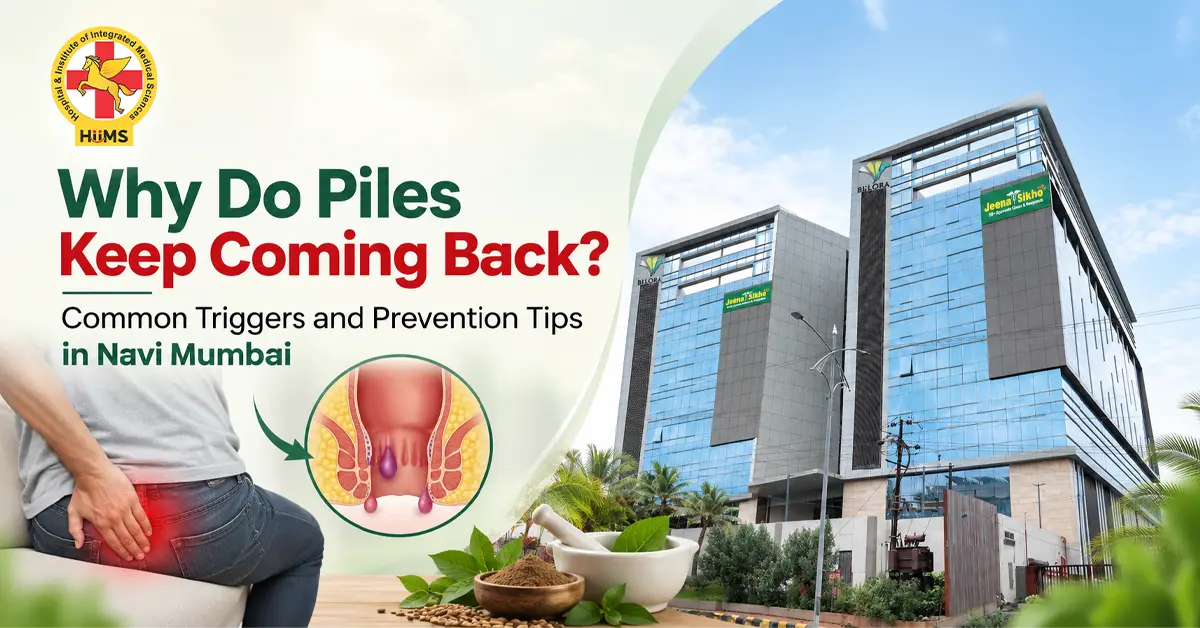
Piles can be an uncomfortable problem, especially when they keep returning after a person feels better for some time. Many people notice that the problem comes back after a few weeks or months. They may again experience bleeding, itching, swelling, pain, or discomfort while passing stool. This often makes people wonder why the same problem keeps happening.
The answer is usually connected with daily habits. Constipation, hard stools, too much straining, sitting on the toilet for a long time, low fibre intake, and a less active routine can put repeated pressure on the veins around the rectum. These are some of the commonly recognised piles causes.
For people looking for the piles treatment, it is important to look beyond temporary relief and understand the habits that may be allowing the problem to return. Ayurveda also gives importance to digestion, food habits, bowel routine, and lifestyle while planning care for piles. Ayurvedic piles treatment in Navi Mumbai at Jeena Sikho HiiMS focuses on these aspects to support the better bowel health and long-term care.
Why Do Piles Keep Coming Back?
Piles do not always return because the earlier care was ineffective. In many cases, the same daily habits that caused pressure in the anal area continue even after the symptoms settle.
For example, a person may improve their diet for a few days, drink more water and avoid straining. Once the discomfort goes away, they may return to their old routine. Constipation can slowly return, stools can become hard again, and the pressure during bowel movements may increase.
Long periods of sitting on the toilet can also add pressure to the area. Spending this time using a phone is a common habit today. Regular heavy lifting and repeated straining can also increase pressure around the rectum.
Want to know more? Consult an Ayurvedic expert to understand the common reasons behind recurring piles and learn simple ways to prevent them from coming back.

Common Triggers That May Bring Piles Back
Some habits may look small, but when repeated every day, they can affect bowel health.
1. Constipation and hard stools
Constipation is one of the main reasons piles may become troublesome again. Hard stools are difficult to pass and often make a person push harder during bowel movements. Repeated straining can put extra pressure on the veins around the anus.
2. Sitting too long on the toilet
The toilet should not become a place to sit and use the phone for twenty or thirty minutes. Sitting on the toilet for too long can put extra pressure on the anal area. It is better to respond to the natural urge and avoid unnecessary sitting.
3. Low fibre intake
When your diet lacks enough fibre, stools can become hard and difficult to pass. Adding fruits, vegetables, whole grains, pulses and other fibre rich foods can help keep the bowel movements softer and easier.
4. Not drinking enough water
Fibre works better when the body gets enough fluids. If a person increases fibre but does not drink enough water, the bowel routine may not improve as expected. Daily water intake should be adjusted according to the individual needs, activity, weather, and advice from a healthcare professional.
5. An inactive daily routine
Sitting for most of the day and getting very little physical activity can affect bowel habits. A simple walk and regular movement can be useful additions to a healthy routine.
Piles Symptoms That Should Not Be Ignored
The signs of piles can differ from person to person. Some people mainly notice bleeding, while others experience the itching, swelling, discomfort, or a lump near the anus.
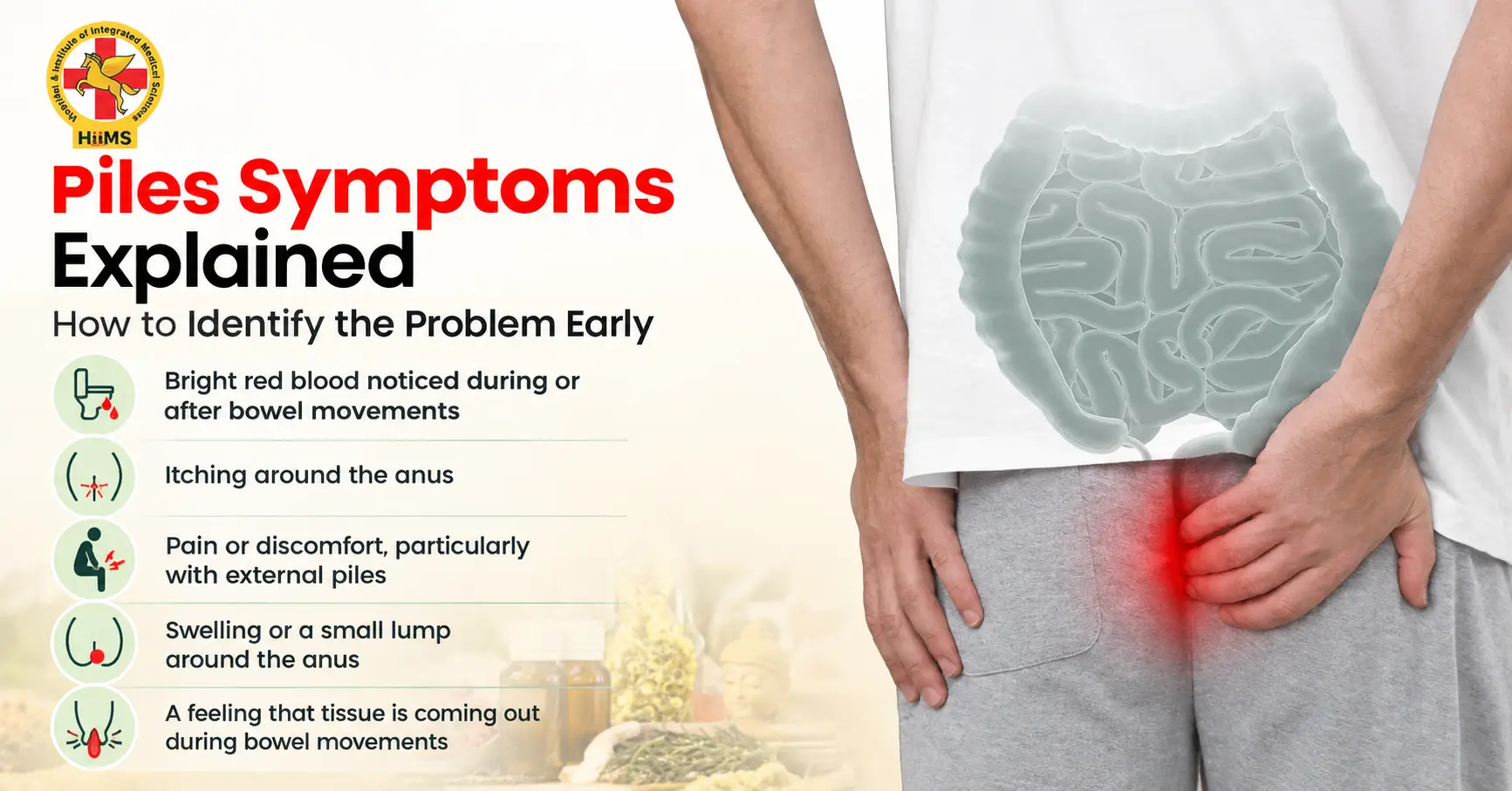
Common piles symptoms include,
- Bright red blood noticed during or after bowel movements
- Itching around the anus
- Pain or discomfort, particularly with external piles
- Swelling or a small lump around the anus
- A feeling that tissue is coming out during bowel movements
Internal piles may bleed without causing much pain, while external piles can cause tenderness and discomfort.
Bleeding from the rectum does not always mean that piles are the cause. Similar symptoms can occur with other digestive or bowel conditions. Anyone with repeated bleeding should get the cause checked instead of repeatedly managing it at home.
Piles Treatment in Navi Mumbai at Jeena Sikho HiiMS With an Ayurvedic Approach
Piles treatment in Navi Mumbai at Jeena Sikho HiiMS focuses on digestion, food habits, bowel routine, and daily lifestyle along with the symptoms. Ayurvedic care may include dietary guidance, lifestyle changes, Ayurvedic medicines, and traditional procedures when considered suitable.
The focus is to support a healthy bowel routine and address the habits that may be linked with recurring piles.
Kshar Sutra Therapy for Piles
Kshar Sutra is a traditional Ayurvedic parasurgical procedure that uses a specially prepared medicated thread. It is commonly considered in Ayurvedic care for certain types of internal piles and may be included as part of an Ayurvedic approach to hemorrhoids treatment.
Research published on PubMed has reported the use of Kshar Sutra in grade II and grade III hemorrhoids, supporting its place as an option in Ayurvedic care. Read the research on PubMed
Its suitability depends on the type and stage of piles, so the procedure should be planned after proper examination by a qualified Ayurvedic doctor.
Simple Piles Prevention Habits for Daily Life
Piles prevention becomes easier when small habits become part of everyday life.
- Include natural fibre from vegetables, fruits, whole grains, and pulses.
- Drink enough water throughout the day.
- Do not ignore the natural urge to pass stool.
- Avoid putting extra pressure during the bowel movements.
- Do not sit on the toilet for a long time.
- Keep the body active with walking and regular movement.
- Avoid making highly processed and low fibre foods a regular part of the diet.
- Maintain a regular meal and bowel routine.
- Avoid frequent heavy lifting if it causes repeated straining.
These piles lifestyle tips are also supported by general guidance on hemorrhoid prevention, which gives importance to fibre, fluids, avoiding straining, limiting toilet sitting time and staying physically active.
When Should You Consult a Doctor?
The recurring piles need attention, especially when the symptoms do not settle. If bleeding continues, pain becomes severe, symptoms return often, or your bowel habits change, consult a professional for the guidance.
Rectal bleeding may have causes other than piles, so it should not always be linked to hemorrhoids. The NIDDK recommends seeking professional help for bleeding and symptoms that continue despite self care.
Getting the symptoms checked can help you understand the cause and choose the next step.
Conclusion
Straining during bowel movements, eating too little fibre, sitting on the toilet for too long, and staying inactive can all contribute to recurring piles. A good bowel routine, balanced food, enough water, and regular movement can support better long term care.
At Jeena Sikho HiiMS Navi Mumbai, the Ayurveda-based approach looks at digestion, diet, lifestyle, and individual needs. If you are exploring Piles Treatment in Navi Mumbai, you can book a free consultation with Jeena Sikho HiiMS to discuss your concerns and understand the next steps.

FAQs
1. Why do my piles keep coming back even after treatment?
Because the daily habits linked to the piles may not change completely even when the symptoms go away.
2. Can sitting on the toilet for too long cause piles again?
Yes, long toilet sitting adds unnecessary pressure on the anal area.
3. Can piles come back without any pain or bleeding?
Yes, internal piles can return quietly with only mild itching or swelling.
4. Can Ayurvedic treatment stop piles from returning permanently?
It supports the better bowel health, but results depend on maintaining habits too.
5. What foods should be avoided to prevent piles recurrence?
Highly processed, low fibre and very spicy or oily foods are best avoided.