

A person can be busy all day and still feel uneasy by the time night arrives. The work is done, messages have been answered, and the usual routine has been followed, yet the mind keeps returning to the same thoughts. Sleep may take longer, patience may run short, and ordinary situations can start feeling more demanding than before. When this happens regularly, it can affect many parts of daily life.
That is why choosing the right therapy for anxiety is so important. It is not only about easing a worried mind for a few hours. It is about helping the body settle, the nerves calm down, and daily life feel manageable again. In Ayurveda, the focus stays on balance, routine, and healing the whole person, not just the symptom.
In this blog, you will see what usually causes anxiety, how it shows up, and which natural therapies can bring real comfort and steady relief in everyday life for many people, too.
Understanding Anxiety Beyond Everyday Stress
Anxiety is different from normal pressure because it stays longer and starts impacting daily life. A racing heart, shaky hands, or sudden fear may return often. Those are common symptoms of anxiety attack.
What Causes Anxiety?
People often ask what causes anxiety, and the answer is usually a mix of habits and strain. Long screen hours, poor sleep, skipped meals, emotional pressure, and too much caffeine can slowly disturb the nervous system.
Lifestyle Habits That Can Trigger Anxiety
When sleep, meals, and work hours keep changing, the body stays on alert and anxiety starts to feel normal.
The Ayurvedic View of Anxiety and Vata Imbalance
Ayurveda explains that anxiety is often linked with an aggravated Vata dosha. As this imbalance develops, a person may notice increased restlessness, constant thinking, difficulty sleeping, or a feeling of uneasiness.
Why Therapy for Anxiety Is Important for Long-Term Wellbeing
How Therapy Helps Calm the Mind and Body
Many people seek therapy for anxiety because they want to feel more comfortable in their day-to-day life. A calmer mind, better focus, and the ability to relax more easily are often the changes they hope to achieve.
Benefits of Early Intervention
Early care makes anxiety easier to handle and helps people learn how to reduce stress naturally before stress settles into routine life.
Different Types of Therapy for Anxiety and Their Benefits
Shirodhara Therapy for Mental Relaxation
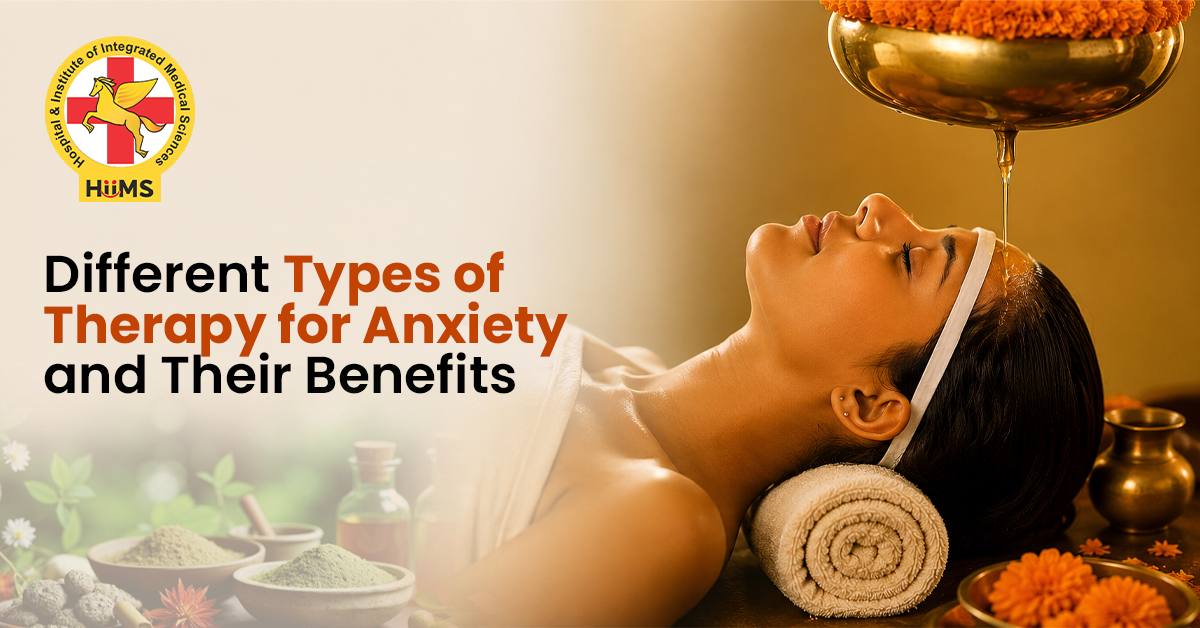
Shirodhara uses a steady flow of warm oil on the forehead. It helps the brain slow down and gives the mind a calmer rhythm.
Abhyanga Therapy for Stress Release
Abhyanga is a warm oil massage for the whole body. It releases tension, improves circulation, and gives the body a comfortable feeling.
Shiro Pichu and Shirobasti for Nervous System Nourishment
These therapies are generally used for people who feel mentally drained, find it hard to switch off at the end of the day, or wake up feeling unrested.
Nasya Therapy for Mental Clarity
Nasya uses herbs through the nasal route and is often chosen when the head feels heavy or the mind feels clouded. It supports freshness, focus, and steadiness.
Yoga and Pranayama for Daily Anxiety Management
Many people look for how to control anxiety in ways they can repeat every day, and yoga with pranayama fits that need well.
Meditation and Mindfulness Practices
Meditation changes the way a person relates to thoughts instead of fighting them. That change makes it easier to follow how to reduce stress naturally in daily life.
Zero Volt Therapy (Grounding Therapy)
Zero Volt Therapy is based on direct contact with the earth. Walking barefoot on grass or natural ground can feel deeply calming after a long day of tension.
The Integrated Healing Approach at Jeena Sikho HiiMS
Combining Ayurveda, Yoga, and Naturopathy
At Jeena Sikho HiiMS, Ayurveda, Yoga, and Naturopathy are used together as part of the care process. This combined approach helps address different aspects of a person’s health while encouraging better balance in daily life.
Personalised Therapies Based on Individual Needs
No two people experience anxiety in the same way, so the therapy plan is adjusted to the person, not the other way around.
Focusing on the Root Cause Rather Than Temporary Relief
The idea is to understand a person’s overall health rather than focusing on a single concern. This allows care to be planned in a more complete and thoughtful way. That is where therapy for anxiety becomes more meaningful.
Conclusion
Anxiety can affect sleep, focus, energy, and even the way a person speaks or breathes throughout the day. The good part is that it does not have to stay that way. With the right therapy for anxiety, steady routine, calm eating habits, and simple mind-body practices, people often begin to feel lighter and settled. Ayurveda is not a short-term process. It works step by step, with care and balance.
If you are looking for a path, you can also choose a VOPD consultation with the expert doctors at Jeena Sikho HiiMS and discuss the most suitable support for your health concern.

FAQs
- Which Ayurvedic therapy is often chosen first for anxiety?
Shirodhara is commonly chosen because it helps the mind slow down and creates a deep sense of calm. - Can anxiety show up in the body as well?
Yes, it often does. Tightness in the chest, a racing heartbeat, sweating, and shaky hands are common body signals. - How to control anxiety in daily life?
A steady routine, better sleep, gentle breathing, and less screen overload can make a real difference over time. - Is it possible to reduce stress without strong medicines?
Many people try yoga, meditation, grounding, and Ayurvedic therapies when they want a calmer, natural approach. - Why do doctors talk about lifestyle while treating anxiety?
Because habits impact the nervous system. When the routine becomes more balanced, the mind often starts to settle too.
Disclaimer: The information provided on this blog is for general educational and informational purposes only. It is not intended to replace professional medical advice, diagnosis, or treatment. Always consult a qualified healthcare professional before making any changes to your diet, lifestyle, or treatment plan. Individual results may vary.