
Blood pressure is something many people hear about during a routine health check, but few understand what the numbers actually mean. A reading such as 120 over 80 may look like just two numbers, yet it tells us about the force of blood against the walls of the blood vessels. Blood pressure changes during the day with activity, stress, sleep, food, and other daily factors.
Understanding the types of blood pressure can help a person take better care of their health. A reading may fall within a healthy range, remain elevated, or reach a level that needs closer attention. High blood pressure may also remain unnoticed because many people do not feel clear symptoms.
According to the World Health Organization, an estimated 1.4 billion adults between 30 and 79 years had hypertension worldwide in 2024. The WHO highlights that many people with high blood pressure remain unaware of their condition. This makes regular blood pressure checking important.
In clinical practice, doctors usually look at more than one blood pressure reading. They also ask about food, sleep, physical activity, stress, body weight, family history and other health concerns before discussing suitable care.
What Are the Different Types of Blood Pressure?
Blood pressure has two numbers. The first is systolic pressure, which shows the force in the arteries when the heart beats. The second is diastolic pressure, which shows the force when the heart rests between beats.
The American Heart Association places adult readings in these groups:
- Normal: below 120 and below 80 mmHg
- Elevated: 120 to 129 and below 80 mmHg
- Stage 1 high: 130 to 139 or 80 to 89 mmHg
- Stage 2 high: 140 or more, or 90 or more mmHg
- Severe: above 180 or above 120 mmHg
These groups explain the blood pressure types seen in routine checks. However, one high reading does not confirm hypertension. Doctors usually look at repeated readings taken the right way.
If your readings stay higher than usual, speak with a qualified healthcare professional. A proper check can help you understand your numbers and decide what care may suit you.
What Does Research Say About Blood Pressure in India?
High blood pressure is a common concern in India. The first phase of the ICMR INDIAB study looked at more than 14,000 adults and found hypertension in 26.3 percent of them. City dwellers showed higher rates than people in villages.
A later national study of more than 113,000 people, published on PubMed, reported hypertension in 35.5 percent. Obesity and diabetes were also common alongside it.
These studies show why everyone, not only those who feel unwell, should know the types of blood pressure and check them often. In the national ICMR INDIAB study, more than 1 in 3 adults had high blood pressure. That means in a family of six, two people may be living with it.
What Leads to High Blood Pressure?
There is no single reason behind a rise. Several habits and health factors work together over the years.
Some of the common causes of high blood pressure include:
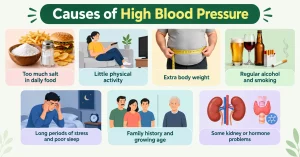
- Too much salt in daily food
- Little physical activity
- Extra body weight
- Regular alcohol and smoking
- Long periods of stress and poor sleep
- Family history and growing age
- Some kidney or hormone problems
Doctors often notice that a person who sits most of the day, eats packed food and sleeps late finds it harder to keep readings steady.
However, lifestyle is not the only factor. Some people develop high blood pressure even with a fairly healthy routine. This is why each person needs an individual check.
High Blood Pressure: Signs You Should Know
Most people with high blood pressure feel nothing, so the problem stays hidden. The phrase high blood pressure symptoms can even mislead us, because warning signs are often missing.
Very high readings may bring signs such as:
- A severe headache
- Chest pain or trouble in breathing
- Weakness or changes in vision
- Difficulty in speaking
If a reading is above 180 over 120 and these signs appear, get urgent help at once.
How Can Food and Daily Routine Help?
Food and habits are the base of long-term care. They do not need hard rules. Here are some natural ways to manage blood pressure that fit into a normal day:
- Cut down on extra salt in meals
- Eat fresh vegetables, suitable fruits, whole grains and pulses
- Keep away from packed and fried food
- Walk or exercise as your body allows
- Sleep and wake at fixed times
- Keep your weight in a healthy range
- Avoid smoking and limit alcohol
Small changes are easier to keep than strict plans. For example, if one hour of exercise feels too much, begin with a short daily walk and add time slowly.
How Does Ayurveda Approach Blood Pressure Care?
Ayurvedic treatment for high BP begins by understanding your lifestyle, nature and your health concerns, not by depending on one herb.
In Ayurveda, health is understood through the balance of three doshas: Vata, Pitta, and Kapha. Many Ayurvedic texts link a rise in blood pressure with disturbed Vata and Pitta. Stress, late nights, spicy food and irregular meals are said to increase them.
This is why two people with the same reading may need different care. One may need help with stress and sleep, and another with food and weight.
Long-term medicines can bring numbers down. Yet some people notice side effects such as dizziness or tiredness, while the habits behind the rise stay the same. This is why many families look for gentler, habit-based care.
How Does Jeena Sikho HiiMS Varanasi Approach Blood Pressure Care?
At Jeena Sikho HiiMS Varanasi , doctors may ask about meals, salt, water, activity, sleep, stress, digestion and past blood pressure reports. The aim is to find the root cause behind your readings.
Once the cause is clear, care is planned around therapies that work on it directly:
- Yoga and breathing practice: works on stress and a restless mind, which are common roots of a raised reading.
- Lower Leg Hot Water Immersion (LLHWI): Keeping the lower legs in warm water for 45 to 60 minutes helps the body relax and eases the tension that can keep pressure high.
- Hot Water Immersion (HWI): immersing the body in warm water for 45 to 60 minutes targets the stress and physical tension and supports rest.
- Nostril breathing: left nostril breathing is used for high BP and right nostril breathing for low BP, as it is believed to balance the body’s rest and alert response, which is closely linked to stress.
- Panchakarma: cleansing therapies that aim to remove built up toxins and dosha imbalance, used only when a person’s health suits them.
- Shirodhara: a slow stream of warm oil over the forehead calms the mind and addresses the mental stress, a common trigger for high readings.
These therapies are done under the guidance of a qualified doctor.
Supporting Daily Care With the BP Care Combo
Along with food, sleep and therapies, some people like to add a simple routine at home. The BP Care Acharya Ji Signature Combo has six Ayurvedic products in one pack: Gut Care, Mix Berry Juice, Pet Shuddhi Kit, Pure Shilajit, Dr. BP and Maha Rakt Chaap. It has herbs like Sarpagandha, Arjuna, Jatamansi, Brahmi, Triphala and Manjistha. Good digestion, less stress, better strength and clean blood all matter when we talk about blood pressure, so this combo keeps all of them in mind. For best results, use it regularly, eat less salt, and take it only with a doctor’s advice.

Why Personalised Care Matters for High Blood Pressure
Blood pressure does not rise for the same reason in every person. One may need to work on food and weight, while another needs to look at sleep, stress or kidney health.
So the types of blood pressure and their readings should always be read along with your overall health.
Conclusion
The types of blood pressure help us understand what different readings mean, but the number is only one part of the picture. Food, activity, sleep, stress, body weight and regular monitoring all matter. Ayurveda can offer a personalised approach that gives attention to the daily habits along with suitable medicines and therapies.
At Jeena Sikho HiiMS, people can discuss their health concerns and understand suitable Ayurvedic care. For the personalised guidance, you can book a VOPD consultation and speak with a qualified doctor from home.
FAQs
1. What is a normal blood pressure reading?
A normal reading is below 120 over 80 mmHg for adults.
2. What do the two blood pressure numbers mean?
The top number shows pressure when the heart beats, and the bottom shows pressure when it rests.
3. Does one high reading mean I have hypertension?
No, doctors usually look at repeated readings taken the right way before confirming it.
4. What are the main causes of high blood pressure?
Too much salt, little activity, extra weight, stress, poor sleep, smoking, alcohol and family history are the common causes.
5. Why is high blood pressure called a silent problem?
Many people have no warning signs, so the rise often goes unnoticed until a routine check.