
High blood pressure is one of those conditions that stays hidden for years and then shows up in the worst possible way. Most people only think about it as a single number on a machine, but that number tells you very little about what is actually happening inside the body. Once you start looking closer, you realize that the types of high blood pressure are not all the same, and each one acts differently.
Some develop slowly over decades, some appear suddenly because of another illness sitting underneath, and some only show up in a doctor’s clinic and disappear at home. Knowing which type you are dealing with involves far more than just knowing whether the reading is high or normal, because the cause decides the treatment.
In this blog, you will learn about the different forms of hypertension, how they differ from one another, the stages doctors use to judge severity, and what you can practically do about it.
What Is High Blood Pressure?
Blood pressure is simply the force your blood applies against the walls of your arteries as the heart pushes it around the body. When this force stays higher than normal for a long stretch of time, doctors label it as hypertension.
Different Types of High Blood Pressure Explained
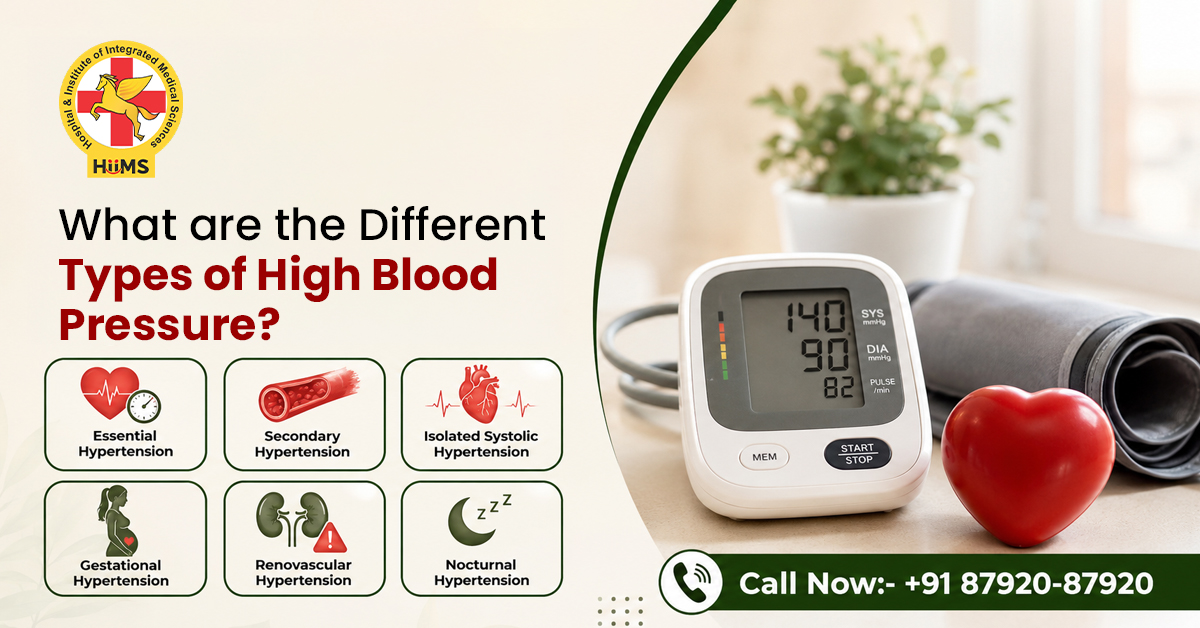
When people talk about the types of high blood pressure, they are usually referring to two broad categories that doctors rely on the most.
Primary (Essential) Hypertension
This is the most common form, and it does not come from one single, identifiable cause. Instead, it builds up gradually over many years as a combination of aging, genetics, weight gain, and daily habits stack on top of each other. Most people who eventually get diagnosed with primary hypertension never had one clear trigger. It simply built up quietly through years of sedentary living, poor diet, and family tendency toward the condition.
Secondary Hypertension
Secondary hypertension works differently because it has a direct, traceable cause. Conditions such as kidney disease, thyroid disorders, sleep apnea, or even certain medications can push blood pressure up within a short period. Identifying the exact cause here is extremely important, because treating the underlying condition often brings the blood pressure back down on its own, unlike primary hypertension, which needs long-term lifestyle management.
Other High Blood Pressure Types You Should Know
Beyond these two categories, there are several other high blood pressure types that often go unnoticed.
White Coat Hypertension
Here, the reading rises only inside a clinic or hospital, usually because of nervousness around the appointment itself, while home readings stay perfectly normal.
Masked Hypertension
This is the reverse situation. The reading looks normal at the doctor’s office but climbs higher once the person is back home, which makes it tricky to catch without regular home monitoring.
Resistant Hypertension
When blood pressure refuses to come down despite being on multiple medications, it is classified as resistant hypertension, and it usually needs a deeper investigation into what is actually responsible for it.
Isolated Systolic Hypertension
This form is common in older adults, where only the top number stays high while the bottom number remains within a normal range.
Hypertensive Crisis
This is the most difficult situation, where blood pressure shoots up to dangerous levels and needs immediate medical attention to prevent organ damage.
Understanding the Stages of High Blood Pressure
Doctors also classify the condition using specific stages of high blood pressure, which helps decide how urgently it needs to be treated.
- Elevated Blood Pressure: Systolic between 120-129, diastolic below 80.
- Stage 1 Hypertension: Systolic between 130-139, or diastolic between 80-89.
- Stage 2 Hypertension: Systolic 140 or above, or diastolic 90 or above.
- Hypertensive Emergency: Readings above 180/120, along with symptoms like chest pain or severe headache, which need emergency care right away.
| Category | Systolic (mmHg) | Diastolic (mmHg) |
| Normal | Below 120 | Below 80 |
| Elevated | 120–129 | Below 80 |
| Stage 1 | 130–139 | 80–89 |
| Stage 2 | 140 or higher | 90 or higher |
| Hypertensive Emergency | 180 or higher | 120 or higher |
What Increases the Chances of Developing Hypertension?
Several everyday factors silently push blood pressure upward over time, and understanding hypertension types becomes easier once you know what triggers them. These include age, family history, lack of exercise, obesity, a high-salt diet, chronic stress, smoking, excess alcohol, poor sleep quality, and existing kidney or thyroid conditions. None of these alone guarantee hypertension, but together they raise the level of risk considerably.
Are There Any Warning Signs?
Hypertension is often called the silent condition because it hardly ever shows symptoms until the numbers reach a dangerously high point. Once it does start showing signs, common ones include persistent headaches, dizziness, blurred vision, and chest discomfort.
Since these warning signs usually appear late, regular monitoring remains the only reliable way to catch types of hypertension early.
Ayurvedic Approach to Managing Different Types of High Blood Pressure
Individual Dosha Assessment
At Jeena Sikho HiiMS Hospital Varanasi, every case starts with understanding the person’s unique body constitution (prakriti) instead of just the reading on the machine.
Panchakarma Therapies
Traditional detoxification therapies help clear accumulated toxins that often sit at the root of long-standing high blood pressure.
Ayurvedic Herbs Recommended by Experts
Herbs known for supporting heart function and calming the nervous system are recommended based on individual need.
Diet and Daily Routine Guidance
A structured diet and daily routine plan helps correct the everyday habits that quietly keep blood pressure elevated.
Yoga, Pranayama and Stress Management
Breathing exercises, yoga, and stress management techniques are woven into the plan since stress plays a major role in most cases.
The entire treatment plan is personalized according to the person’s body constitution and root cause instead of focusing only on the reading itself.
When Should You Consult a Doctor?
You should reach out to a doctor if you notice persistent high readings, a sudden spike in blood pressure, chest pain, a severe headache, blurred vision, shortness of breath, or dizziness. Early diagnosis in these situations often prevents complications that are far harder to manage later.
Conclusion
Understanding the types of high blood pressure helps people notice the condition earlier instead of waiting for it to turn serious. Identifying the exact cause behind the reading is just as important as managing the number itself, since the right approach depends entirely on what is driving it.
At Jeena Sikho HiiMS, Ayurvedic principles, practical lifestyle guidance, and modern diagnostics come together to support long-term heart health through a personalized plan built around the individual, not just the reading on a machine. You can also opt for a VOPD consultation for your health concern with expert doctors at Jeena Sikho HiiMS.

FAQs
Q1: What are the main types of high blood pressure?
The main categories are primary and secondary hypertension, along with situational forms like white coat, masked, resistant, and isolated systolic hypertension.
Q2: What is the difference between primary and secondary hypertension?
Primary hypertension builds up gradually without one clear cause, while secondary hypertension develops quickly due to an identifiable underlying condition.
Q3: Which type of high blood pressure is the most common?
Primary hypertension accounts for the majority of cases, since it develops slowly through age, genetics, and everyday lifestyle habits.
Q4: Can high blood pressure develop without symptoms?
It absolutely can, which is why it earned the nickname “silent condition” and often goes unnoticed until readings become dangerously high.
Q5: How does Ayurveda view high blood pressure?
Ayurveda looks at hypertension as an imbalance within the body’s constitution and focuses on correcting the root cause through diet, herbs, and lifestyle changes.