


Men do not usually bother about prostate problems until they start experiencing urinary or other complications. Having to go to the bathroom frequently, trouble with passing urine and discomfort in the pelvis region are seen as problems of growing older. Though these symptoms could point towards some prostate disorders, ignoring them would not be wise at all times.
Cancer of the prostate gland occurs when there is an abnormal growth of the cells of the prostate gland in men. Prostate cancer in men is quite common in men, as it is one of the most diagnosed types of cancers. However, prostate cancer in some men progresses slowly and does not show any symptoms in its early stages.
Knowing about the cancer of the prostate, its causes, symptoms, stages and treatment options can help men make proper health-related choices. This blog post discusses the prostate cancer, the symptoms that it causes, diagnosis and the various treatment options that can be explored.
What Is Prostate Gland Cancer?
The prostate is a small, walnut-shaped gland below the bladder. It makes the fluid that carries sperm. Prostate gland cancer begins when cells in this gland change, grow in an uncontrolled way and form a tumour. In many men, the growth is slow and may stay inside the gland for years. In others, it grows faster and can spread to bones and other organs.
Prostate Cancer Symptoms
Early prostate cancer often causes no symptoms at all. That’s why regular check-ups matter, especially as you get older. When symptoms do appear, they can include:
- Trouble starting urination, or a weak or stop-start stream
- Needing to pass urine often, especially at night
- A feeling that the bladder is never fully empty
- Pain or burning while urinating or ejaculating
- Blood in the urine or semen
- Pain in the lower back, hips or pelvis that doesn’t go away
- Unexplained weight loss or tiredness in advanced cases
Here’s the important part: many of these signs can also come from a non-cancerous problem such as an enlarged prostate or a urine infection. You can’t tell the cause by symptoms alone, so a test is the only way to know.
Noticed changes in your urine flow, or passing urine more often at night? Don’t wait or self-diagnose. Get a prostate check-up done today.
Prostate Cancer Causes and Risk Factors
Changes in the DNA of prostate cells drive the abnormal growth. Some men are more likely to develop it than others. The main prostate cancer risk factors are:
- Age. The most common risk factor is age, and the older a man is, the greater the chance of getting prostate cancer.
- Family history. Having a first-degree relative with prostate cancer more than doubles a man’s risk. The risk may be higher if a relative was diagnosed at 55 or younger, or if family members have had breast, ovarian or pancreatic cancer.
- Inherited gene changes. The BRCA2 mutations increase the risk of prostate cancer that is more aggressive and develops at a younger age.
- Race and ethnicity. Black men have a higher risk of prostate cancer and are over twice as likely to die from it than white men.
- Lifestyle. Obesity, low physical activity and diets high in red meat or fat may raise risk. Men who eat a lot of red meat or high-fat foods may have a higher risk of getting prostate cancer. Healthy habits improve your overall health, but they aren’t a guarantee.
Prostate Cancer in Older Men
Prostate cancer in older men is far more common than in younger men. About 60% of prostate cancers are diagnosed in men 65 or older, and it is rare in men under 40. Because prostate cancer in older men often grows slowly, and because older men may have other health conditions, treatment decisions need care. Sometimes the right choice is close monitoring rather than immediate treatment. This is a decision to make together with your doctor, based on your age, general health and the type of cancer.
Prostate Cancer Stages
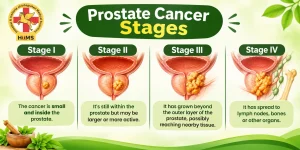
Doctors use stages and grades to describe how serious the cancer is.
- Stage I: The cancer is small and inside the prostate.
- Stage II: It’s still within the prostate but may be larger or more active.
- Stage III: It has grown beyond the outer layer of the prostate, possibly reaching nearby tissue.
- Stage IV: It has spread to lymph nodes, bones or other organs.
There are basically four prostate cancer stages in total, depending on the stage and whether it has metastasised. Another test that is done is the Gleason score that helps determine the aggressiveness of the cancer and how quickly it will spread. A low score indicates slow-growing cancer. This will assist the medical practitioners to come up with the best treatment method.
How Is Prostate Cancer Diagnosed?
- PSA blood test: PSA is a protein made by the prostate. A raised level can signal cancer but also infection or a harmless enlarged prostate. An elevated PSA doesn’t necessarily mean you have cancer.
- Digital rectal exam (DRE): The doctor feels the prostate for hard or uneven areas.
- MRI or ultrasound: Imaging shows suspicious areas.
How Jeena Sikho HiiMS Manages Prostate Cancer
The modern medicine treatment methods for prostate cancer, like surgery, radiation therapy, and hormonal therapy, are determined according to the nature of the cancer, its stage, and the general health of the patient. Although the above treatments are meant to either manage or even kill the cancer, their results as well as side effects may differ from one person to another. In addition to seeking treatment using conventional medicine, there are those who turn to Ayurveda to assist them in improving their overall well-being, lifestyle, nutrition, and quality of life.
Jeena Sikho HiiMS highlights Ayurvedic and lifestyle-focused support alongside medical evaluation and stresses that complementary therapies should be used carefully under qualified medical supervision. At HiiMS, Ayurvedic physicians may review your reports and health history, and based on your condition, they may provide guidance on:
- Diet: fresh, home-cooked, balanced meals, with attention to digestion and weight
- Daily routine: regular sleep, gentle activity and stress-reducing practices
- Supportive care: helping with general well-being, such as appetite, energy and comfort during conventional treatment
- Coordination: making sure any Ayurvedic advice fits with the treatment prescribed by your oncologist or urologist
Always tell the doctor and your Ayurvedic physician about everything you take, including herbs and supplements, since some can interact with cancer medicines.
Want supportive, lifestyle-focused guidance alongside your medical treatment?

Healthy Habits That Support Prostate Health
These steps can’t guarantee protection, but they support general health:
- Stay at a healthy weight and keep active most days
- Eat more vegetables, fruit, whole grains and pulses, and less red meat and fried food
- Limit alcohol and avoid tobacco
- Know your family history and share it with your doctor
- Get regular check-ups after 45 to 50, or earlier if you’re at higher risk
- Don’t ignore urinary changes, blood in urine or persistent back pain
Conclusion
Prostate cancer in men is common, often slow and, when found early, usually treatable. Age, family history, genetics and race are the biggest prostate cancer risk factors, and many men have no symptoms at first, which is why check-ups and honest conversations with your doctor matter. Prostate cancer stages and the Gleason score guide treatment, which can range from careful monitoring to therapy.
Don’t be embarrassed to talk about urinary or prostate problems. Early action gives you more options and more peace of mind. Lifestyle changes and supportive Ayurvedic guidance can complement medical care, but they should never replace it.
FAQs
Q1. What are the early signs of prostate cancer?
Early prostate cancer often has no signs. When they appear, they include a weak urine stream, frequent urination at night, trouble starting urination, blood in urine or semen, and discomfort while urinating.
Q2. At what age should men get checked for prostate cancer?
For men at average risk, the conversation usually starts at around 50. Men with a strong family history or who are at higher risk may need to start at 40 to 45. Talk to your doctor about what suits you.
Q3. Does a high PSA always mean cancer?
A raised PSA can also be caused by an enlarged prostate, infection or inflammation. It’s a reason for more tests, not a diagnosis.
Q4. Is prostate cancer curable?
Early, localised prostate cancer can often be managed, and many men live for many years after diagnosis. Advanced cancer that has spread is harder to cure but can often be controlled for years with treatment.
Q5. Can diet and lifestyle prevent prostate cancer?
A healthy weight, regular exercise and a balanced diet support your overall health and may help, but regular check-ups remain important.
References:
- https://pmc.ncbi.nlm.nih.gov/articles/PMC6375450/
- https://www.cancer.gov/types/prostate?