
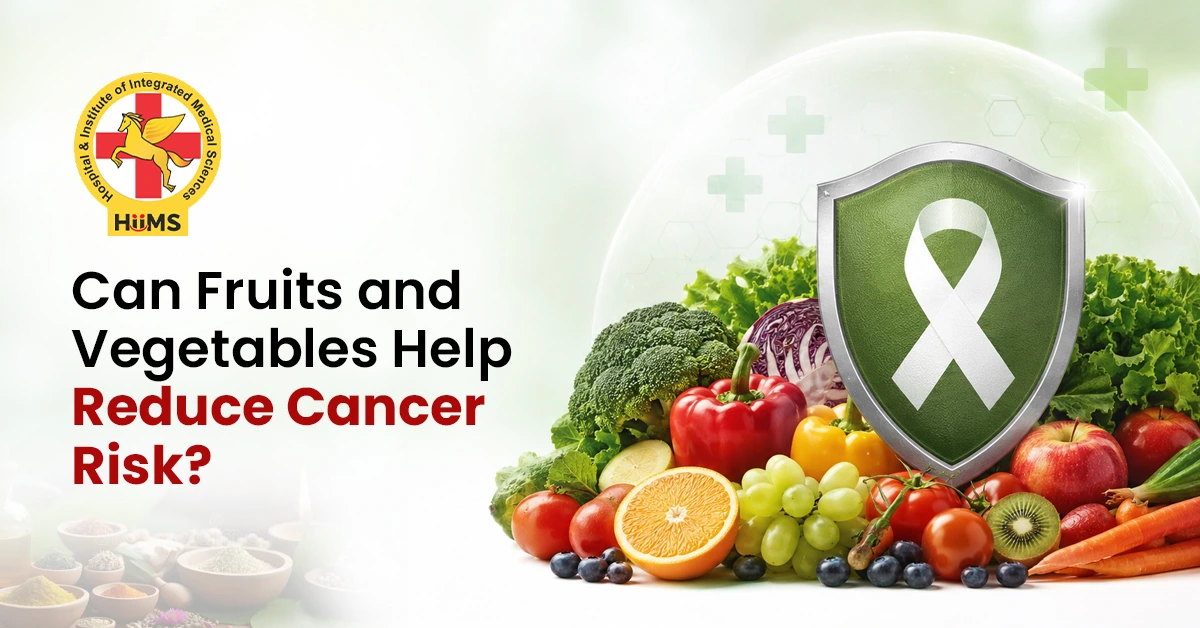
The risk of cancer can be affected by several things, including genetics, family history, lifestyle, environmental factors, and food habits. Although food alone cannot prevent cancer, the quality of our daily diet still matters for overall health.
Fruits and vegetables can be included as a regular part of balanced meals because they provide fibre, vitamins, minerals and many plant-based compounds. Research has found that eating patterns with a good amount of plant foods are linked with a lower risk of certain cancers.
However, this should not be understood as a promise that eati
ng a particular fruit or vegetable will prevent cancer. What matters more is the overall pattern of food choices made over time.
Adding different fruits, vegetables, whole grains and pulses to daily meals can be a simple way to follow a healthier diet. In this article, we will discuss how fruits and vegetables for cancer prevention may help, what choices can be made at home and how small changes in daily eating habits may support the overall health.
The Role of Fruits and Vegetables for Cancer Prevention
Fruits and vegetables contain a wide range of nutrients that the body needs. They also provide fibre and naturally occurring plant compounds. According to the World Cancer Research Fund, eating more fibre is strongly linked with a lower risk of bowel cancer.
Fibre may also help with maintaining a healthy body weight, which is important because excess body weight is associated with several types of cancer.
The benefit does not come from one particular fruit or vegetable. It comes from eating different plant foods regularly. For this reason, cancer prevention foods should be seen as part of an overall eating pattern rather than a special food remedy.
A colourful plate can be a simple way to bring variety into meals. Green leafy vegetables, carrots, tomatoes, beans, citrus fruits, berries and other seasonal fruits can all have a place in a balanced diet.
Which Fruits and Vegetables Can Be Included?
There is no need to search for expensive or unusual foods. Common fruits and vegetables can provide useful nutrients when eaten regularly.
Some good choices include:
- Green leafy vegetables such as spinach, mustard greens and coriander leaves
- Cruciferous vegetables including broccoli, cauliflower and cabbage
- Carrots, pumpkin and other orange vegetables
- Tomatoes and other red vegetables
- Guava, oranges, papaya, apples and seasonal fruits
- Berries when easily available
- Beans, peas and other pulses
Different plant foods contain different nutrients and natural compounds. Cruciferous vegetables, for example, contain compounds such as glucosinolates, while fruits and vegetables can provide carotenoids, flavonoids and other plant substances being studied for their possible protective effects.
This is why including a variety of healthy foods for cancer prevention is more useful than depending on one particular fruit or vegetable.
Why Fibre Matters in a Healthy Diet
Fibre is one of the important reasons vegetables, fruits, whole grains and pulses are encouraged in a healthy eating pattern. It helps add bulk to food and supports normal bowel movement.
Research by the World Cancer Research Fund shows strong evidence that foods containing dietary fibre can lower the risk of colorectal cancer. Fibre-rich foods can also help with maintaining a healthy weight.
Foods such as guava, apples, pears, vegetables, oats, whole grains, beans and lentils can contribute to daily fibre intake.
When thinking about cancer prevention foods, it is therefore better to look at the complete meal. A bowl of vegetables with whole grains and pulses is more meaningful than treating one food as a special answer.
Does Diet Really Affect Cancer Risk?
Research suggests that dietary patterns rich in vegetables, fruits, whole grains and beans are associated with a lower risk of certain cancers.
At the same time, diets high in highly processed foods, sugary drinks and processed meats are not considered supportive of cancer prevention.
The connection between diet and cancer risk is not about one meal or one day. It is about what a person eats most of the time.
A healthy eating pattern may include:
- Plenty of vegetables and whole fruits
- Foods such as oats, brown rice and whole wheat
- Beans, lentils and peas
- Nuts and seeds in suitable amounts
- Adequate water
- Fewer sugary drinks
- Less highly processed food
Such habits can also support healthy body weight and overall well being.
How to Include More Fruits and Vegetables in Daily Meals
It is easy to know that fruits and vegetables are good for health, but including them regularly can sometimes be difficult. A few small changes in everyday meals can make this habit easier to follow over time.
Try simple habits such as:
- Add one fruit to breakfast.
- Keep seasonal fruits available for snacks.
- Add leafy vegetables to dal or vegetables.
- Include a bowl of salad with lunch when suitable.
- Add beans or lentils to regular meals.
- Choose whole fruits more often than fruit juice.
- Add different coloured vegetables to lunch and dinner.
- Try a new seasonal vegetable from time to time.
A simple goal is to include around five portions of fruits and non-starchy vegetables in your daily meals.
However, someone who currently eats very few vegetables does not need to reach this amount immediately. Adding one extra portion and gradually building the habit can be a practical beginning.
Can Ayurvedic Eating Habits Support This Approach?
Traditional Indian food habits have long included seasonal fruits, vegetables, leafy greens, pulses, grains, herbs and simple home-cooked meals. Such foods can naturally become part of a balanced daily routine.
Ayurveda also gives importance to fresh food, proper digestion, seasonal eating and suitable food combinations according to individual needs.
From this point of view, choosing fresh seasonal produce and eating meals in a simple and balanced manner can be a sensible approach.
Still, food should not be considered a guaranteed way to prevent cancer. Fruits and vegetables for cancer prevention are best understood as one part of a healthy lifestyle.
Regular physical activity, healthy body weight, avoiding tobacco, limiting alcohol and other healthy habits also matter.
What Should You Remember?
The most important point is that there is no single miracle food. A healthy diet works through regular habits.
A practical daily plate can include:
- A good portion of vegetables
- One or two servings of whole fruit
- Whole grains according to personal needs
- Pulses or other suitable protein sources
- A small amount of nuts or seeds
- Enough water throughout the day
Rather than asking which one food can prevent cancer, it is better to ask whether the overall diet is rich in natural, fibre-rich and nourishing foods.
Conclusion
Eating a good variety of fruits and vegetables can be helpful for maintaining overall health and may play a role in lowering the risk of certain cancers.
They contain fibre, vitamins, minerals and several natural plant compounds that the body uses for its normal functions. Fruits and vegetables for cancer prevention should be included as part of a balanced lifestyle rather than considered a cure or a sure way to avoid cancer.
Seasonal fruits and vegetables, whole grains and pulses can make everyday meals more wholesome, while highly processed foods can be kept to a minimum. Making these choices regularly is often more useful than trying to follow a perfect diet.

FAQs
1. Can eating fruits and vegetables reduce cancer risk?
Eating a varied diet rich in fruits and vegetables may help lower the risk of certain cancers as part of an overall healthy lifestyle.
2. Which fruits are good for a healthy diet?
Guava, apples, oranges, papaya, berries and other seasonal fruits can be included in a balanced diet.
3. Is fibre important for cancer prevention?
Yes, fibre supports digestive health and higher fibre intake is associated with a lower risk of colorectal cancer.
4. Can an Ayurvedic diet include fruits and vegetables?
Yes, fresh seasonal fruits and vegetables can easily be included in traditional and balanced Ayurvedic eating habits.
5. Is diet the only factor that affects cancer risk?
No, cancer risk can also be influenced by factors such as genetics, lifestyle, environmental exposure, tobacco use, alcohol and body weight.
Disclaimer: The information provided on this blog is for general educational and informational purposes only. It is not intended to replace professional medical advice, diagnosis, or treatment. Always consult a qualified healthcare professional before making any changes to your diet, lifestyle, or treatment plan. Individual results may vary.