
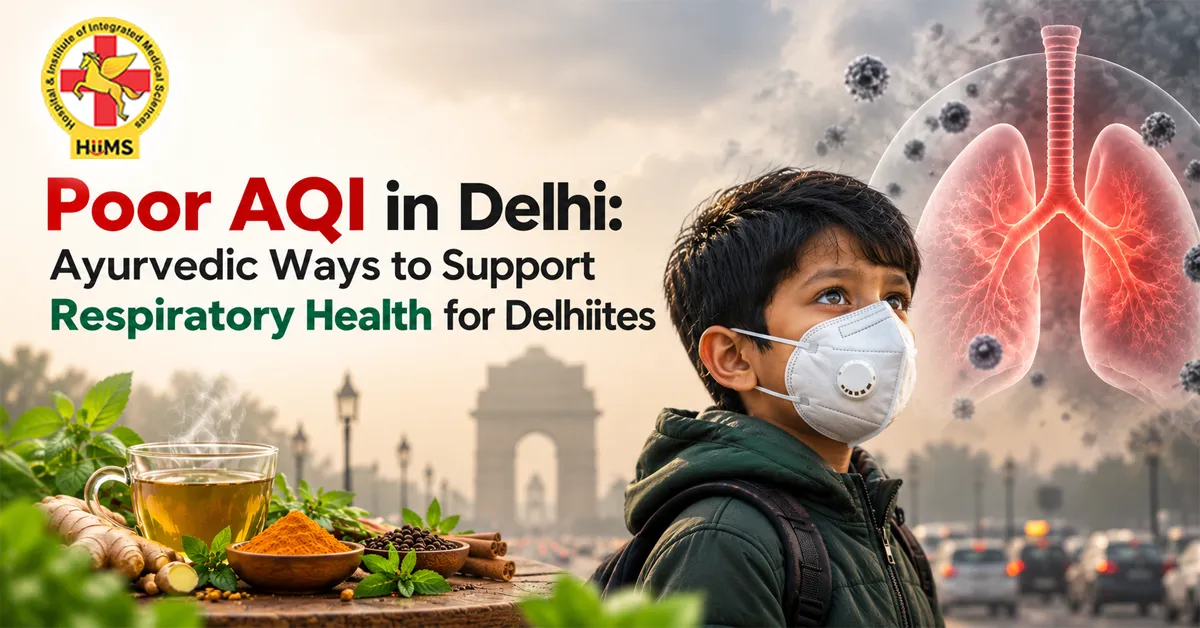

Change in the quality of air in Delhi is a problem for individuals who travel, exercise or work outdoors. On October 21, 2026, there was the first-ever bad day of air in Delhi when AQI rose to 245. This has been mentioned in the article “Delhi’s Poor AQI” published in The Week. The poor air quality can affect the breathing process and cause worry in case of children, elders or respiratory patients.
It is crucial for the citizens of Delhi to know how to protect themselves from being exposed to pollution as a part of their health care routine. Besides adhering to the guidelines regarding air quality, some healthy practices could keep you healthy and breathe easy. In Ayurveda too, emphasis is laid on daily routine, balanced diet, proper sleep, and seasonal care. Here we look at the Ayurvedic ways to support respiratory health, pollution prevention tips, and other practices that could help you take care of yourself in smog season.
How Does Poor AQI Affect Respiratory Health?
The Air Quality Index helps individuals know how polluted the air is around them. As stated by India’s Central Pollution Control Board (CPCB), the range of AQI from 201 to 300 means the pollution is on the poor side. Exposure to such levels will lead to breathing difficulties.
Air pollution comprises substances such as particles or gases that could irritate one’s eyes, throat, nose, and lungs. One may develop such effects as coughing, throat irritation, wheezing, a feeling of tight chest, and difficulty in breathing. People suffering from respiratory illnesses like asthma will be affected.

Ayurvedic Ways to Support Respiratory Health
Ayurveda emphasises daily routines, suitable food choices, adequate rest, and practices that support general well being. Though such Ayurvedic tips for lung health can be a supplement to pollution measures, they will not protect you from all the impacts of pollution.
1. Have a Simple Daily Routine
A simple routine on a daily basis will enable one to keep their timing right. This will include sleeping for enough hours, eating meals at regular intervals, and also not exerting oneself during pollution days.
On AQI days, it is advisable to conduct exercise and walks indoors rather than outdoors since the breath rates go up during physical activities, hence taking in more of the polluted air.
2. Eat a Well-Balanced and Nutritious Diet
The right diet keeps you healthy and also supplies the nutrients necessary for bodily processes. It should consist of a good mix of seasonal fruits, vegetables, whole grains, pulses, nuts, and other nutritious proteins.
Warm meals made of vegetables, such as vegetable soup, dal, and cooked vegetables can also be considered in the winter. But there is no special food item or diet plan in Ayurveda that cleanses the lungs of pollutants or keeps you safe from all health effects of air pollution.
Dietary recommendations of people who already have some disease conditions should be followed as per the advice of their health care provider.
3. Stay Well-Hydrated
Consume water throughout the day as per your body needs. Warm water or other warm beverages without caffeine content may help in soothing the throat in some cases.
Hydration maintains bodily functions but does not cleanse air pollution from the lungs. People who are advised to limit their fluid intake due to heart or kidney conditions must do so.
4. Practice Gentle Breathing Exercises Wisely
Light breathing exercises may assist some people to relax and be aware of their breathing process. In case you choose to practice, use a clean indoor place and make your exercise comfortable.
Do not practice strong breathing exercises, long breath retention, and strenuous pranayama when air quality is bad, especially for those suffering from asthma and other respiratory diseases. Do not continue practising in case you start feeling dizzy, coughing, having chest pains or difficulties breathing.
5. Be Careful With Herbal Remedies and Steam
Ayurvedic herbs are widely used in various wellness practices; however, their effectiveness in preventing respiratory problems caused by pollution is not scientifically confirmed. The herbs can have side effects and interfere with your medications; thus, you should consult a health care specialist before applying them.
Steam inhalation is an ineffective technique of cleaning the lungs from pollutants. Hot water and steam may burn your skin, so you should not use steam instead of medicine. If you have persistent coughing, wheezing, or breathing problems, you should consult a doctor.
Delhi Pollution Health Precautions to Follow During Smog Season
A healthy lifestyle approach is just an element of respiratory health. Reduction of pollution exposure is an important factor for good lung health during smog season, when the Air Quality Index of Delhi turns out to be bad. It may be achieved with the help of checking the air quality
Check AQI Before Going Outside
Check the official CPCB AQI dashboard before commuting, exercising, or planning outdoor activities. Air quality can vary between neighbourhoods and throughout the day.
Limit Outdoor Activities
In case of poor AQI, try to limit outdoor activities that are long and/or strenuous. Try to exercise inside and reschedule outdoor work that is not essential until the conditions become better.
Use a Well-Fitting Protective Mask
A well-fitting N95 or equivalent particulate respirator can help reduce exposure to airborne particles when worn correctly. Fit matters, and no mask provides complete protection against every air pollutant. People who have difficulty breathing or existing health conditions should seek appropriate advice about mask use.
How To Improve Indoor Air Quality
Close your windows and doors during high levels of outdoor pollution, if possible, and use an appropriate air purifier if you have one. Ensure regular maintenance and filter replacement as advised by the manufacturer.
Do not smoke indoors, burn incense or use other products that produce smoke. Air pollution occurs indoors too, so it is important to regulate ventilation depending on outdoor pollution.
Watch for Warning Signs
Do not ignore coughing, wheezing, chest tightness, and difficulty breathing. Consult a physician if you have any of these symptoms. Difficulty breathing, chest pain, and blue lips need urgent medical attention.
An Integrated Approach to Respiratory Wellness at Jeena Sikho HiiMS
The Jeena Sikho HiiMS approach is more about Ayurveda, life guidelines, and well-being care. People who are interested in adopting an Ayurvedic lifestyle for respiratory wellness are advised to consult with the hospital’s website and discuss their health issues with a medical professional.
At the same time, people must remember that Ayurvedic treatments should not be viewed as a means of detoxing the lungs. They cannot help to get rid of pollution-related damage to one’s body. Those people who have asthma or other pulmonary diseases should keep following the prescribed course of treatment.
Conclusion
Poor AQI in Delhi is a warning for the people to be serious about their respiratory health, especially during the smog season. In line with the air quality advisories, minimising outdoor activity, wearing a proper mask, and improving indoor air quality are some key precautions. While taking these measures, one can also adopt Ayurvedic practices like having a disciplined schedule, balanced diet, hydration, and relaxation for general wellness. But there is nothing in Ayurveda that can prevent one from polluted air.
If one faces breathing problems, he/she must consult a doctor.

FAQs
Q1. How does poor AQI impact breathing?
If the AQI is poor and one is exposed to this condition for long, they may suffer the breathing problems. These include coughing, irritation in the throat, wheezing and difficulty in breathing, especially for people with pre-existing lung diseases.
Q2. What are some ayurvedic methods of ensuring good breathing?
Ayurvedic breathing methods include ensuring regularity in day-to-day activities, having healthy balanced meals, having adequate sleep and engaging in breathing exercises under good indoor air conditions. However, this does not negate any precautions against polluted air.
Q3. What should be the precautions taken by people living in Delhi at the time of smog season?
One should know AQI levels, avoid prolonged outdoor activities during high pollution levels, wear an appropriate N95 respirator or another, and pay attention to indoor air quality. Follow the authorities’ recommendations.
Q4. Do herbal remedies help protect the lungs from air pollution and its effects?
Currently, there is no evidence that any herbal remedy will provide full protection to lungs from air pollution or undo pollution damage to the lungs.
Q5. Is it advisable to engage in physical exercise when the AQI is poor in Delhi?
Exercising outside should be reduced when AQI is bad as it might pose harm to your health. Check the official AQI notifications before exercising outside.