

Many people hear the words “heart failure” and fear that the heart has stopped. That is not what it means. Heart failure means the heart muscle has become weak or stiff, so it cannot pump enough blood for the body’s needs. Many people live for years with this condition when they notice it early, follow their cardiologist’s plan and build healthy daily habits.
Estimates suggest that India has between 1.3 and 4.6 million people with cardiac failure. In this blog, you will learn the symptoms, causes and risk factors of cardiac failure, the common management options and the Ayurvedic approach to heart health, which can support your routine alongside your doctor’s care.
What Is Heart Failure?
Your heart pumps blood to every part of the body. In cardiac dysfunction, the pump loses some of its strength. Blood and fluid may then back up in the lungs, legs and belly, and the body may not get enough oxygen-rich blood.
Doctors often group it into two main types:
- Weak pumping (reduced ejection fraction): The heart muscle is weak and does not squeeze well.
- Stiff heart (preserved ejection fraction): The heart squeezes normally but is too stiff to fill with enough blood.
Cardiac Dysfunction is usually a long-term condition. It needs regular follow-up with a specialist.

Which Heart Failure Symptoms Should You Watch For?
Heart failure symptoms often start slowly, and many people blame age or lack of fitness. Watch for these signs:
- Shortness of breath, especially when walking, climbing stairs or lying flat
- Needing extra pillows to sleep or waking up at night feeling breathless
- Swelling in the feet, ankles or legs
- Constant tiredness and weakness
- Sudden weight gain over a few days, caused by fluid build-up
- Swollen belly or loss of appetite
- A cough or wheeze that does not go away
- Fast or irregular heartbeat
Go to a hospital at once if you have:
- Severe breathlessness at rest or while lying down
- Chest pain or pressure
- Fainting or severe dizziness
- Coughing up pink or frothy sputum
These can be signs of an emergency. Do not wait for them to settle.
What Are the Main Causes of Heart Failure?
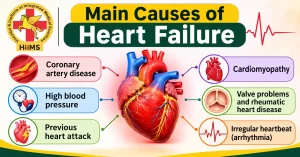
It usually follows another condition that has strained the heart over time. The main causes of heart failure include:
- Coronary artery disease: Narrowed blood vessels reduce blood supply to the heart muscle. In a study of 5,590 patients at a large Delhi-NCR hospital, coronary artery disease was behind nearly 78% of cardiac failure cases.
- High blood pressure: The heart works harder for years, and the muscle thickens and weakens.
- Previous heart attack: Damage to the heart muscle reduces its pumping strength.
- Cardiomyopathy: Diseases of the heart muscle itself.
- Valve problems and rheumatic heart disease: Damaged valves force the heart to work harder.
- Irregular heartbeat (arrhythmia): A very fast or uneven rhythm can weaken the heart over time.
- Other conditions: Diabetes, thyroid problems, severe anaemia, lung disease, heavy alcohol use and some infections.
In many cases, more than one of these conditions may affect the heart at the same time. Identifying the underlying cause through timely healthcare evaluation helps doctors decide on a suitable care plan.
Risk Factors for Heart Failure
Some factors raise your chances of developing heart failure:
- High blood pressure and high blood sugar
- High cholesterol
- Smoking and tobacco use
- Excess body weight
- Lack of physical activity
- Heavy alcohol use
- Long-term stress and poor sleep
- Family history and increasing age
- Untreated sleep apnoea
You can change many of these factors with daily habits. That is why regular health checks matter, even when you feel well.
What Does Research Say?
Researchers say that rising rates of high blood pressure, diabetes, obesity and smoking are likely to increase cardiac dysfunction in South Asia. A study of patients at an Indian tertiary hospital found that coronary heart disease caused about half of the heart failure cases, and high blood pressure caused around 15% to 27%. Rheumatic heart disease and heart muscle diseases also played a significant role.
Managing blood pressure, blood sugar, and blood vessel health early can lower the risk of heart failure.
Heart Failure Management Options
Heart failure management options depends on the cause, the type of cardiac failure and how severe it is. Your doctor decides the plan. It usually combines several steps.
Medical Management
- Medicines: Doctors commonly use medicines that ease the load on the heart, control blood pressure and remove extra fluid. Never stop or change them without your doctor’s advice.
- Devices and procedures: In some cases, doctors suggest devices such as a pacemaker or defibrillator, or procedures such as angioplasty, bypass surgery or valve repair.
- Regular tests: Blood tests, ECG, echocardiogram and follow-up visits show how your heart is doing.
These options help many people, but they may cause side effects such as dizziness, tiredness, frequent urination, infection, or bleeding.
Tell your doctor about any new symptoms, and never stop medicine on your own. This is why many people turn to Ayurveda, which offers gentle support for daily wellbeing.
How Jeena Sikho HiiMS Approaches Heart Health Through Ayurveda
Ayurveda looks at heart health in a wider way. It gives attention to food, digestion, daily routine, mental wellbeing and the general balance of the body. At Jeena Sikho HiiMS, the Ayurvedic approach to heart health focuses on the root cause of the condition rather than just the symptoms.

After a proper assessment, an Ayurvedic doctor may consider these options:
- Hridya Basti: Warm herbal oil is placed over the chest area for a set time. This traditional Ayurvedic procedure is used in selected wellness practices under expert guidance.
- Abhyanga and Swedana: Abhyanga is a traditional oil massage, and Swedana is a sweating or steam procedure. Both are used to support relaxation and general wellbeing.
- Panchakarma: A group of traditional procedures planned for each person, and it supports natural cleansing processes.
- Herbal support: Herbs such as Arjuna, Ashwagandha and Guggul have traditionally been used in Ayurveda. Their use depends on your health condition.
- Yoga, breathing practices and meditation: Gentle practices that support a calmer routine and better sleep.
Every person’s heart health is different, so the doctors plan care only after a proper assessment. With personal guidance on food, routine and traditional therapies, Ayurveda gently supports your heart’s wellbeing and helps you feel calmer, lighter and more comfortable in daily life.
Food and Daily Routine for a Healthier Heart
Simple, home-cooked food is often easier to maintain than a strict diet. These habits can help:
- Eat more fresh vegetables and seasonal fruits
- Include suitable whole grains, nuts and seeds
- Cut down on salty foods and packaged snacks
- Limit deep-fried and highly processed foods
- Avoid sugary drinks
- Eat meals at regular times and do not overeat
- Drink water as your doctor advises
Add gentle movement, such as a short daily walk if your doctor allows, and try to sleep and wake at fixed times.
Conclusion
Heart failure needs attention, but you do not have to face it alone. Notice the early signs, follow your doctor’s plan and build simple habits around food, sleep, movement and stress. These steps can help you feel stronger and more confident in daily life.
At Jeena Sikho HiiMS, doctors plan natural care around your body, your habits and your daily routine. With personal guidance on diet, lifestyle and traditional therapies, Ayurveda can support your heart wellbeing and help you feel more comfortable and confident every day.
Book a VOPD consultation today and get expert guidance from the comfort of your home.

FAQs
Q1. What are the common heart failure symptoms?
Shortness of breath, swelling in the feet or legs, constant tiredness, sudden weight gain and a cough that does not go away are common signs.
Q2. What are the main causes of heart failure?
Coronary artery disease, high blood pressure, a previous heart attack, valve problems and diseases of the heart muscle are the main causes.
Q3. Is salt a problem in heart failure?
Too much salt can make the body hold extra fluid, which adds strain on the heart. Ask your doctor how much salt and fluid suit you.
Q4. Can heart failure develop without symptoms?
In the early stages, symptoms may be mild or easy to miss. People often blame age or lack of fitness. Regular health checks help doctors notice problems early.
Q5. Is exercise safe with heart failure?
Gentle activity, such as a short daily walk, often helps. Always ask your doctor which type and how much exercise suits you.