

Have you ever had your eye pressure checked while your vision seemed perfectly fine? Most of us visit an eye doctor only when something feels wrong, and glaucoma rarely gives that signal early.
This blog covers glaucoma management in Jalandhar in plain words: how the condition is found, who is more likely to get it, what a visit to an eye doctor involves, and how Ayurvedic support can sit alongside your regular eye care.
Why Glaucoma Often Goes Unnoticed
Glaucoma is a group of eye conditions that damage the optic nerve, the cable that carries pictures from your eye to your brain. It is often linked with raised pressure inside the eye. The most common type builds up slowly and does not hurt. Side vision fades first, and the brain fills the gaps, so many people adjust without realising anything has changed. Damage that has already happened cannot be undone, which is why finding glaucoma early matters so much.
Awareness is a real gap. A survey in the Indian Journal of Ophthalmology covered 4,927 adults in rural North India. Only 409 of them (about 8.3%) had heard of glaucoma, and just 1.89% knew enough about it to meet the study’s criteria. The answers were self-reported on a questionnaire, so the numbers are a rough picture, but they show how little the condition is talked about. Good glaucoma management in Jalandhar starts with simply knowing that it exists.
Eye Issues?

How Glaucoma Is Diagnosed
A quick vision test with an eye chart cannot find glaucoma, because central vision stays sharp until late. An eye doctor usually checks several things in one visit:
- Eye pressure, measured with a gentle puff or a small probe (tonometry)
- The optic nerve, looked at through dilated pupils
- Side vision, using a visual field test
- The drainage angle inside the eye (gonioscopy)
- A scan of the nerve layer (OCT) and sometimes corneal thickness
Not every test is needed for everyone, and your doctor may repeat some of them over time, since glaucoma is judged by change from one visit to the next. Please bring old reports and your current eye drops to each visit, since these results are the basis for any plan for glaucoma management in Jalandhar.
Who Is More Likely to Develop Glaucoma?
Some people have a higher chance, and it helps to know where you stand. A 2020 study in the Delhi Journal of Ophthalmology examined 680 people from rural and peri-urban Aligarh in Uttar Pradesh and found glaucoma in 4.6% of them. Older age, a family history of glaucoma and a history of angle closure were linked with it. It was a small, cross-sectional study, so it shows associations and not causes. Doctors also commonly watch for:
- Age above 40
- A parent or sibling with glaucoma
- Diabetes
- High short-sightedness (myopia)
- Long use of steroid drops, tablets or inhalers
- A past eye injury
If two or more of these apply to you, ask for a full eye check even if you see well. Glaucoma care in Jalandhar is easier when it starts before symptoms do.
Choosing a Glaucoma Specialist in Jalandhar
A general eye check is a good start, but once glaucoma is suspected, it helps to see an ophthalmologist who looks after glaucoma regularly. When you look for a glaucoma specialist in Jalandhar, a few questions are worth asking. Which tests will be done, and how often will they be repeated? What is my target eye pressure? Which drops do I need, and what are their side effects? When would laser or surgery be discussed? Who do I contact if my eye becomes painful between visits?
Ask for your reports to be written down or given to you, so that you can show them to any doctor later. A specialist who explains your numbers in simple words is easier to follow up with, and follow-up is what protects your sight over the years.
Have an eye disease?
What to Expect When You See a Glaucoma Doctor in Jalandhar
The first visit usually takes a while, since eye drops that widen the pupils need time to take effect. Please go with someone, because your vision may be blurry and sensitive to light for a few hours afterwards. A glaucoma doctor in Jalandhar will ask about your family history, other health conditions and every medicine you use, including eye drops from a chemist. Based on your results, the plan may include pressure-lowering drops, laser treatment, or surgery, along with regular visits to monitor the optic nerve and side vision.
Eye drops work only when used every day at the right time, so ask your doctor how to fit them into your routine. When we go through someone’s medicines at a first visit, we usually ask to see the eye drop bottles, and timing is the thing most people are unsure about. Many people miss doses without realising it, so a phone reminder or a fixed link with another habit, like brushing teeth, helps.
Best Glaucoma Management in Jalandhar Starts With a Plan You Can Follow
People often ask where to find the best glaucoma management in Jalandhar. A better question is what a good plan looks like for you. It has a clear target pressure, a schedule for visits and tests, drops you can use without missing doses, and a doctor you can reach with questions. It also means that you tell your doctor about every other therapy you try, including Ayurvedic ones, so that nothing clashes with your drops.
Please never stop or change your eye drops on your own, even if your eyes feel comfortable, because glaucoma damage can continue without any symptoms. The same goes for follow-up visits: they are the only way to know whether your plan is working.
Glaucoma Care in Jalandhar Beyond the Clinic: Daily Habits
Good glaucoma care in Jalandhar also happens at home. These habits fit well with your doctor’s plan:
- Walk or exercise regularly, since staying active supports your overall circulation and weight, and ask your doctor about the right level for you
- Be careful with inverted yoga poses such as headstands, because the head-down position can raise eye pressure in some people, so ask your doctor before including them
- Eat plenty of vegetables, fruit and pulses, and drink water in small amounts through the day instead of a very large quantity at once
- Keep diabetes and blood pressure in check with your doctor, wear eye protection when working with tools, and have your eyes tested every year or two after 40, or earlier if glaucoma runs in your family
Ayurvedic Eye Support Alongside Your Eye Doctor’s Plan
In Ayurveda, glaucoma-like eye conditions are described under the name Adhimantha, and eye care is linked with digestion, daily routine and stress. At Jeena Sikho HiiMS, we offer Ayurvedic support for glaucoma management in Jalandhar and for eye health in general, along with your ophthalmologist’s care and never in place of it. Under Acharya Manish Ji’s guidance, this is what we may suggest:
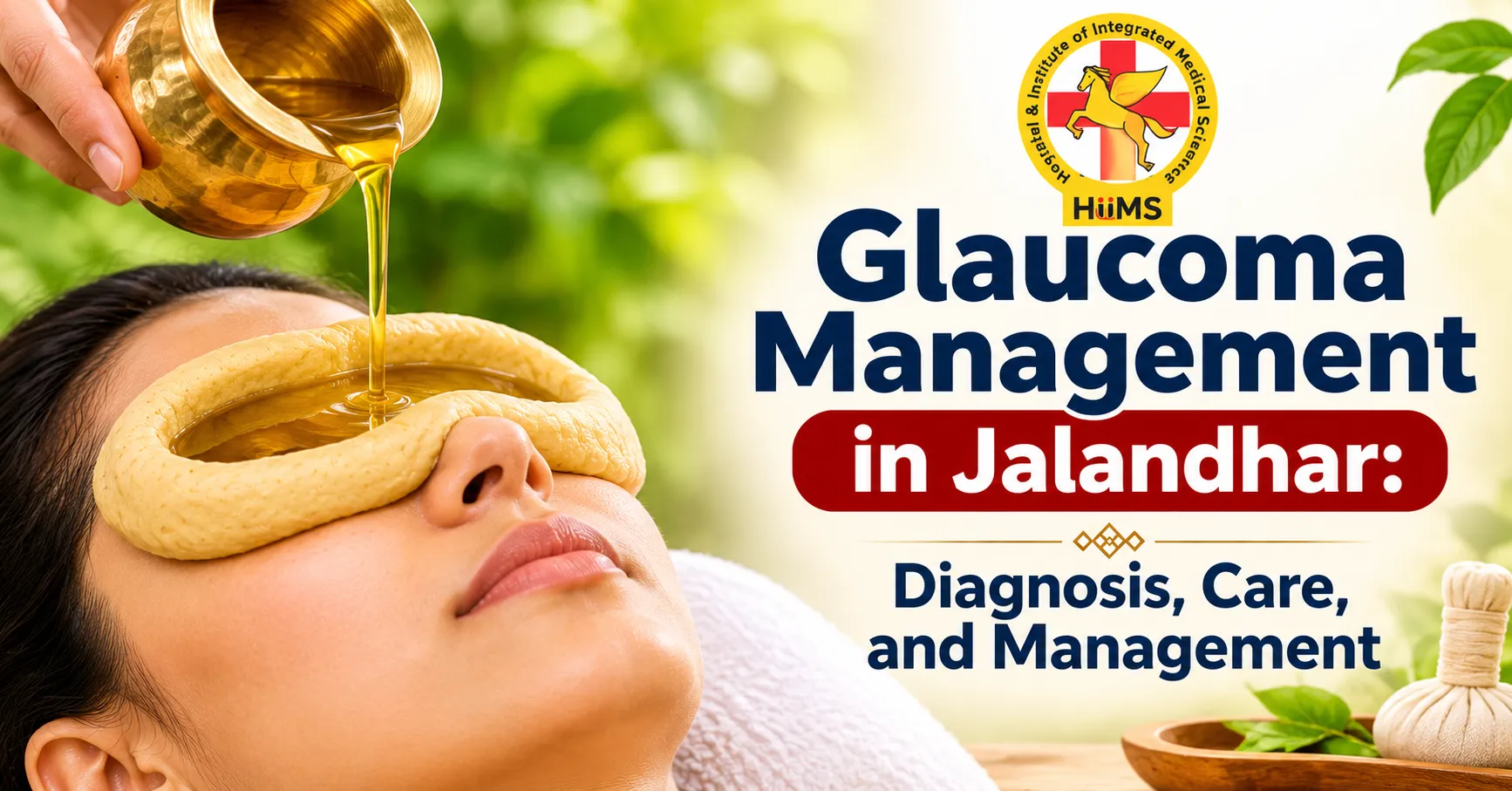
- Akshi Tarpan: a routine in which a ring of black gram dough is placed around each eye and lukewarm medicated ghee, such as Triphala ghrita, is held in it for a short time set by the doctor, followed by rest away from bright light, dust and screens. We offer it as a calming routine for tired, dry or strained eyes.
- Panchakarma: gentle options such as Abhyanga (oil massage) and Nasya (nasal drops), chosen by the doctor. Stronger therapies may not suit everyone, and some are advised against in weak or older patients.
- Yoga and breathing: gentle practice, with head-down poses avoided unless your eye doctor says they are fine.
Food follows Acharya Manish Ji’s two-plate pH-balanced diet. Plate 1 is raw food, such as seasonal fruit or a fresh salad, and Plate 2 is a cooked, millet-based meal with dal and vegetables, with dinner before sunset. The doctor adjusts it to your reports, especially if you have diabetes.
Please keep using your prescribed eye drops, keep every follow-up, and tell your glaucoma specialist in Jalandhar about every therapy you try.
When to Get Urgent Medical Help
A sudden, severe eye ache, a red eye with blurred vision, rainbow-coloured circles around lights, a headache with nausea or vomiting, or sudden loss of vision can point to a rapid rise in eye pressure. This needs an eye emergency visit the same day. Please do not wait for your next visit to the glaucoma doctor in Jalandhar, and do not try home routines.
Conclusion
Glaucoma is quiet, so regular eye checks, steady use of drops and follow-up visits do most of the work. Whatever the best glaucoma management in Jalandhar looks like for you, it begins with knowing your risk, choosing a doctor you can talk to, and keeping your plan in front of every doctor you see.
If you want diet and routine support to go with your regular glaucoma management in Jalandhar, our team at Jeena Sikho HiiMS is happy to go through your reports with you. Please do not stop any prescribed eye drops on your own.
Prefer to talk from home? Book a VOPD with Jeena Sikho HiiMS Jalandhar and review your eye reports with a doctor via video call.

FAQs
Q1. Can glaucoma be found with a normal vision test?
Usually not. Eye chart tests check central vision, while glaucoma affects side vision first. It needs a pressure check, optic nerve exam and field test.
Q2. Can glaucoma happen with normal eye pressure?
Yes. Some people have optic nerve damage even when their pressure reads in the usual range. That is why the nerve and side vision are checked too.
Q3. Can I stop my eye drops once my pressure is normal?
No. A normal reading often means the drops are working. Stopping can let the pressure rise again without any symptoms.
Q4. Do screens cause glaucoma?
Screens can tire the eyes, but they are not known to cause glaucoma. Take regular breaks and keep up your eye checks.
Q5. How often should I get my eyes checked if glaucoma runs in my family?
Many doctors suggest a full eye check every one to two years after 40, or earlier if you have other risks. Your doctor will set the interval for you.