

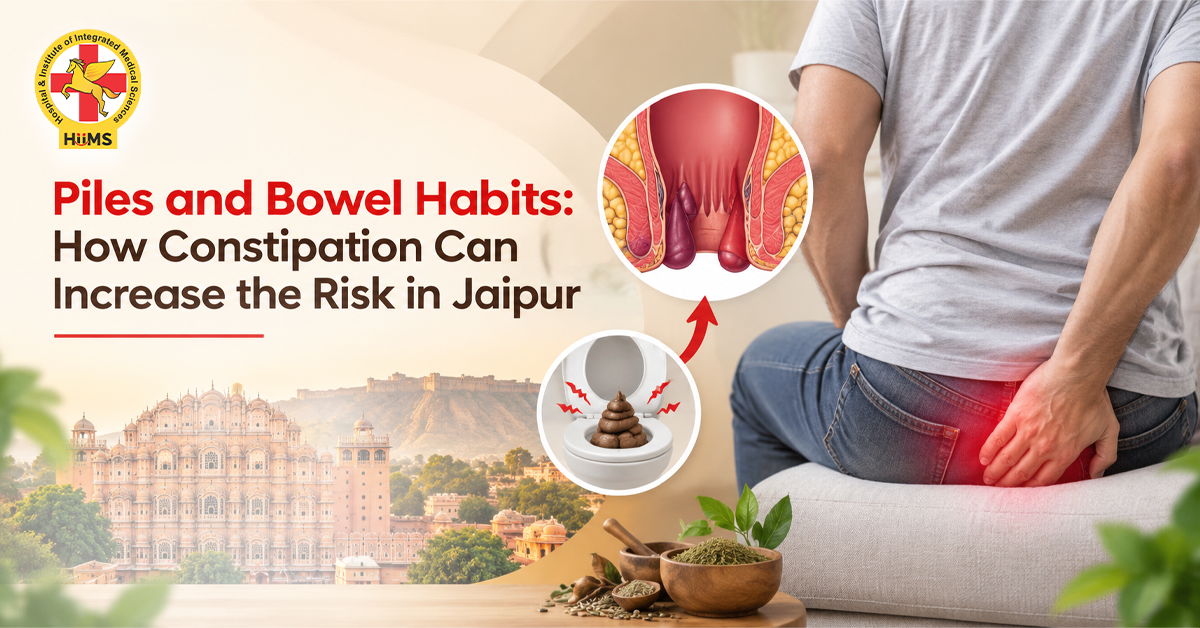
Sitting on the toilet way longer than you should, straining because nothing’s moving, and then noticing a bit of blood or discomfort right after: sound familiar? A lot of people go through this exact cycle for months before actually connecting the dots. Bowel habits and piles are way more linked than most people give them credit for, and if this keeps happening to you, it’s probably time to look into proper piles treatment in Jaipur instead of just pushing through it every single time.
Here’s how constipation actually feeds into your risk, what symptoms to watch for, and what real prevention looks like day to day.
Understanding the Link Between Constipation and Piles
NIDDK data puts it at roughly 1 in 20 Americans dealing with piles at some point, and about half of adults past 50 go through it too. Straining during bowel movements and ongoing constipation are widely seen as major triggers here, since that extra pressure on the veins around your rectum just keeps piling up over time.
Once you look at constipation and piles together like this, it makes a lot more sense why fixing one side of the equation usually eases the other.
Dealing with recurring constipation too? You can talk to the team at Jeena Sikho HiiMS about a proper digestive check alongside your piles evaluation.

What Are the Main Piles Causes You Should Know?
There’s rarely just one reason behind it. A few piles causes keep coming up again and again:
- Chronic constipation and repeated straining during bowel movements
- Low-fiber diet, too much processed or refined food
- Sitting for long stretches, desk or toilet, doesn’t matter which
- Pregnancy, thanks to the extra pressure around the pelvic area
- Lifting heavy stuff regularly without proper form
How Do Piles and Bowel Movements Actually Connect?
This trips a lot of people up, so let’s keep it simple. Every time you strain during a bowel movement, that pressure goes straight into the veins around your anus and lower rectum.
Do this over and over for weeks or months, and those veins start swelling up and losing their normal shape. That’s basically the whole story behind piles and bowel movements; it’s rarely one bad day. It’s a pattern that quietly builds up without you noticing.
What Are the Common Piles Symptoms to Watch For?
Catching early piles symptoms makes a real difference in how manageable things stay later on. Keep an eye out for:
- Mild bleeding you spot on toilet paper
- Itching or general discomfort around the anal area
- That nagging feeling that your bowel movement wasn’t quite complete
- A soft lump shows up whenever you strain
If a couple of these keep showing up together, get it checked rather than just hoping it goes away on its own.
Is Constipation Relief Enough to Prevent Piles?
Not completely, though it genuinely helps a lot. Proper constipation relief, more water, more fiber, staying active cuts down how often you’re straining in the first place, and that directly brings your risk down.
But if piles have already formed, relief alone won’t undo them. It mostly just stops things from getting worse while you sort out actual treatment.
Piles Prevention Tips for a Healthier Gut
Good piles prevention really just comes down to a handful of small habits, not one big overhaul:
- Drink enough water consistently through the day
- Eat fiber-rich foods: whole grains, vegetables, the basics
- Avoid sitting for long, uninterrupted stretches
- Don’t hold in the urge to go, since that makes stools harder and straining worse down the line
A Daily Combo That Supports Gut and Bowel Health
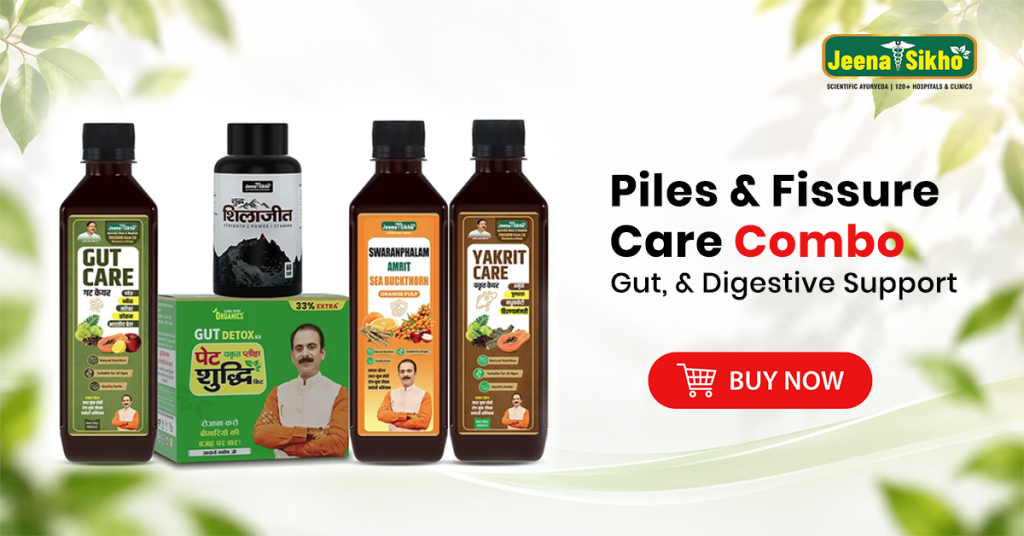
Alongside these habits, some people also look at daily Ayurvedic support to keep digestion and bowel movements on track. The Jeena Sikho Piles & Fissure Care Essential Combo brings together Gut Care Juice, Swaranfalam Amrit Sea Buckthorn Juice, Pet Yakrit Pleeha Shuddhi Kit, Yakrit Care Juice, and Pure Shilajit Capsules, made with ingredients like Amla, Giloy, Baheda, Harad, and Sea Buckthorn.
It’s designed to support regular bowel movement, natural cleansing, liver function, and everyday digestive comfort, taken as part of a daily routine rather than a one-time fix. This kind of consistent gut support works alongside the habits above, not instead of them.
Find more details here: https://store.jeenasikho.com/products/jeena-sikho-piles-fissure-care-combo?
What Does Piles Treatment Look Like at Jeena Sikho HiiMS Jaipur?
At Jeena Sikho HiiMS, piles treatment in Jaipur typically revolves around Kshar Sutra therapy, a traditional Ayurvedic method that uses a medicated herbal thread made with Snuhi latex, Apamarga Kshar, and turmeric. Here’s roughly how it goes:
- A first consultation to check the type and severity of your piles
- Mild local anesthesia, just to keep things comfortable
- The thread tied gently at the base of the pile, slowly cutting off the blood supply to the tissue
- Weekly follow-ups where the thread gets changed until the pile dries and falls off on its own
- Ongoing guidance on fiber, hydration, and bowel habits to support healing and cut down on recurrence
This piles treatment in Jaipur is considered minimally invasive, usually needs just local anesthesia, and doesn’t mean an extended hospital stay.
Conclusion
Piles tend to get harder to deal with the longer constipation and straining are left ignored, which is really why it makes sense to tackle both at once rather than treating them like separate problems. If ongoing discomfort or recurring symptoms have been bothering you, figuring out the actual root cause changes how you approach piles treatment in Jaipur from here on.
You can book a Free consultation with Jeena Sikho HiiMS and go through your specific symptoms with our team before deciding what’s right for you.

FAQ’s
1) If I fix my constipation, will my existing piles go away on their own?
Not usually. It stops things from getting worse, but piles that have already formed typically need actual treatment like Kshar Sutra, not just diet changes.
2) How long does Kshar Sutra therapy actually take?
The procedure itself is about 15-25 minutes, with the thread changed over the next few weeks as it works.
3) Is surgery the only option once piles get bad?
Not necessarily. Plenty of advanced cases respond well to Kshar Sutra therapy, which works as a real alternative to major surgery for a lot of people.
4) Can piles come back after treatment?
They can, but sticking to good diet and bowel habits afterwards brings the chances down quite a bit.
5) Does sitting for hours actually make piles worse?
Yes, especially prolonged sitting on the toilet, it adds pressure directly on the veins in that area and is a well-known contributing factor.