

Some people wake up already tired, even before the day starts. Others keep replaying small things in their head, and the thoughts do not stop when the work ends. A person may look calm from outside, yet inside, the mind may stay busy with fear, pressure, and constant overthinking.
Many people pass this away as normal stress because life today already feels fast and crowded. Still, when the same discomfort continues for weeks or months, it can slowly turn into an anxiety disorder. The early symptoms of anxiety disorder are important because they often show up before the problem becomes heavy.
In this blog, you will understand those signs, learn what causes anxiety, and see how simple support, daily balance, and the right treatment for anxiety can help a person feel more steady again.
What Is an Anxiety Disorder?
Normal worry usually rises for a reason and disappears once the situation passes. An anxiety disorder, on the other hand, stays longer, feels stronger, and starts to disturb ordinary life. The person may keep expecting something bad to happen, even when the day is quiet and nothing is clearly wrong. This kind of worry can slowly touch sleep, focus, confidence, and mood, and that is why it should not be treated like a small passing phase. Anxiety can affect daily life physically and psychologically, especially when the worry starts feeling hard to control.
How Anxiety Affects the Mind and Body Together
Anxiety does not stay in thoughts alone. The body joins in too, and that is where many people feel confused. A fast heartbeat, body tightness, stomach discomfort, tiredness, and restlessness often come together when the mind stays stressed for too long. When this pattern continues, the body starts reacting as if danger is always near, even during regular routines. That is one reason why what causes anxiety needs to be understood from both the mind side and the body side.
Symptoms of Anxiety Disorder You Should Not Ignore
Emotional and Mental Symptoms
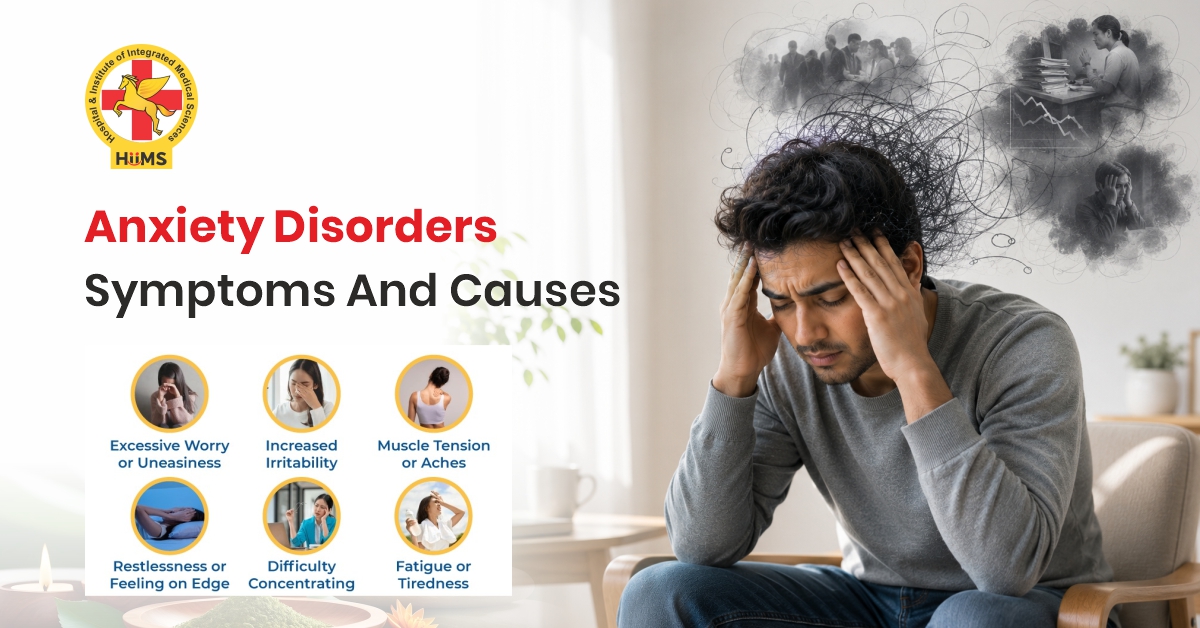
The earliest symptoms of anxiety disorder often begin quietly. Constant worry, fear without a clear reason, repeated overthinking, irritability, poor concentration, and a tired mind are common signs. Some people feel as if their thoughts are moving faster than they can handle, while others feel mentally stuck and unable to think straight.
Physical Symptoms Seen in Anxiety
The body usually speaks when the mind is carrying too much. Sweating, fast heartbeat, trembling, poor sleep, headaches, stomach discomfort, and constant tiredness are some common physical signs connected with anxiety. In some people, these signs come and go. In others, they keep returning and slowly disturb work, rest, and appetite.
Behavioural Changes That Slowly Appear
Anxiety also changes the way a person acts. Some begin avoiding social situations, while others lose confidence in conversation or feel unable to relax even in a peaceful place. Sometimes a person stops talking openly the way they used to, and even simple day-to-day work starts taking more mental effort. Most people do not notice this change early, but after some time it begins creating problems in studies, work, and relationships at home.
When Anxiety Starts Affecting Daily Life
When anxiety stays untreated for too long, it starts touching the practical parts of life. Work performance can drop, relationships may feel strained, studies may suffer, and the sleep cycle can become uneven. At that point, proper treatment for anxiety is no longer about comfort alone. It becomes a way to protect daily functioning and emotional health.
What Causes Anxiety Disorders?
Long-Term Stress and Emotional Pressure
A big part of what causes anxiety is long-term pressure that never really gets released. When a person keeps dealing with office pressure, family matters, financial tension, emotional stress, and continuous overthinking at the same time, the mind slowly starts feeling exhausted. The mind keeps carrying the same strain, and after some time, even a small problem can feel much larger than it is.
Poor Lifestyle and Daily Habits
Daily habits are more important than many people expect. Poor sleep, long hours on screens, very little physical movement, unhealthy eating habits, and too much caffeine can slowly disturb the body’s natural balance. Over time, these habits may make the nervous system more sensitive and the mind less able to recover from stress. In simple words, the routine itself can quietly feed the problem.
Past Emotional Experiences and Trauma
Old emotional pain can stay active in the memory for a long time. Painful memories, fear, family conflicts, or difficult experiences from the past can still affect the way a person reacts to situations, even after many years. The body may not remember every detail, but the mind often remembers the feeling.
Family History and Nervous System Sensitivity
Some people become more sensitive to stress because of family history and biological patterns. Research from NIMH notes that environmental and genetic factors both play a role in anxiety risk, which means sensitivity can build from more than one source.
How Overthinking Weakens Mental Calm
Overthinking keeps the nervous system active even when the body should be resting. The same worry gets repeated in different forms, and that loop slowly takes away mental quiet. Many people notice that once this habit settles in, it becomes harder to stop the mind from moving in circles. That is why anxiety therapy often includes habits that help the brain slow down instead of pushing it harder.
Sirovasti Ayurvedic treatment benefits
Sirovasti offers a wide range of health benefits, particularly for people dealing with mental and neurological issues. Below are some of the sirovasti ayurvedic treatment benefits :

Different Types of Anxiety Disorders
Generalized Anxiety Disorder brings ongoing worry about everyday problems. Panic Disorder causes sudden fear attacks that can feel overwhelming. Social anxiety disorder appears in situations where a person feels judged or watched. Phobias create intense fear around specific things or places. OCD-related anxiety patterns usually bring repetitive thoughts and repetitive actions that are hard to ignore.
When to Seek Proper Help for Anxiety
When worry does not settle for weeks, sleep keeps getting disturbed, panic becomes frequent, or fear starts affecting everyday life, it becomes important to take proper professional help. When emotional pressure becomes part of the daily routine, the condition usually needs proper attention rather than waiting.
Conclusion
Anxiety can look small in the beginning, but it often grows through routine, pressure, and silence. When the mind keeps running and the body stays tense, life slowly starts feeling narrower than before. That is why noticing the early symptoms of anxiety disorder is so important.
A calmer routine, better sleep, simple food habits, and steady support can make a real difference over time. The goal is not to fight every thought at once, but to create enough balance for the mind to settle again.
If your stress feels heavy or keeps returning, you can also opt for VOPD consultation for your health issue with expert doctors at Jeena Sikho HiiMS. Book an Appointment today to take the first step towards better mental well-being.

FAQs
- What are the early signs of anxiety?
Early signs often include overthinking, restlessness, trouble sleeping, and a feeling of unease that keeps returning. - How does anxiety show up in daily life?
It can affect focus, confidence, sleep, mood, and the way a person responds to routine situations. - What daily habits may increase anxiety?
Poor sleep, too much screen time, unhealthy food choices, and long hours of mental pressure can make anxiety worse. - Which natural practices may support calmness?
Simple breathing exercises, yoga, a steady routine, and cleaner eating habits may help the mind feel less strained. - When should someone speak to a doctor about anxiety?
When fear, worry, or sleep problems continue for weeks and begin disturbing normal life, professional help becomes important.
Disclaimer: The information provided on this blog is for general educational and informational purposes only. It is not intended to replace professional medical advice, diagnosis, or treatment. Always consult a qualified healthcare professional before making any changes to your diet, lifestyle, or treatment plan. Individual results may vary.
