

You are lying in bed, the lights are off, and everyone at home is asleep. But your mind is still awake. It keeps going back to a small mistake from work, or a conversation that ended awkwardly, or something that might go wrong tomorrow. Most of us have felt this at some point. A little worry is normal. It happens to almost everyone.
But when this worry stays for days, disturbs your sleep, changes your appetite, or makes it hard to focus on simple tasks, it is not just stress anymore. This is the point where anxiety treatment needs to be considered, not as a big medical step, but as a way to slowly feel calm again.
Before we talk about what helps, let us first understand what anxiety really feels like and why it stays for so long. This blog will guide you through both.
Anxiety Is More Than Just “Thinking Too Much”
People often say, “You are just overthinking,” but anxiety is not only in the mind. It shows up in the body, too. Your heart may beat fast for no clear reason. You may feel restless, tired, or find it hard to sit quietly. Sleep becomes light and broken, and focusing on small things feels harder than usual. Small problems start to feel bigger.
When this pressure continues for weeks without a break, the line between anxiety and depression can start to blur, even though both are different conditions. So why does the mind stay restless even when there is no real problem in front of you? Ayurveda has a simple answer for this.
Why Does Ayurveda Link a Restless Mind with Vata Imbalance?
In Ayurveda, this restlessness is connected to Vata dosha, the energy in the body linked with movement, both physical and mental. When sleep timings keep changing, meals are skipped, screen time goes on late into the night, and pressure keeps building without any break, Vata is believed to go out of balance. This imbalance is often linked with racing thoughts, sudden fear, and a mind that simply fails to quiet down.
That is why proper anxiety treatment in Ayurveda does not look at just one symptom. It looks at your food, sleep, daily routine, emotional stress, and overall health together. This naturally brings us to daily habits.
How to Control Anxiety? Start by Slowing Down the Day
A fixed routine helps more than people think. Waking up, sleeping, and eating meals at the same time each day gives your body less to react to. A day with no fixed pattern often leaves the mind feeling one step behind. A short walk of fifteen to twenty minutes outside, even barefoot on grass sometimes, is an old and simple grounding habit. Reducing late-night phone usage, keeping the phone away from your pillow, and spending a few quiet minutes in morning sunlight all help slowly. This is really how to control anxiety in a simple way, not through big changes, but through small habits repeated daily.
How to Reduce Stress Naturally with Breath and Quiet Time
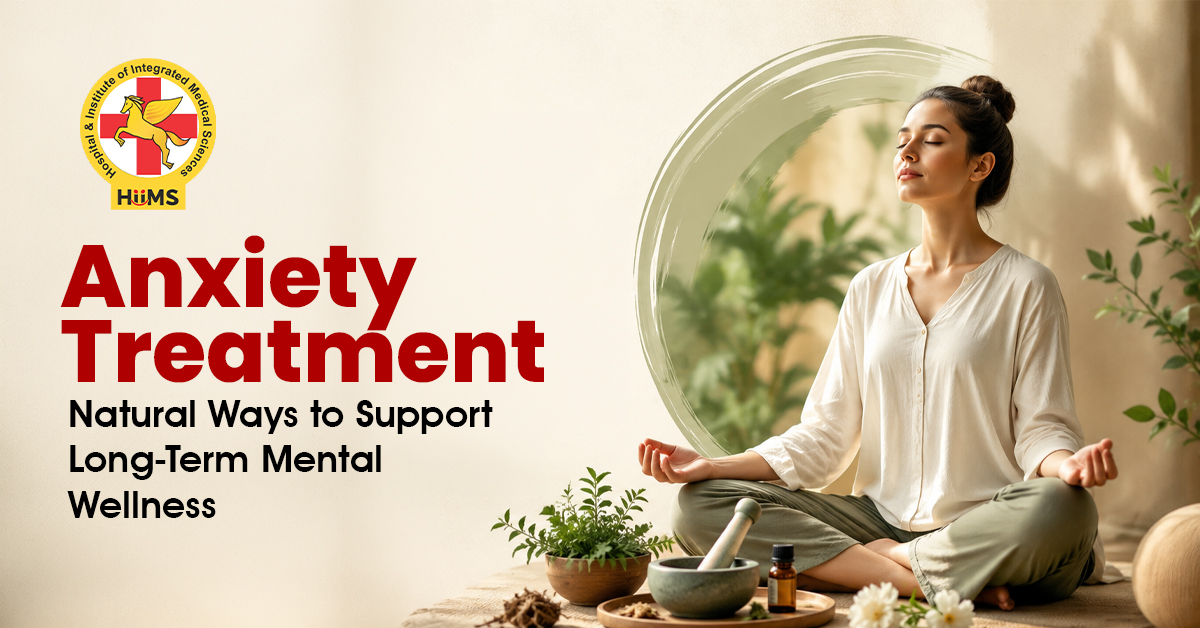
Slow breathing, including Bhramari pranayama, gives your nervous system a chance to pause instead of reacting constantly. Sitting quietly for even five minutes, along with gentle Om chanting, as guided by Acharya Manish Ji, can help calm a mind that has been running non-stop.
This is how to reduce stress naturally, not through willpower alone, but through small moments of stillness repeated often. Daily habits work well for many people. But some situations do need a proper, doctor-guided plan rather than just self-help at home.
Ayurvedic Therapies That Focus on Calm and Rest
Shirodhara is a therapy where warm herbal oil is poured slowly over the forehead. Many people find it deeply relaxing for an overactive mind. Abhyanga is a warm oil massage, used in Ayurveda as part of a wider body-care routine that supports rest and calm. Shirobasti, where warm oil is held over the head for some time, is another therapy sometimes suggested for long-standing restlessness. The right choice usually depends on a person’s health history, daily routine, and a proper check-up. This is what makes real anxiety treatment personal, not one-size-fits-all.
Conclusion
Calming a restless mind is not always about doing one thing right for two days and expecting quick results. It comes from regular sleep, simple food, daily walks, mindful breathing, and less screen time, along with proper guidance when needed.
Severe anxiety, panic attacks, or very low mood always need prompt professional help. Ayurvedic care should support this, not replace it. At Jeena Sikho HiiMS, the process starts by understanding a person’s daily habits and overall health before planning any Ayurveda, Panchakarma, yoga, or lifestyle guidance. Sometimes, feeling better simply starts with noticing that your mind has been asking for rest for a long time.
If this sounds familiar to you, you can book an online video consultation (VOPD) consultation with expert doctors at Jeena Sikho HiiMS.

FAQs
- What is a natural approach to anxiety treatment?
It usually means a combination of steady daily routines, outdoor walks, mindful breathing, and some Ayurvedic therapies chosen based on the person’s condition. - How to control anxiety when the mind keeps overthinking?
A short walk, fixed sleep timing, and a few minutes of slow breathing often help calm repeated worrying thoughts. - How to reduce stress naturally in everyday life?
Small changes like morning sunlight, warm home food, less screen time, and slow breathing build calm slowly over weeks. - Are anxiety and depression the same?
No, they are different conditions, but long-term anxiety can sometimes lead to low mood if it is not managed well. - Which Ayurvedic therapies are commonly used for a restless mind?
Shirodhara, Abhyanga, and Shirobasti are commonly suggested, depending on the person’s routine and overall health check-up.