
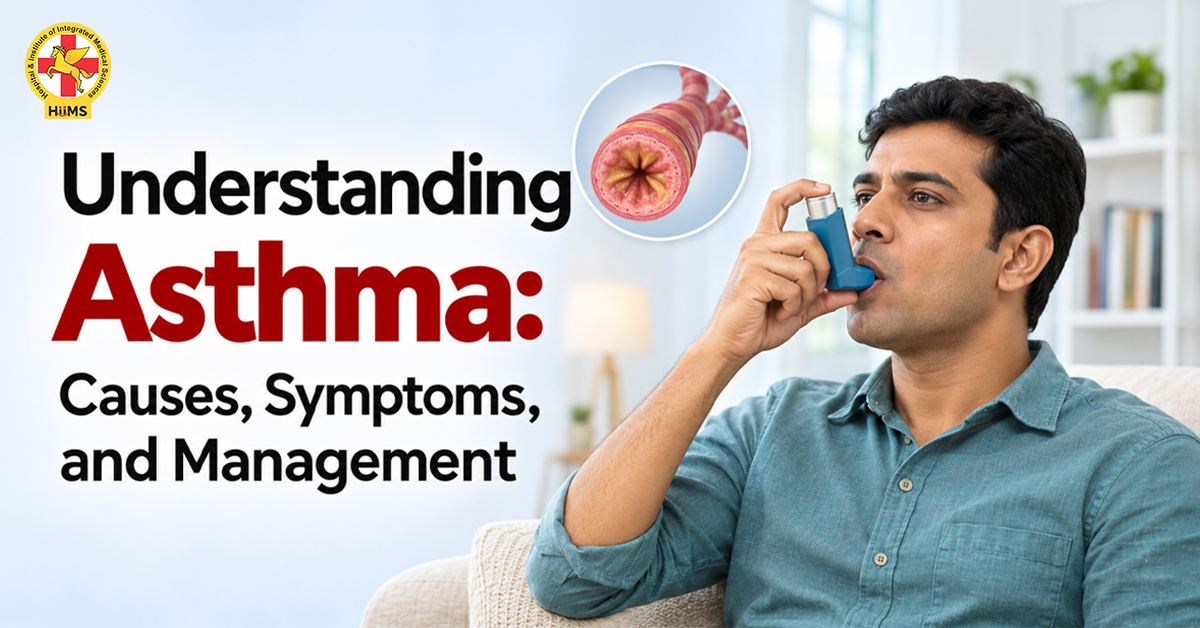

Asthma is a long-term condition that narrows the airways and makes breathing difficult. It can start at any age, and symptoms often come and go. Because of this, many people treat each episode on its own and miss the bigger picture.
A Lancet Global Health analysis of Indian states estimated that 37.9 million people in India had asthma in 2016. Many of them live with symptoms for years before they understand the triggers behind them.
This blog explains the causes, symptoms, and daily asthma management tips. It also covers when to see a doctor and how Ayurveda looks at the condition.
What Is Asthma?
In asthma, the airways become inflamed and narrow. The lining also produces extra mucus. As a result, air passes with difficulty, and a person may wheeze or cough. It affects children and adults alike and its severity ranges from mild to serious. Some people have symptoms only now and then, while others have them daily.
Symptoms flare when something irritates the airways. This is why triggers matter as much as the symptoms themselves. The next section looks at what causes asthma and what sets it off.
Wheezing or a cough that keeps coming back? Speak with our experts to understand what may be behind it.
What Are the Asthma Causes
Asthma has no single cause. Genes, surroundings, and daily exposures all play a part.
Allergens
Dust mites, pollen, pet dander and mould can inflame the airways in sensitive people. Even a dusty room or an old mattress can set off symptoms.
Air Pollution and Smoke
Smoke, vehicle fumes and cooking fumes irritate the airways. Over time, they can make asthma harder to control. People who live near heavy traffic or burn wood or coal indoors face higher exposure.
Respiratory Infections
Colds and chest infections inflame the airways. In children, they often bring the first episodes.
Family History
Asthma and allergies often run in families. So a family history raises the chance of developing it. However, a family history does not make asthma certain.
Cold Air and Weather Change
Cold air and sudden weather shifts can tighten the airways. This is why symptoms often rise in winter.
Workplace Dust and Fumes
Chemicals, flour dust, and fumes at work can trigger symptoms. Some jobs carry more exposure than others.
These causes often combine, so one trigger rarely acts alone. Knowing them helps you spot the signs early.
Knowing Asthma Symptoms
Asthma symptoms vary from person to person. They also change from day to day.
Wheezing
Wheezing is a whistling sound while breathing out. It is one of the most common signs. It may be louder at night.
Breathlessness
Many people feel short of breath during simple tasks. For example, climbing stairs may feel harder than before. It may ease with rest and return later.
Chest Tightness
Some people feel a band around the chest. It often comes with a feeling of heaviness.
Cough, Especially at Night
A dry cough that worsens at night or early morning is a typical sign. It can last for weeks.
Disturbed Sleep
Night-time coughing and wheezing break sleep. As a result, daytime tiredness is common. Over time, poor sleep also affects mood and focus.
Flares With Triggers or Exercise
Symptoms may rise with dust, smoke, cold air, or exercise. Noting what came before a flare helps find the trigger.
Symptoms alone cannot confirm asthma so a proper check is the next step.
When to See an Asthma Specialist and What to Expect
A general physician can start the evaluation. If symptoms keep returning, an asthma doctor can look deeper.
Doctors may advise a few tests. Spirometry measures how much air you breathe out and how fast. A peak flow meter tracks airflow at home. Allergy tests help find triggers.
Some signs need emergency care at once. These include blue lips, trouble speaking in full sentences and no relief from the usual reliever. Do not wait for these to settle.
Bring a list of your symptoms, triggers, and past reports to the visit. This helps the doctor see the full picture.
Not sure which tests you need? Our team can point you in the right direction.
Asthma Management: Daily Habits That Help
Good asthma management goes beyond medicines. Daily habits shape how often symptoms flare.
Know Your Triggers
Keep a short diary of what you ate, where you were, and how you felt before each flare. Patterns appear within a few weeks. Once you know them, you can avoid or reduce them.
Track Symptoms and Peak Flow
Regular readings show when control is slipping. This gives your doctor clearer information.
Breathing Exercises and Yoga
Breathing exercises and yoga help you breathe slowly and use your lungs fully. Regular practice can improve quality of life and ease everyday symptoms. Start with a few minutes a day.
Keep Indoor Air Clean
Wash bedding often and dust with a damp cloth. Avoid smoke and strong sprays at home. Keep windows closed on high-pollen or high-pollution days.
Eat on Time and Drink Enough Water
Regular meals and enough water keep the body steady. Avoid long gaps between meals.
Sleep and Stress
Poor sleep and stress can make symptoms feel worse. A fixed sleep time and a few minutes of slow breathing exercises help.
Want a daily routine that fits your triggers? Speak with our doctors.
Conventional Options for Asthma Relief
Conventional care uses reliever inhalers for quick asthma relief. Controller inhalers keep inflammation down over time and allergy medicines help when allergens are the trigger. These options help many people breathe easier. Your doctor may adjust the type and dose of medicine as your symptoms change.
However, relievers ease an attack but do not treat what causes it. Controller inhalers often need to be used for years, and symptoms can return when doses are missed. Some people also notice side effects, such as throat irritation or a hoarse voice. Because inhalers act on symptoms rather than the triggers behind them, many people also look at diet, routine, and Ayurvedic care.
The Ayurvedic View: Tamaka Shwasa
Ayurveda describes recurrent breathing difficulty with wheezing as Shwasa. Tamaka Shwasa is named for its night-time attacks. Vata and Kapha are the chief doshas. Ama (undigested waste) and weak digestive fire (Agni) also play a part.
In this view, asthma begins with weak digestive fire (Agni). It creates Ama, or undigested waste, which blocks the Pranavaha Srotas, the channels of breath. Aggravated Vata then dislodges Kapha in these channels, and the airways narrow. Ayurveda also lists dust, smoke, cold & damp surroundings, and heavy foods as triggers. These match many modern triggers.
Care follows the same order. It begins by avoiding the triggers and improving digestion using diet and lifestyle. It then uses therapies such as Snehana (oil massage), Swedana (steam), Vamana, and Virechana to clear the channels. Because care follows each person’s dosha balance, two people with asthma may receive different plans. Next, we look at how this approach applies in practice.
Asthma Care at Jeena Sikho HiiMS
Asthma often involves triggers, digestion, and routine together, so care needs more than one angle. Jeena Sikho HiiMS is an integrated hospital that combines Ayurveda, Naturopathy, Homeopathy, Unani, and modern science. Its doctors plan asthma care after assessing symptoms, triggers, and reports.
Want to know your Ayurvedic care plan for asthma? Connect with our Jeena Sikho HiiMS team.
CAAT Protocol
Jeena Sikho HiiMS uses the CAAT Protocol for asthma care. It is a simple practice of four steps that supports easier, calmer breathing. Each letter stands for one step —
- C – Capacity of Lungs: gentle forward-bending poses that open the chest and build lung capacity over time.
- A – Afferent Mismatch Correction: a small fan placed near the mouth for 5–10 minutes to help balance breathing signals.
- A – Air Flow: breathing in through the nose and out through slightly narrowed lips. In severe cases, breathe in and out through the mouth.
- T – Test: checking how much more comfortable you feel after each practice.
Panchkarma
Panchkarma is a set of cleansing therapies. For asthma, therapies such as Vamana and Virechana are used after assessment. A 2023 Journal of Ayurveda study of 30 patients compared Kulattha Guda alone with the same given after Virechana. Wheezing relief was 78.57% with Virechana and 70% without, and peak flow improved by 59.09% and 54%.
Herbal Support
Vasa, Pushkarmula, and Yashtimadhu are traditionally used for the chest and breathing. The doctor chooses herbs and doses for each person.
pH-Balanced Diet
This diet includes fresh fruits and raw vegetables, and meals are kept light. Light meals are easier to digest, which Ayurveda links to a stronger Agni. Salty, fried, and packaged foods are avoided.
Mind & Body Healing
Pranayama, such as Anulom-Vilom and Bhramari is combined with yoga and sleep guidance. Together they support calmer breathing and a steadier routine. Regular practice matters more than long sessions.
Conclusion
Asthma management works best when triggers, daily habits and the right care fit together. Tracking symptoms and keeping a steady routine make daily life easier. Ayurveda adds to this by looking at digestion, diet, and breathing practices, alongside regular guidance. With the right plan, breathing can feel easier and more settled.
Speak with the Jeena Sikho HiiMS team about asthma care from home. Book a VOPD (video consultation) to receive personalised guidance from our experts.

FAQs
1.What causes asthma?
Allergens, smoke, infections, cold air and family history are common causes. Often, more than one factor is involved.
2.What are the early asthma symptoms?
Wheezing, breathlessness, chest tightness and a night-time cough are common early signs.
3.Can asthma be managed with lifestyle changes?
Habits such as avoiding triggers, steady sleep, and breathing exercises help control symptoms. Your doctor can guide you on the full plan.
4.Which doctor should I see for asthma?
Start with a general physician. For repeated symptoms, a pulmonologist or allergy specialist can help.
5.How does Jeena Sikho HiiMS approach asthma care?
We plan care after assessing your symptoms, triggers and reports. It includes the CAAT Protocol, Panchakarma, herbal support, a pH-balanced diet, and Mind & Body Healing.