

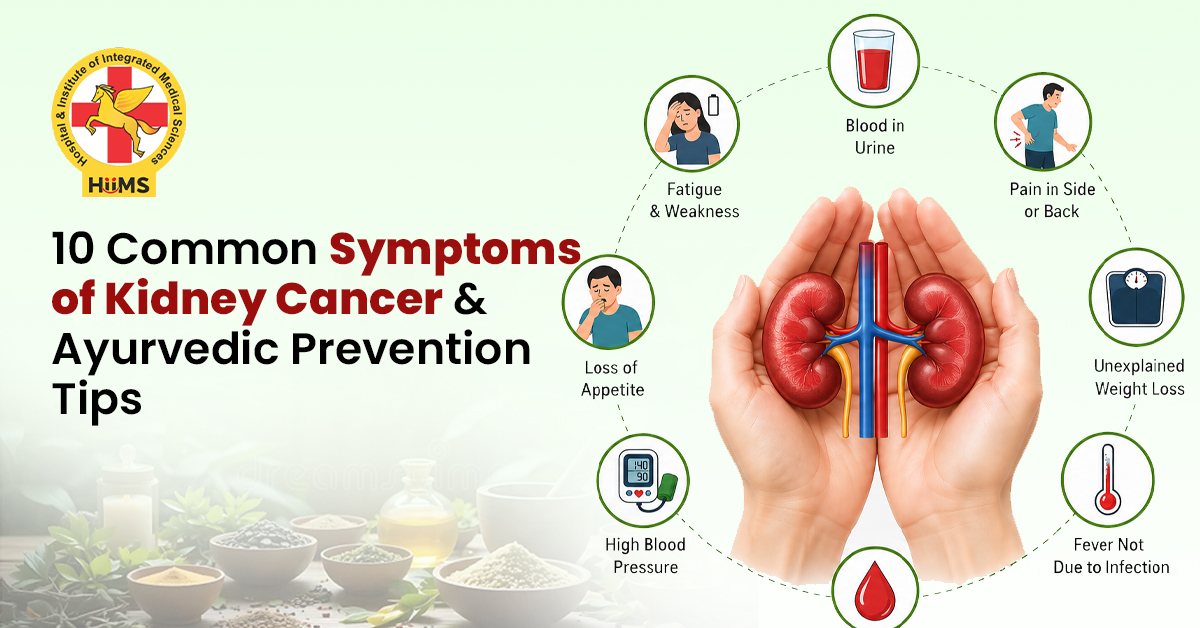

Most of the time, the body doesn’t suddenly show something serious; it starts with small signs. A little tiredness, a slight discomfort, or changes that seem minor at first.
We usually ignore them. Life gets busy, and it’s easy to think it’s just stress or routine. But sometimes, these small changes are worth paying attention to.
When it comes to kidney cancer, early signs can be very subtle, which is why awareness matters more than anything.
In this blog, we’re going to explore the kidney cancer symptoms, how they often go unnoticed, and how Ayurveda looks at prevention in a deeper, more grounded way.
What is kidney Cancer?
Kidney cancer begins when cells in the kidney start growing uncontrollably and form a tumour. It usually starts in the lining of tiny tubes inside the kidney.
Over time, if not detected early, it can affect kidney function and may spread to other parts of the body. That’s why it becomes important to be aware of its symptoms.
10 Common Symptoms of Kidney Cancer
Before anything becomes serious, the body usually gives hints. These are some of the symptoms of kidney disease your body might already be showing:
1. Blood in Urine
You might notice that the colour of your urine is pink, red, or slightly darker than usual.
2. The Unexplained Ache
A dull ache in the lower back or side that doesn’t really leave.
3. Physically, Something Feels Different
A little bit of heaviness or unevenness around the abdomen.
4. Always Feeling Tired
Feeling tired or weak all the time, even after enough sleep.
5. Anaemia
There is a decrease in red blood cells that makes you look pale and makes it hard to breathe.
6. Sudden Weight Drop
No diet, no extra exercise, yet the weight starts going down.
7. Loss of Appetite
A sudden, unexplained lack of interest in food.
8. Random Fevers
A fever that comes and goes without any clear reason.
9. Swelling in The Legs or Feet
Shoes feel tighter, or there’s a bit of puffiness by the end of the day.
10. Waking Up Sweaty
You wake up feeling slightly damp or uncomfortable.
What Can Increase the Risk of Kidney Cancer? (Common Causes)
It’s rarely one clear reason; it usually builds over time.
- Smoking
- High blood pressure
- Excess weight
- Family history
- Long-term chemical exposure
Individually, these may not feel serious, but over time, they can increase the risk of kidney cancer. This is why awareness at an early stage can have a significant impact.
How Kidney Cancer is Diagnosed
Once you notice kidney disease symptoms, proper diagnosis helps bring clarity.
Doctors recommend blood tests, urine tests, and imaging scans like CT or MRI. In some cases, a biopsy may be needed to confirm the condition.
This step helps you understand what the body has been trying to communicate. And once there’s clarity, the focus naturally shifts to what can be done next.
Ayurveda and Kidney Cancer: Looking Beyond the Disease
Ayurveda approaches things a little differently.
Instead of focusing only on kidney cancer, it tries to understand what may have been happening in the body. In Ayurveda, this imbalance is linked to Mutravaha Srotas (urinary system) and the buildup of ama (toxins).
It looks at the small, everyday things, your routine, digestion, stress, and how you’ve been living. Instead of trying to fix everything at once, the idea is to slowly help the body restore itself both mentally and physically.
Ayurvedic Prevention Tips for Kidney Cancer
In Ayurveda, it’s about living in a way that supports the body every day. The practice mainly consists of four things: Aahar (what you eat), Vihar (how you live), Shaman (natural support through herbs), and Shodhan (detox).
Vihar: How You Support Your Mind and Body
- Mind-body balance – this balance manages stress
- Yoga – this helps keep circulation active and the system functioning smoothly
- Meditation – even a few quiet minutes daily can help settle the mind and reduce internal strain
Aahar: What You Eat Every Day
- Balanced, simple meals – fresh fruits and simple sattvic foods that are easier for the body to process
- Alkaline water – supports hydration and overall system balance
- Intermittent fasting – giving the body enough time to rest between meals
In Ayurveda, food isn’t just fuel; it’s part of how the body maintains and repairs itself.
Shaman: Herbs That Support Kidney Health
Ayurveda also leans on natural herbs to support the body quietly over time.
- Punarnava – helps with swelling and supports kidney function
- Gokshura – supports urinary health and flow
- Varuna – helps in cleansing and maintaining balance
- Turmeric & Ginger – support the body in reducing internal inflammation
These aren’t quick fixes, but with consistency, they help the body stay supported.
Shodhan: Panchakarma (Detox) at Jeena Sikho HiiMS
Sometimes, basic habits aren’t enough, and the body needs a deeper reset.
That’s where Panchakarma comes in. It’s a guided Ayurvedic detox at Jeena Sikho HiiMS, built around five cleansing steps that help the body slowly clear out toxins and rebalance.
For kidney support, therapies like:
- Basti – supports kidney function and helps balance Vata
- Virechana – focuses on internal cleansing and removing toxins
It’s not rushed; it simply gives the body the space to reset and feel a little more balanced again.
Conclusion
The body rarely reacts suddenly; it signals first.
Kidney cancer, like many conditions, often begins quietly. The key is not to ignore those early signs or to keep pushing through the discomfort. Because the earlier you listen, the easier it becomes to respond.
If you’ve been noticing these symptoms or simply want clarity, you don’t have to figure it out alone. You can connect with Jeena Sikho HiiMS VOPD (video consultation) and speak with experts from the comfort of your home.

Sometimes, the right guidance at the right time makes all the difference.
FAQs
Q.1 What are the early signs of kidney cancer?
Ans: It often begins with small changes like tiredness, slight discomfort, or changes in urine that don’t feel serious at first.
Q.2 How does weight loss relate to kidney health?
Ans: A sudden drop in weight without any clear reason can be one of the body’s quiet signals.
Q.3 What increases the risk over time?
Ans: Things like smoking, high blood pressure, excess weight, or long-term exposure to chemicals can gradually add to the risk.
Q.4 What role does daily lifestyle play?
Ans: Simple habits like balanced food, movement, and stress management quietly support long-term health.
Q.5 How does Ayurveda look at this condition?
Ans: It focuses on understanding the body’s imbalance and supporting it through routine, diet, and overall lifestyle.

Leave a comment