


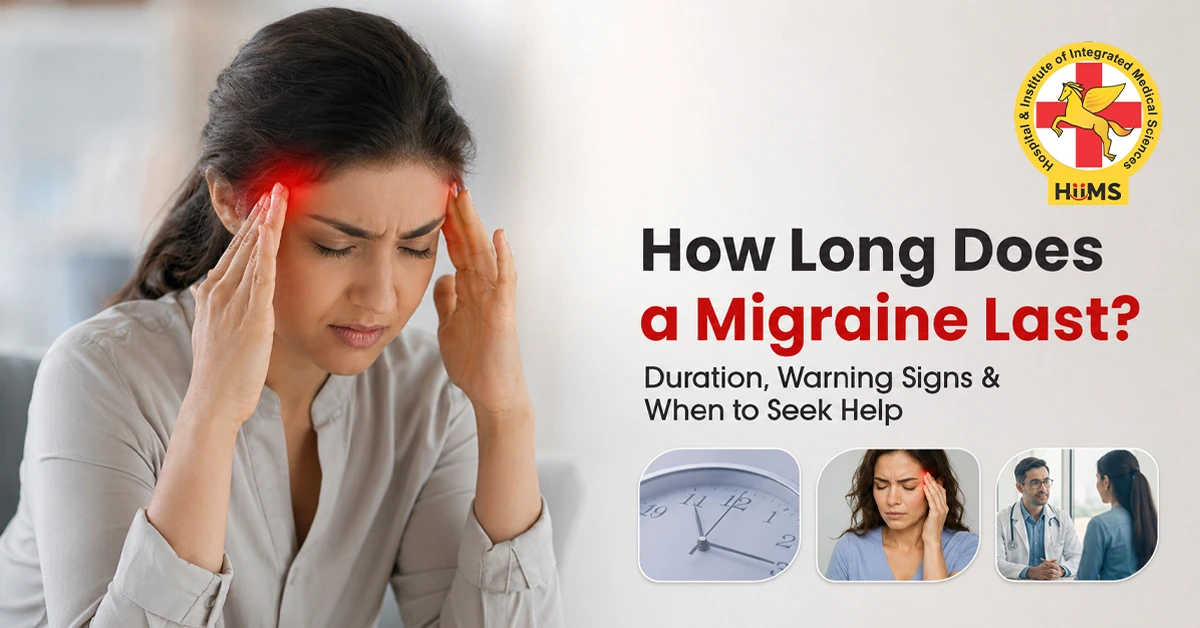
A migraine is not just an ordinary headache; it is accompanied by severe or throbbing headaches together with symptoms such as nausea, vomiting, dizziness, and sensitivity to light, sound, and smell. A migraine can last for a few hours for one person and for several hours for another.
Being able to tell how long a migraine lasts is important so that you are aware of what is normal for you. A typical untreated migraine attack can last between 4 and 72 hours, although the overall episode may feel longer because symptoms can occur before and after the headache itself.
Understanding migraine symptoms, possible triggers and warning signs can also help a person recognise an attack earlier and take suitable steps for migraine relief.
What Happens During a Migraine Attack?
A migraine attack can develop in different phases. Not everyone experiences all of them, and the duration can vary from one person to another.
How Migraine Pain Usually Begins
Some people notice changes before the actual headache starts. They will experience fatigue, have their moods affected, crave certain foods, have stiff necks, or be sensitive to lights and sounds.
Common Migraine Symptoms
During the headache phase, a person may experience moderate to severe throbbing or pulsating pain. Nausea, vomiting and sensitivity to light or sound are also common. Some people experience dizziness or visual changes.
How Long Can Different Migraine Stages Last?
The premonitory phase may occur for several hours or even days before the headache. Aura, when present, commonly lasts between 5 and 60 minutes. The headache phase generally lasts 4 to 72 hours, followed by a postdrome phase that may leave a person tired or mentally foggy for another day or two.
How Long Does a Migraine Usually Last?
In most cases, a migraine headache can last 4 to 72 hours if it is not successfully prevented or treated. Nevertheless, there is no fixed period of time that applies to everybody. Different people have different frequencies and durations of attacks.
Why the Duration of Migraines Can Be Different for Different People
Such conditions as a sleep disorder, stress, hormonal imbalance, dehydration, fasting, or other personal triggers influence how the attack manifests itself. Also, people need more time to recover after the attack.
Does the Postattack Condition Prolong the Duration of Migraines?
Yes, indeed there is such a thing as the postdrome stage, which is otherwise called the ‘migraine hangover’, wherein people would feel fatigue, lack of concentration, dizziness, or simply being not well even if the original pain is getting better.
What Are the Migraine Warning Signs to Watch For?
Identification of migrane warning signs will alert you to the possibility of a migraine attack coming your way.
Symptoms That Occur Before the Headache
These can include fatigue, changes in mood, craving for certain foods, concentration difficulties, stiffness of the neck, and sensitivities to light and sound.
Migraine Aura and Other Warning Symptoms
Some people experience an aura before or during the headache. It may cause flashing lights, zigzag patterns, temporary visual changes, tingling or numbness and speech difficulties. Aura generally lasts between 5 and 60 minutes.
Signs That a Migraine May Be More Serious
A sudden and extremely severe headache, new neurological symptoms, confusion, weakness, difficulty speaking, fever or a stiff neck should not simply be assumed to be a migraine. These symptoms may require urgent medical assessment.
What Causes a Migraine to Last Longer?
However, the exact migraine causes are intricate and vary from person to person. Various factors are responsible for triggering a headache attack or making it worse.
Common factors include stress, lack of sleep, missing meals, dehydration, hormonal imbalance, excessive light and smell, among others. Regular use of pain-relieving drugs may lead to medication overuse headaches.
Maintaining a diary on migraines helps one to know about the pattern of their headache attacks and the factors involved.
When Is Migraine Pain a Reason to Seek Medical Help?
Not every migraine requires emergency care, particularly when the symptoms are familiar and follow your usual pattern. There are some cases where you should seek immediate medical help.
Headaches that reach their full strength in just one to two minutes after a head trauma or along with weakness, numbness, trouble with speech, confusion, visual problems, fever, or neck stiffness should be brought to the attention of a doctor immediately.
A migraine headache lasting for more than 72 hours is a case known as status migrainosus and needs medical attention.
Will a Migraine Go Away on Its Own?
Some migraine attacks may gradually settle with rest, sleep and appropriate self-care. However, it is not a good idea to simply ignore frequent, severe or unusually long attacks.
When Rest and Self-Care Can Be Helpful
Relaxation in a dimly lit environment, proper hydration, balanced meal consumption, and limiting exposure to potential triggers can be an effective remedy for migraine relief for certain individuals.
When It’s Time To See a Doctor Because Your Migraine Symptoms Are Unbearable
If you experience attacks more often, feel them last longer than usual or find that they interfere with your job performance and daily routine, see your doctor.
What Can Help With Migraine Relief?
No one remedy fits all. According to a healthcare provider, medications can be prescribed based on the person’s health condition to control acute symptoms or as a preventive measure.
Apart from medications, getting enough sleep, taking meals at the right time, drinking plenty of water, handling stress, and knowing what sets off an attack can help in minimising their occurrence.
What Does Migraine Treatment Depend On?
The migraine treatment headaches depend on factors such as the frequency of attacks, the intensity of the pain, the symptoms that accompany it, and its impact on day-to-day activities.
Some individuals require medication only when a migraine headache occurs while others may require preventive treatments due to its frequency. This can be advised by a health practitioner.
The goal of care is generally to reduce the frequency, severity and impact of attacks and improve quality of life.
Could Ayurvedic Care Support Migraine Management?
Ayurveda takes an individualised approach that considers diet, daily routine, sleep, digestion and stress along with the person’s overall condition.
At HiiMS, supportive Ayurvedic care may include guidance related to food, routine, relaxation and selected therapies according to individual needs. Such care should be planned after proper assessment and should not replace medically necessary evaluation or treatment, particularly when symptoms are new, severe or unusual.
Conclusion
A migraine attack commonly lasts between 4 and 72 hours, but the experience can differ from person to person. Symptoms may also appear before the headache and continue after the pain has settled. Recognising your usual pattern, identifying triggers and following an appropriate care plan can help with better migraine management.
However, a sudden severe headache, new neurological symptoms or a migraine lasting more than 72 hours should not be ignored. If your attacks are frequent, severe or affecting your daily life, consider consulting a healthcare professional.
If you are looking for an individualised approach to migraine management and supportive Ayurvedic care, you can consult the experts through VOPD consultation at Jeena Sikho HiiMS.

FAQs
Q.1 For how long can one experience a migraine?
Ans: An average migraine attack lasts from 4 to 72 hours but depends on individual features.
Q.2 For how many years does a migraine last?
Ans: Migraine may be a recurrent disease lasting for several years; however, frequency and intensity of attacks vary in time.
Q.3 How long can you be suffering from a migraine and still be considered okay?
Ans: It is advisable that one seek medical help if a patient gets a migraine lasting for more than 72 hours, especially if the signs are atypical and/or severe.
Q.4 Can a migraine go away without treatment?
Ans: A few cases will resolve with adequate rest, but if not, severe migraines must not be ignored by a physician.