
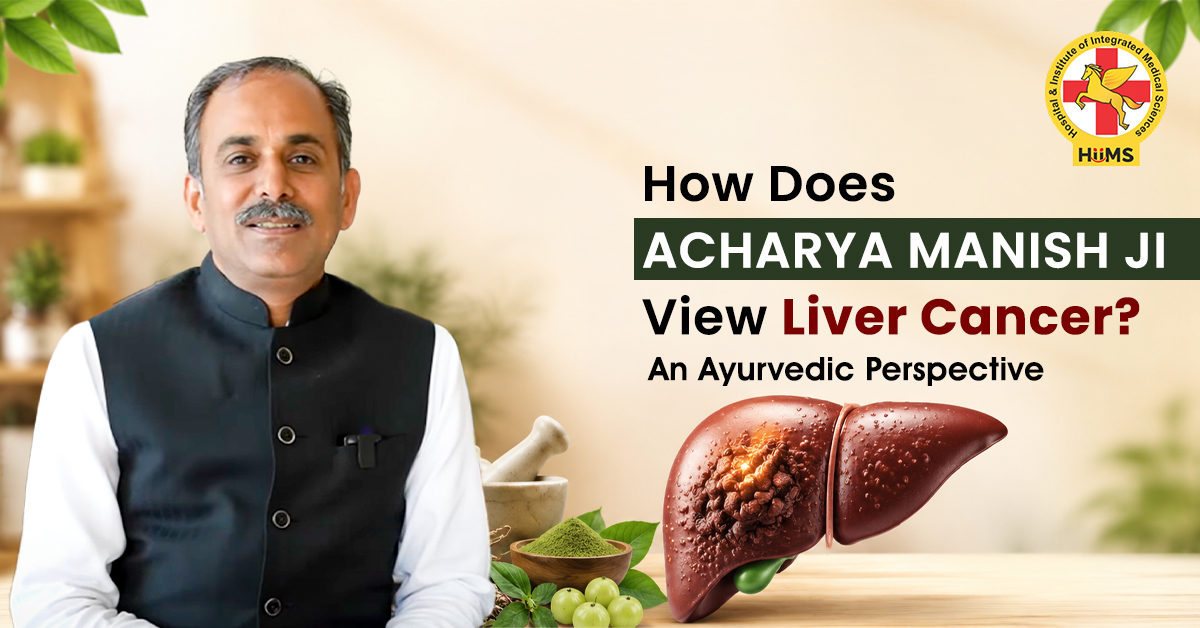

A liver cancer diagnosis brings a specific kind of fear, partly because the liver does so much quietly, filtering, processing, keeping the whole body balanced, that its failure feels overwhelming. Acharya Manish Ji often approaches this from a place of understanding rather than alarm, looking at liver cancer through the lens of Ayurveda alongside what modern medicine already knows.
This blog walks through the traditional Ayurvedic perspective to give you a fuller understanding of what’s actually happening in the body.
What is Liver Cancer? A Quick Medical Overview
Liver cancer, most commonly hepatocellular carcinoma, typically develops in the setting of chronic liver disease and cirrhosis. It’s among the leading causes of cancer-related death worldwide, largely because it often progresses silently for a long time before symptoms show up clearly enough to prompt testing.
Liver Cancer Causes: What Modern Medicine Points To
Medical research consistently points to a specific set of liver cancer causes:
- Chronic hepatitis B or hepatitis C infection, responsible for the majority of cases worldwide
- Long-term, heavy alcohol use
- Non-alcoholic fatty liver disease, closely tied to obesity and diabetes
- Cirrhosis from any underlying cause
- Exposure to aflatoxins, toxins produced by mould on improperly stored grains
- Certain hereditary conditions, like hemochromatosis
Not everyone with these risk factors develops liver cancer, and some people develop it without any known risk factor present. That unpredictability is exactly why routine screening matters for anyone at elevated risk.
Liver Cancer Symptoms Worth Knowing About
Early liver dysfunction often stays quiet, but a few liver cancer symptoms are worth paying attention to as things progress:
- Persistent fatigue and reduced appetite
- Unexplained weight loss
- Jaundice, yellowing of the skin or eyes
- Abdominal swelling or fluid retention
- Nausea, and in more advanced stages, cognitive changes
Because many liver conditions stay silent until real damage has occurred, routine medical evaluation genuinely matters for anyone carrying known risk factors, rather than waiting for symptoms to force the issue.
How Does Acharya Manish Ji’s Ayurvedic Perspective Explain Liver Cancer?
In Ayurveda, liver cancer is generally referred to as Yakrit Arbuda, with Yakrit meaning liver and Arbuda meaning tumour or abnormal growth. Acharya Manish Ji’s understanding, rooted in classical Ayurvedic texts, ties this to an imbalance primarily involving the Pitta and Kapha doshas.
Pitta governs metabolism and the body’s transformation. When aggravated, it upsets Rakta Dhatu (blood tissue) and Yakrit itself. This creates conditions for abnormal cellular activity to take hold. Kapha, which is associated with structure and stability, contributes to the mass-forming and stagnant quality of tumour growth when it is in excess in addition to disturbed Pitta.
It’s worth being honest here: classical Ayurvedic texts themselves describe many of these tumour conditions as serious and difficult to fully resolve, reflecting a level of realism worth respecting rather than glossing over.
What Role Do Ama and Weakened Agni Play?
Besides the dosha imbalance itself, Ayurveda points to two underlying conditions that permit this process to take root: Agnimandya, a compromised digestive fire, and Ama, the accumulation of undigested metabolic waste. When digestion slows chronically, undigested material accumulates instead of being properly processed and eliminated.
Over time, this Ama is believed to disturb the deeper tissues, including Rakta and Meda dhatu (fat tissue), creating the toxic internal environment that Ayurveda associates with tumour formation. Chronic alcohol use, wrong or incompatible food combinations, and long-standing emotional stress are all mentioned as contributing factors in this framework, patterns that interestingly overlap with several risk factors modern medicine has independently identified, too.
Can Ayurveda Actually Support Liver Cancer Care?
To a genuine degree, yes, though it’s important to be clear about what that support actually looks like. Ayurveda’s role here isn’t to replace oncology treatment; chemotherapy, surgery, or targeted therapy remain the primary path for treating liver cancer itself.
What Ayurveda offers, through Acharya Manish Ji’s approach, is supportive care working alongside that treatment, Panchakarma-based detox practices like Virechana to help ease Pitta-related inflammation, herbs like Guduchi traditionally used to support immune function and protect liver tissue from further toxin buildup, and dietary and lifestyle guidance aimed at reducing the strain on an already compromised organ.
Stress management and adequate rest are also emphasised, as emotional strain is considered a significant contributor to disease progression in this framework.
Conclusion
Understanding liver cancer through both a medical and Ayurvedic lens gives you a fuller picture, the specific causes and symptoms modern medicine has mapped clearly, alongside the dosha-based framework Acharya Manish Ji draws on to explain how and why this imbalance takes hold in the body.
Neither replaces the other, and any supportive Ayurvedic care should always be coordinated closely with your treating oncologist. If you’d like to understand how this kind of supportive approach could fit alongside your current liver cancer treatment, you can book a VOPD consultation with Jeena Sikho HiiMS and have that conversation directly with our team.

FAQs
Q.1 What is liver cancer called in Ayurveda?
Ans: It is generally known as Yakrit Arbuda. It is associated with imbalance of Pitta, Kapha doshas and Ama accumulation.
Q.2 Is Ayurveda an alternative to chemotherapy or surgery in liver cancer?
Ans: No, Ayurveda is a supplement to conventional oncology treatment not a replacement.
Q.3 What are the early symptoms of liver cancer to watch out for?
Ans: Among the first warning signs are constant fatigue, loss of appetite and unexplained weight loss, but many liver problems are silent at first.
Q.4 Is alcohol use linked to liver cancer in both medical and Ayurvedic views?
Ans: Yes, both modern medicine and Ayurveda identify long-term alcohol use as a significant contributing factor.
Q.5 Should I inform my doctor if I’m exploring Ayurvedic support for liver cancer?
Ans: Yes, always, coordinated care between your doctor and any Ayurvedic practitioner is essential for your safety.

Leave a comment