
A prostate cancer diagnosis often brings one question to the front of a man’s mind before anything else: why did this happen to me? It’s a fair question, and one that doctors get asked in clinics every single day.
And the honest answer is that there is no single, confirmed answer to the causes of prostate cancer. What researchers have found instead is a collection of factors that, together, raise the chance of the disease showing up. Age plays a part, genetics play a part, and so does the way a man eats, is physically active, and lives day to day.
Understanding these facts doesn’t just satisfy curiosity. In fact, it puts real, usable information in your hands for making better decisions about checkups, diet, and long-term health.
In this blog, you’ll get a clear, simple overview of how prostate cancer develops, the risk factors behind it, and practical steps that support prevention.
Understanding How Prostate Cancer Begins
To understand the causes of prostate cancer, it helps to know what’s actually happening inside the body. Every cell in the prostate carries a kind of internal instruction manual, written in its DNA, that tells it when to grow, when to divide, and when to stop.
In a healthy prostate, this system runs smoothly in the background without any kind of complications. Cancer starts when something disturbs those instructions. The DNA inside certain cells changes, and instead of following the normal growth pattern, those cells start multiplying faster than they should and choose not to die the way healthy cells do.
Over time, this accumulation of abnormal cells can form a tumor. Scientists still don’t fully know what triggers these DNA changes in every case, which is exactly why prostate cancer research remains such an active field today.
What Causes Prostate Cancer?
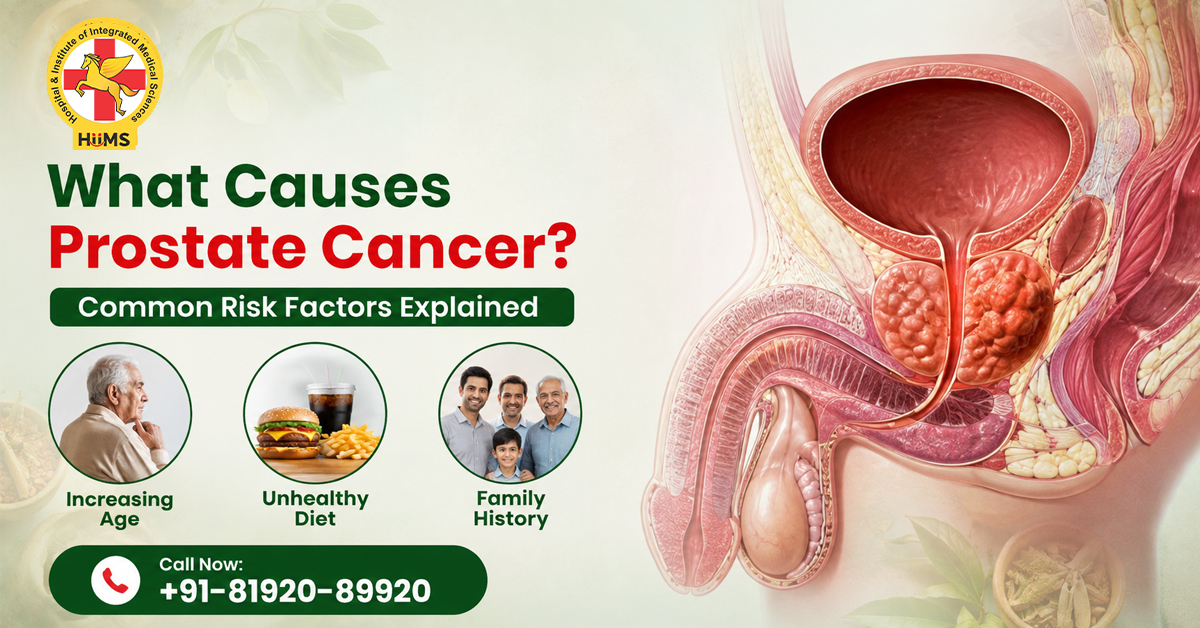
Most doctors agree that prostate cancer very rarely comes from one particular trigger. It usually develops from a combination of things working together: a man’s age, the genes passed down through his family, his everyday habits, and even his surroundings.
Having one or two of these prostate cancer risk factors doesn’t guarantee a diagnosis, and plenty of men with several risk factors never develop the disease at all.
But the more of these elements that add up, the higher the overall chance becomes. That’s the real value in learning what causes prostate cancer, it changes the conversation from fear to informed decision-making.
Common Prostate Cancer Risk Factors Explained
Age Is the Biggest Risk Factor
Among all known prostate cancer causes, age stands out as the strongest one. The disease is uncommon in men under 50, but the numbers increase significantly after that point. As the body ages, cells divide more times over a lifetime, and each division carries a small chance of a copying error in the DNA. Those small errors accumulate, which is part of why older age and cancer risk tend to move together.
Family History and Inherited Genes
If a father, brother, or other close male relative has had prostate cancer, personal risk goes up noticeably. Some of this connection traces back to inherited gene changes, including mutations like BRCA, which are more widely known for their link to breast cancer but also raise prostate cancer risk.
Obesity and Unhealthy Lifestyle Habits
Carrying excess body weight, staying largely inactive, and eating a diet heavy in processed and fatty foods all appear to influence prostate health over time. These habits don’t function alone, but they can make the body’s internal environment friendlier to abnormal cell growth.
Smoking and Harmful Chemical Exposure
Smoking and long-term exposure to certain industrial chemicals have both been studied as possible contributors. The evidence isn’t identical across every study, but enough research points to a connection that doctors still list these among the factors worth taking seriously.
Long-Term Inflammation of the Prostate
Chronic inflammation, sometimes lasting months or years without obvious symptoms, may create the kind of persistent internal irritation where unhealthy cell changes become more likely to take hold.
Can Prostate Cancer Be Prevented?
There’s no definite way to stop prostate cancer before it starts, but prostate cancer prevention is very much a real, practical goal. Eating a balanced diet built around vegetables, fruits, and whole grains, staying physically active most days, and maintaining a healthy body weight all support prostate health.
Avoiding tobacco, scheduling regular health check-ups after age 50, and knowing your family history round out a strong, sensible prevention routine.
When Should You Speak to a Doctor?
Certain signs deserve quick healthcare attention rather than a wait-and-see approach. These include frequent urination, difficulty passing urine, blood in the urine or semen, a noticeably weak urine flow, pain while urinating, and unexplained pain in the back or bones. If any of these are showing up, book an appointment instead of trying to self-diagnose.
Conclusion
The exact causes of prostate cancer are still being studied, but the known prostate cancer risk factors give men a real starting point for understanding their personal risk. Healthy daily habits, timely screening, and early health care advice remain the most reliable tools available.
For men looking to support prostate health through a natural, personalised approach, Jeena Sikho HiiMS Varanasi offers holistic Ayurvedic guidance alongside expert consultation, built around lifestyle and long-term wellbeing.
You can also opt for a VOPD consultation to discuss your health concerns directly with expert doctors at Jeena Sikho HiiMS.

FAQs
1. Does prostate cancer always cause noticeable symptoms early on?
Early-stage prostate cancer often develops quietly, so many men only notice changes once the condition has progressed somewhat.
2. Can younger men develop prostate cancer too?
It’s uncommon before 50, though it can occasionally occur earlier, especially in men with a strong family history.
3. How often should screening happen after age 50?
Doctors typically recommend discussing a personalised screening schedule, since frequency depends on individual risk factors and overall health.
4. Is diet really connected to prostate health?
A diet high in processed and fatty foods appears linked to greater risk, while balanced, plant-rich eating is known to support better outcomes.