
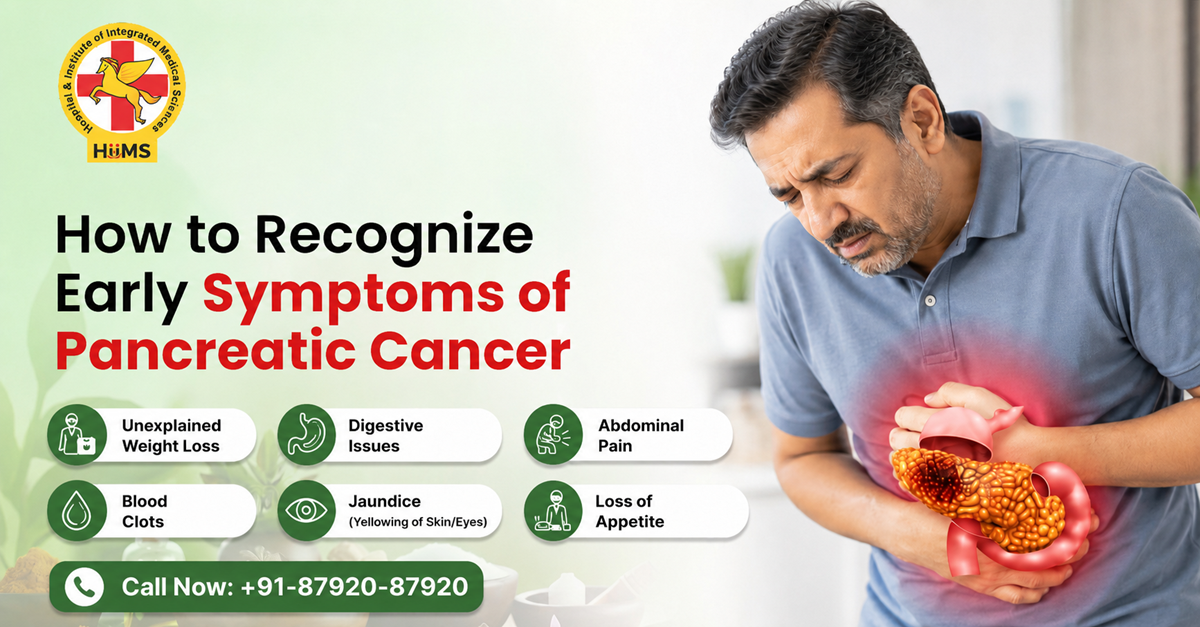
Most people do not pay much attention to small digestive changes unless the discomfort starts disturbing everyday life. A little bloating after meals, sudden tiredness, loss of appetite, or pain around the stomach area often gets connected with stress, irregular eating habits, or weak digestion. The problem is that some health conditions start with these very ordinary signs, and pancreatic cancer is one of them. Since the pancreas works quietly inside the body, early changes usually remain unnoticed for a long time.
This is why awareness is more important than panic. Paying attention to repeated body signals can help a person seek medical guidance before the condition becomes more serious.
In this blog, you will understand the symptoms of pancreatic cancer, risk factors, and important body changes linked with this condition in very simple language.
What Is Pancreatic Cancer?
The pancreas is a small organ located behind the stomach, but it performs very important functions inside the body. It helps digest food and supports blood sugar regulation with the help of insulin. When abnormal cells begin growing inside the pancreas, they can gradually affect digestion, energy levels, and nearby organs.
Understanding the symptoms of pancreatic cancer can help people pay closer attention to unusual health changes and seek medical guidance when needed. Early awareness often makes it easier to recognize warning signs before they become more serious.
Why Pancreatic Cancer Is Often Detected Late
The pancreas sits deep inside the abdomen, so small changes usually stay hidden during the early stages. In many cases, the symptoms feel very common. People may think the discomfort comes from acidity, weak digestion, gas, overeating, or tiredness after work. This delay in attention often becomes one of the biggest reasons why pancreatic cancer gets diagnosed later.
Learning about the early signs of pancreatic cancer can help people recognize when common symptoms continue for longer than expected and require medical evaluation.
Early Symptoms of Pancreatic Cancer You Should Not Ignore
Persistent Pain in the Upper Abdomen or Back
One of the early signs many people notice is a dull pain around the upper stomach area. Sometimes the discomfort slowly moves toward the middle back and keeps returning after meals. A few people also experience increased pain while lying down for long periods. These repeated changes should not be ignored, even if they appear mild in the beginning.
Sudden Loss of Appetite
A person may suddenly stop enjoying food the way they normally do. Even small meals can create heaviness, fullness, or discomfort. Digestion may feel slower than usual, and regular eating habits can start changing without a clear reason.
Unexplained Weight Loss
Losing weight without exercise or dietary changes deserves attention. The body may start feeling weaker, clothes may become loose, and energy levels may reduce throughout the day.
Unexplained weight loss and ongoing weakness can be among the early signs of pancreatic cancer. When these changes continue without any obvious cause, they should not be ignored.
Bloating, Gas, and Digestive Discomfort
Many early pancreatic problems begin with digestion-related discomfort. Frequent gas, bloating, nausea, greasy stools, or indigestion can appear when the pancreas does not function properly. Since these symptoms seem common, people often continue ignoring them for months.
Yellowing of Skin and Eyes (Jaundice)
When bile flow becomes blocked, the skin and eyes may slowly develop a yellow appearance. Some people also notice dark urine, pale-coloured stools, or itching on the skin during this time.
Jaundice should always be checked properly because it can indicate changes occurring inside the body.
Constant Tiredness and Weakness
Fatigue linked with pancreatic cancer often feels different from ordinary tiredness. Even after getting proper rest, the body may feel exhausted during simple daily activities. Weakness, reduced stamina, and low energy can continue for several weeks.
Changes in Blood Sugar or New-Onset Diabetes
Doctors have observed that sudden diabetes after the age of 50 can sometimes be associated with pancreatic health changes. A person whose blood sugar levels were stable earlier may suddenly start noticing unusual changes.
Paying attention to unexpected shifts in blood sugar levels may help identify underlying health concerns earlier.
Who May Have a Higher Risk of Pancreatic Cancer?
Lifestyle-Related Risk Factors
Smoking, regular alcohol consumption, excess body weight, and unhealthy eating habits can gradually affect pancreatic health. Daily habits such as eating highly processed foods, sleeping irregularly, and dealing with ongoing stress may also impact overall digestive function.
Health Conditions Linked With Pancreatic Cancer
People with chronic pancreatitis, diabetes, or a family history of cancer may have a higher risk. This does not mean every person with these conditions will develop pancreatic cancer, but regular monitoring becomes important.
Age and Other Factors
The risk generally increases after the age of 50 or 60. As the body ages, digestion and metabolism naturally change, but ongoing health issues should never be dismissed as normal ageing.
Since the risk of pancreatic cancer increases with age, paying attention to persistent digestive discomfort, appetite changes, or unexplained weight loss becomes especially important.
When Should You Speak to a Doctor?
If stomach discomfort, bloating, appetite loss, jaundice, unexplained weight loss, or weakness continue for several weeks, seeking medical guidance becomes important. Persistent digestive changes should not be ignored simply because they come and go.
People who understand the symptoms of pancreatic cancer often recognize that the body usually gives repeated warning signs before a serious condition progresses further.
Conclusion
The body rarely changes without giving signs first. Sometimes those signs appear through digestion problems, unusual weakness, loss of appetite, jaundice, or unexplained weight changes that quietly affect daily life. Recognizing these pancreatic cancer symptoms early can encourage timely medical attention rather than waiting for symptoms to become severe.
Awareness about pancreatic cancer symptoms encourages people to observe their health more carefully and take action when unusual changes appear. Understanding the early signs of pancreatic cancer can support better health awareness and encourage prompt medical evaluation when needed.
A balanced lifestyle, mindful eating habits, regular health checkups, and attention to persistent symptoms all play an important role in overall well-being.
You can also opt for an online video consultation (VOPD) at Jeena Sikho HiiMS Hospital Varanasi and connect with expert doctors for personalized health guidance.

FAQs
Q1: Can pancreatic cancer start with simple digestion problems?
Many people first notice bloating, indigestion, gas, or stomach heaviness before more noticeable symptoms appear.
Q2: Which pain is commonly linked with pancreatic cancer?
Pain often develops around the upper abdomen and may gradually spread toward the middle back area.
Q3: Can sudden diabetes become a warning sign?
New-onset diabetes after the age of 50 can sometimes be associated with pancreatic health changes and should be properly evaluated.
Q4: Why do people ignore early symptoms of pancreatic cancer?
The symptoms often resemble common digestive issues, tiredness, acidity, or stomach discomfort, which may delay medical attention.
Q5: When should someone seek medical guidance?
Persistent appetite loss, unexplained weight loss, jaundice, ongoing digestive discomfort, or unusual weakness should be medically evaluated.