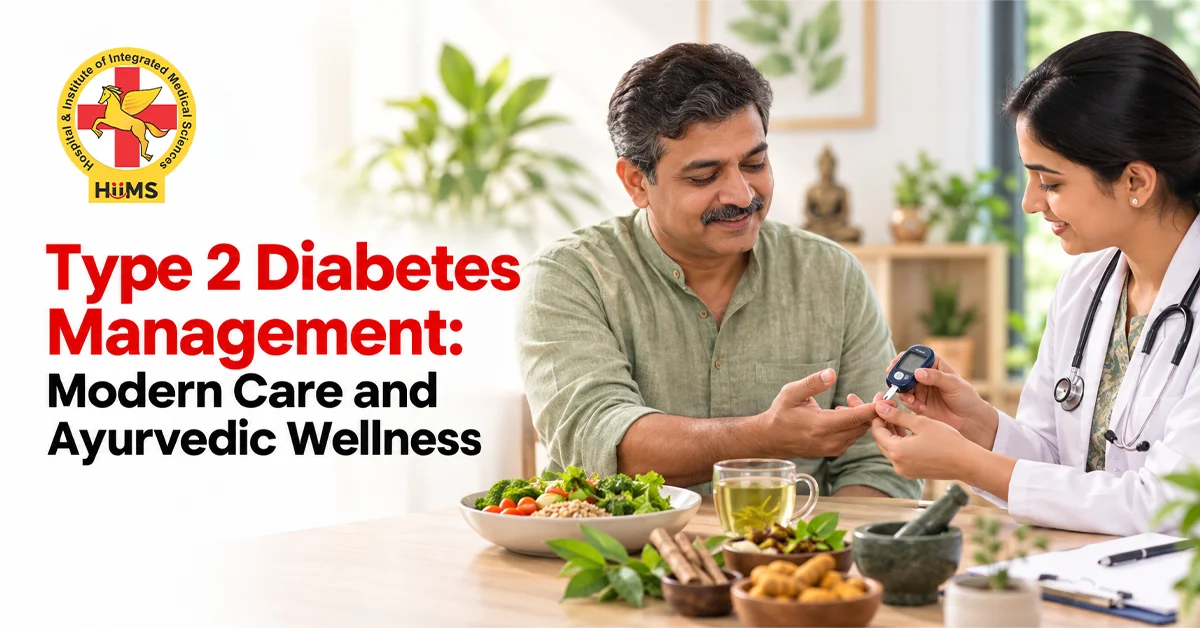

Living with type 2 diabetes often means paying attention to several parts of everyday life at once. Food choices, meal timings, movement, sleep, stress and medicines can all become part of the daily routine. For some people, the challenge is not knowing what diabetes is, but understanding how to manage it without making life feel unnecessarily complicated.
Modern healthcare provides important tools such as blood glucose testing, HbA1c checks, medicines and regular screening, while Ayurveda looks at food, routine, digestion and overall balance from a different perspective. Bringing these ideas together can help a person understand their health more carefully and make practical changes that fit their needs.
In this blog, we will look at Type 2 Diabetes Management, common symptoms, everyday food and lifestyle choices, the Ayurvedic view of diabetes, and how Jeena Sikho HiiMS combines modern monitoring with Ayurvedic wellness.
What Does Type 2 Diabetes Management Actually Involve?
Managing type 2 diabetes starts with understanding what is happening inside the body. Insulin helps glucose move from the blood into cells so it can be used for energy. In type 2 diabetes, the body may not respond to insulin properly, which can cause blood glucose to remain higher than it should.
Understanding Blood Sugar and Insulin
This is why diabetes care involves more than looking at one sugar reading. Doctors may use blood glucose tests, HbA1c and other assessments to understand the person’s condition and decide what care is appropriate.
Why Regular Monitoring is Important
Regular checks can show whether the current plan is working and whether any changes are needed. WHO also recommends combining healthy eating, physical activity, medicines when needed, and regular screening for complications as part of diabetes care.
Recognising Type 2 Diabetes Symptoms Early
Some people notice changes before a diagnosis, while others discover diabetes during a routine health check. Knowing the common type 2 diabetes symptoms can encourage timely testing.
Common Signs to Notice
- Frequent urination or unusual thirst
- Feeling tired more often than usual
- Blurred vision
- Cuts or wounds taking longer to heal
- Tingling or numbness in the hands or feet
These signs can have different causes, so testing and professional advice are more useful than trying to identify diabetes from symptoms alone.
Where Ayurvedic Wellness Fits Into Type 2 Diabetes Care
Ayurveda describes diabetes through the traditional concept of Madhumeha and pays attention to factors such as digestion, food habits, daily routine and individual body physiology. This creates a different way of looking at everyday health alongside modern medical care.
The Four Ayurvedic Pillars at HiiMS
At Jeena Sikho HiiMS, the Ayurvedic framework is described through four areas: Aahar, or food; Vihar, or lifestyle; Shaman, or medicines and Shodhan, or therapies. Together, these areas form the basis of Ayurvedic wellness for type 2 diabetes, with the person’s health condition and existing care taken into consideration.
Building a Practical Type 2 Diabetes Diet

Food naturally becomes the next part of the discussion because everyday meals have a direct place in diabetes care. A sensible type 2 diabetes diet can focus on whole foods, vegetables, pulses, suitable portions of whole grains or millets, and regular meal timings.
What to Keep in Mind
Fresh, simple meals can make daily eating easier to manage. Sugary drinks, heavily processed foods, frequent snacking and very large meals are better kept limited. The right food plan can differ according to medicines, glucose levels, age and other health conditions, so a fixed diet chart may not suit everyone.
Type 2 Diabetes Lifestyle: Small Habits That Matter
Food works alongside routine. A practical type 2 diabetes lifestyle can include regular walking, suitable physical activity, adequate sleep and breaks from long periods of sitting. Yoga, breathing exercises and other calming practices may also become part of a person’s routine when they are appropriate for their health.
The goal is not to change everything in one day. A routine that a person can follow consistently is often easier to maintain than a strict plan that becomes difficult after a few weeks.
How Jeena Sikho HiiMS Brings Modern Care and Ayurveda Together

Jeena Sikho HiiMS Safdarjung presents an integrated approach in which modern health monitoring and Ayurvedic practices are considered together. The approach includes dietary guidance, lifestyle planning, Ayurvedic assessment and therapies such as Panchakarma, along with monitoring of relevant health measurements.
Need Guidance for Type 2 Diabetes Care?
If you have questions about your diabetes care, diet or daily routine, you can connect with the doctors at Jeena Sikho HiiMS for personalised guidance based on your health needs.

Monitoring Alongside Ayurvedic Care
This part is especially important for people already taking diabetes medicines. Ayurvedic medicines, herbs or therapies should be discussed with a qualified healthcare professional rather than added independently. Blood glucose levels, current medicines, medical history and test results can all help doctors decide what is suitable for an individual.
Research into Ayurvedic medicines for type 2 diabetes has produced some encouraging findings, but researchers have also pointed out limitations in the available studies. This makes careful monitoring and professional guidance an important part of responsible type 2 diabetes care.
Type 2 Diabetes Management Tips for Everyday Life
A few practical type 2 diabetes management Tips can make the routine easier to follow:
- Keep meal timings reasonably consistent.
- Choose simple meals instead of relying heavily on processed foods.
- Include suitable physical activity in your daily schedule.
- Check blood glucose as advised by your healthcare professional.
- Never stop or change prescribed medicines without medical advice.
- Keep regular appointments and recommended health checks.
These habits work best when they become part of normal life rather than feeling like a temporary challenge.
Conclusion
Managing diabetes requires attention beyond a single blood sugar number. Food, physical activity, sleep, medicines, regular testing and personal habits all have a place in long-term care.
Ayurveda can add another perspective by focusing on food, routine, digestion and individual needs, while modern healthcare provides established methods for monitoring glucose and checking for complications. At Jeena Sikho HiiMS, people can discuss an integrated approach based on their health condition and existing treatment plan.
If you are looking for personalised type 2 diabetes management, you can also opt for a VOPD consultation with expert doctors at Jeena Sikho HiiMS to discuss your concerns from home and understand which care options may be suitable for you.

FAQs
1. What are the early signs of type 2 diabetes?
Frequent urination, increased thirst, tiredness, blurred vision and slow wound healing are some commonly reported signs that may need medical evaluation.
2. What foods can be included in a diabetes-friendly diet?
Vegetables, pulses, whole foods and suitable portions of whole grains can form part of a balanced eating pattern, depending on individual health needs.
3. How does lifestyle affect diabetes care?
Regular movement, suitable meals, consistent sleep and routine health checks can all form important parts of everyday diabetes care.
4. Where does Ayurveda fit into diabetes care?
Ayurveda may be included as part of an individualised wellness plan, particularly around food, routine and traditional therapies, alongside appropriate medical care.
5. When should someone consult a doctor about diabetes?
Professional advice is appropriate when symptoms persist, glucose readings change frequently, medicines need review, or a person wants to add Ayurvedic medicines or therapies to existing care.