
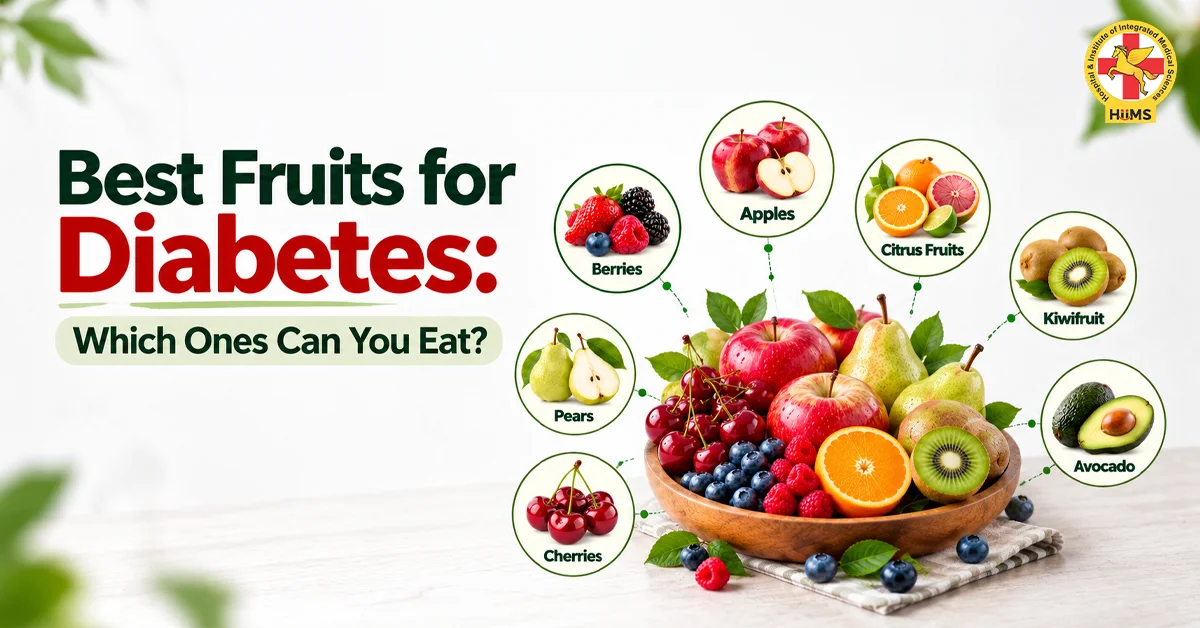

A frequent concern among people with diabetes is whether fruit’s natural sugar means they should stop eating it. For most, completely avoiding fruit isn’t needed. Fresh fruit provides fibre, vitamins, minerals and other nutrients that fit within a balanced diet. The essentials are choosing the right portions and understanding how each fruit affects blood sugar.
The right fruits for diabetes depend on each person’s dietary needs, daily eating pattern and blood glucose results. Guava, apples, oranges, pears and berries are a few fruits that could fit into a diabetes-friendly diet.
According to the American Diabetes Association, fresh, frozen or canned fruit without added sugar can be included in a diabetes meal plan. Hence, the goal is sensible portions, whole fruits and a balanced daily routine, not cutting out fruit entirely.
Can People with Diabetes Eat Fruits?

People with diabetes can usually include whole fruits in their daily diet when they follow suitable portion sizes. Fruits contain natural sugars, but they also provide fibre and nutrients that are often missing from the sugary snacks.
When it comes to fruits and blood sugar levels, the form of the fruit matters. According to the Centers for Disease Control and Prevention, fruit juice raises blood sugar faster than whole fruit. Whole fruits contain fibre, which helps you feel full for longer.
Fruits for Diabetes: Which Fruits Are Good Choices?
The following healthy fruits for diabetics may fit into a balanced diet. The right serving depends on the fruit’s carbohydrate content and the person’s daily meal plan.
1. Guava
Guava contains fibre, vitamin C and other nutrients. A small guava may be a suitable snack when eaten in a measured portion. Wash it well and eat it fresh rather than adding salt or sugar.
2. Apple
Apples contain fibre, particularly in their skin. Eat a fresh apple with the skin instead of drinking apple juice. Apples may fit into a daily meal plan when you account for their carbohydrates.
3. Orange
Oranges contain vitamin C, water and fibre. A whole orange is generally a better everyday choice than orange juice because it retains its fibre and takes longer to eat.
4. Pear
Pears provide the fibre and other nutrients. A small pear may be included in a meal plan, depending on your carbohydrate needs. Eat it fresh and avoid adding sweeteners.

5. Berries
Strawberries, blueberries and other berries offer fibre, vitamins and plant compounds. Their portions still matter, but they provide variety when choosing the best fruits for diabetics.
6. Papaya
Papaya contains several nutrients, including vitamins A and C and dietary fibre. A small bowl of fresh papaya may fit into a balanced diet. Avoid adding sugar or sweet syrups.
7. Kiwi
Kiwi contains vitamin C and fibre. One small kiwi may be included as part of a varied diet. Consider the portion along with other carbohydrate foods eaten during the day.
8. Peaches and Plums
Fresh peaches and plums provide water, fibre and vitamins. Choose whole fruits instead of sweetened canned varieties, and keep the portion suitable for your meal plan.
As the American Diabetes Association’s guide to fruit choices explains, diabetes-friendly fruits can be part of a balanced meal plan when eaten in measured portions.
Fruits for Type 2 Diabetes: What Should You Consider?
Choosing Low-Sugar Fruits for Diabetes involves more than checking whether a fruit tastes sweet. Your serving size, the foods eaten with it and how your blood glucose reacts are all important.
Keep the following in mind:
- Portion control: The carbohydrate content of a small apple is not the same as that of a large apple.
- Label reading: Choose canned fruit without added sugar.
- Self-awareness: Follow your healthcare professional’s guidance on checking blood glucose before or after meals.
- Meal planning: Count the fruit along with roti, rice, grains and other sources of carbohydrate.
The National Institute of Diabetes and Digestive and Kidney Diseases also shares guidance on healthy eating, physical activity and diabetes management.
Fruits to Limit or Be Careful With If You Have Diabetes
There is no single list of fruits to avoid for diabetes that applies to everyone. However, some forms and portions deserve extra attention.
- Fruit juice: Even juice without added sugar may contain a large amount of carbohydrates in a small glass.
- Dried fruit: Raisins, dates and dried figs contain concentrated carbohydrates, so small portions matter.
- Mangoes: You may include mango in a suitable portion, but avoid eating a large amount at once.
- Bananas: Consider the size and ripeness of the banana and account for its carbohydrates.
- Grapes: They are easy to eat in large quantities, so measure your serving rather than eating directly from a large bunch.
- Chikoo: Its sweet taste and carbohydrate content make portion awareness important.

A fruit doesn’t have to be low in sugar to fit into your diet. What matters most is the total carbohydrate in the portion you eat, not just the fruit’s sweetness.
How to Eat Fruits While Managing Blood Sugar
Small changes to your eating habits can lead to better food choices through the day. The goal is to enjoy fruit without going over the carbohydrate limit in your meal plan.
- Prefer fresh, whole fruits over fruit juice.
- Wash fruit properly before eating it.
- Avoid adding sugar, honey or sweet syrups.
- Follow a suitable portion size rather than eating fruit freely throughout the day.
- Fit fruit into your daily meal plan and follow your healthcare professional’s advice.
Fruits and blood sugar levels can vary from one person to another. So keep an eye on your own readings, and talk to your healthcare professional if you notice the same changes happening repeatedly.
Whole Fruits vs Fruit Juice: Which Is Better?

Choosing whole fruit instead of juice is a simple way to improve your daily food habits. Apples and oranges provide fibre along with the essential vitamins and minerals. However, juicing removes much of the fruit’s natural fibre and makes it easier to consume carbohydrates from several fruits in one sitting.
Even fresh juice without added sugar contains natural sugars. If you enjoy juice, ask your healthcare professional how it fits into your meal plan. Whole fruit is generally the more practical choice for everyday eating. Choosing whole fruits over juice is one small step towards better food habits. However, managing diabetes also involves the regular health guidance, a suitable diet and changes in daily routines.
How Does Jeena Sikho HiiMS Help in Diabetes Care?
Managing diabetes goes beyond choosing the right fruits. Jeena Sikho HiiMS Safdarjung hospitals offer integrated care that combines Ayurveda, Panchakarma, naturopathy and lifestyle guidance. Doctors review your health history, suggest diet and lifestyle changes, and follow up regularly to track your progress.
Conclusion
Choosing the right fruits for diabetes does not mean giving up fruit completely. Guava, apples, oranges, pears and berries may fit into a balanced diet when you pay attention to portion sizes. Whole fruits are generally a better everyday choice than juice, while dried fruits need extra care because their carbohydrates are concentrated.
Jeena Sikho HiiMS can help you understand which diet and lifestyle habits suit your health needs. Book a VOPD consultation to speak with a qualified healthcare professional about your concerns and food choices.

FAQs
1. Can people with diabetes eat fruits every day?
Most people with diabetes can include fruit in their daily meal plan. The right amount depends on the carbohydrate needs, medication and blood glucose readings.
2. Which are the best fruits for diabetics?
Guava, apples, oranges, pears, berries, papaya, kiwi, peaches and plums can fit into a diabetes-friendly diet in the measured portions.
3. Is fruit juice better than whole fruit?
Whole fruit keeps its fibre and is generally the better everyday choice, while juice can raise blood sugar faster.
4. Which fruits should be limited with diabetes?
Dried fruit, juices, mangoes, bananas, grapes and chikoo need extra portion awareness because they can add a lot of carbohydrates at once.
5. Can canned fruit be eaten with diabetes?
Canned fruit without added sugar can be included in a diabetes meal plan. Avoid fruit packed in the sugary syrup and check the label before buying.