

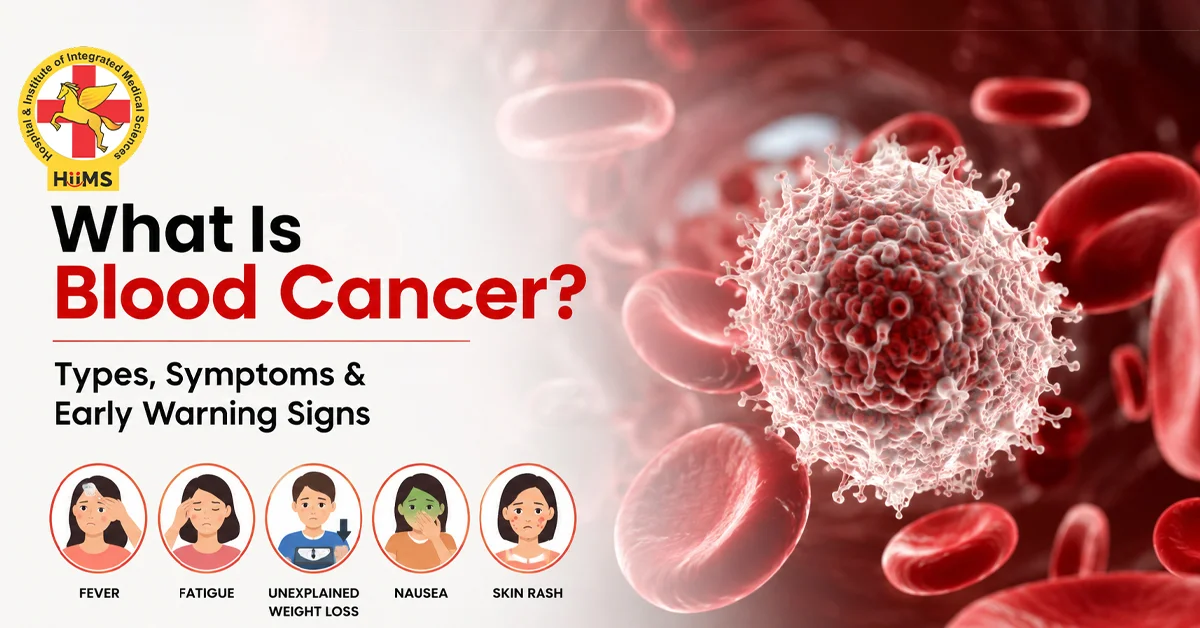
Blood carries oxygen, fights infections and helps control bleeding, so changes in the way blood cells are made can affect several parts of the body. What is blood cancer? The answer to this question becomes easier to understand when we first look at where blood cells come from. Most blood cells develop in the bone marrow, while the lymphatic system also plays an important role in the body’s defence.
Blood cancer develops when certain abnormal cells grow and multiply in an uncontrolled manner, leaving less room for healthy cells to do their normal work. Depending on the kind of cells involved, the condition may affect the blood, bone marrow or lymphatic system. The signs can also vary from person to person, which is why knowing the different blood cancer types and their warning signs can be useful.
In this blog, we will understand how blood cancer develops, explore its major types, and recognise the important symptoms.
What Is Blood Cancer and How Does It Affect the Body?
To understand what is blood cancer, it helps to know the basic work of the bone marrow. This soft tissue inside many bones produces red blood cells, white blood cells and platelets. Red blood cells carry oxygen, white blood cells help fight infections, and platelets help the blood clot when needed.
Blood cancer can interfere with the body’s usual blood-cell production.As these abnormal cells continue to build up, they can push aside healthy cells and interfere with their normal growth. This can eventually affect how the body carries oxygen, fights infections and manages bleeding.
Some cancers start mainly in the bone marrow, while others involve the lymphatic system. These differences explain why the types of blood cancer can look quite different from one another.
What Are the Main Blood Cancer Types?
There are three major groups that people generally mean when discussing blood cancer types. Each starts in a different kind of cell and affects the body in its own way.
1. Leukemia
Leukemia affects the tissues responsible for making blood cells and often causes abnormal white blood cells to build up. As these cells increase, they can affect healthy blood-cell production and may cause weakness, frequent infections and unusual bleeding.
2. Lymphoma
Lymphoma begins in lymphocytes, which are white blood cells that form part of the lymphatic system. As these abnormal cells grow, they may cause the lymph nodes to become swollen. Hodgkin lymphoma and non-Hodgkin lymphoma are the two main groups.
3. Myeloma
Myeloma begins in plasma cells, a type of white blood cell found in the bone marrow. Abnormal plasma cells can interfere with healthy blood-cell production and may also affect the bones.
Although these types of blood cancer develop differently, some warning signs can overlap, so knowing what changes to notice becomes important.
What Are the Early Symptoms of Blood Cancer?
The blood cancer symptoms do not follow one definitive pattern. Some people may notice several changes, while others may initially have only one or two. Several common health problems can cause similar signs, which means one symptom on its own cannot tell you whether cancer is involved.
Early Warning Signs to Watch For
- Persistent tiredness or weakness: Feeling unusually drained even after proper rest can be worth discussing with a doctor.
- Frequent infections: Repeated or unusually persistent infections may occur when normal white blood-cell function is affected.
- Unexplained fever: Fever that keeps returning without an obvious reason deserves attention.
- Easy bruising or bleeding: Frequent nosebleeds, gum bleeding or bruises that occur without a clear injury should not be overlooked.
- Unexplained weight loss: Losing weight without intentionally changing your diet or activity level can have several causes, including some cancers.
- Swollen lymph nodes: A painless lump around the neck, underarm or groin may need medical examination if it persists.
- Night sweats: Heavy sweating during sleep, particularly when it happens repeatedly, can be one of the early warning signs of blood cancer.
- Shortness of breath: Breathlessness during ordinary activities may occur when healthy red blood cells are reduced.
- Bone or joint discomfort: Persistent pain may appear with certain forms of blood cancer, including myeloma.
These blood cancer symptoms can develop gradually, which makes it easy to explain them away as tiredness, a seasonal infection or another everyday problem. Paying attention to a pattern that continues or keeps returning is more useful than worrying about a single unique symptom.
What Can Increase the Risk of Blood Cancer?
There is no single reason behind every case. Sometimes, blood cancer develops without any obvious risk factor. In some people, these changes may be associated with age, a family history of certain cancers, earlier cancer treatment, or prolonged exposure to certain chemicals or radiation.
Lifestyle choices alone do not explain every case of blood cancer, so it is important not to blame yourself or assume that one habit directly caused the condition.
How Is Blood Cancer Diagnosed?
If symptoms continue for some time, doctors usually look beyond the symptoms to understand their actual cause. They may ask about your health history, perform a physical examination and order blood tests such as a complete blood count. When the results call for a closer look, a bone marrow test or other specialised investigations may follow.
This step has significance because the early symptoms of blood cancer can resemble several other health conditions, and only appropriate medical testing can help identify the underlying cause.
Ayurvedic and Integrated Approach to Blood Cancer Care at Jeena Sikho HiiMS
At Jeena Sikho HiiMS Panchkula, the approach to blood cancer care combines Ayurveda, lifestyle guidance, dietary changes and medical assessment. Its blood-cancer programme describes four healing pillars: Aahar, Vihar, Shaman and Shodhan, which include food, lifestyle, medicines and selected therapies.
The care plan is personalised according to the person’s health, medical history and present condition. Ayurvedic therapies should not be considered a replacement for necessary cancer diagnosis or treatment. Instead, people should discuss any complementary approach with their treating healthcare team.
Why Early Care is Important
Knowing the early warning signs of blood cancer does not mean becoming anxious about every unusual change. It means becoming more aware of patterns that deserve attention, particularly when tiredness, fever, infections, bleeding, swelling or unexplained weight changes continue for some time. Early evaluation can help identify the actual reason behind these symptoms and guide the next step in care.
Conclusion
Understanding what is blood cancer starts with knowing how healthy blood cells normally work and what happens when abnormal cells interfere with their production. Leukemia, lymphoma and myeloma are the main groups, although each has different forms and characteristics. Recognising blood cancer symptoms such as persistent fatigue, repeated infections, unusual bleeding, swollen lymph nodes, night sweats or unexplained weight loss can encourage timely medical checkups.
When a health problem continues without a clear reason, getting professional advice is a sensible next step. Jeena Sikho HiiMS Panchkula offers VOPD consultation for people who want to speak with expert doctors about their health concerns and understand the available Ayurveda-based integrated care options from the comfort of home.

FAQs
Q1: What is blood cancer?
Blood cancer can develop in the blood-forming tissues, bone marrow or lymphatic system. As these unusual cells increase, they can interfere with the body’s usual blood-cell production and leave fewer healthy cells to do their work.
Q2: What are the main blood cancer types?
Leukemia, lymphoma and myeloma are the three main groups of blood cancer. Each one begins in different cells and affects the body in its own way.
Q3: Which early signs of blood cancer should be checked?
If tiredness continues, infections keep returning, or you notice fever, unusual bleeding, easy bruising, swollen lymph nodes or unexplained changes in weight, it is worth talking to a doctor.
Q4: Can blood cancer symptoms look like other health problems?
Many of these symptoms can also occur with other health problems. That is why symptoms that continue without a clear reason should be checked by a doctor instead of being self-diagnosed.
Q5: What does an Ayurvedic approach to blood cancer care involve?
At Jeena Sikho HiiMS, care follows four Ayurvedic pillars: Aahar, Vihar, Shaman and Shodhan. The plan is prepared according to the person’s health, condition and individual needs.