
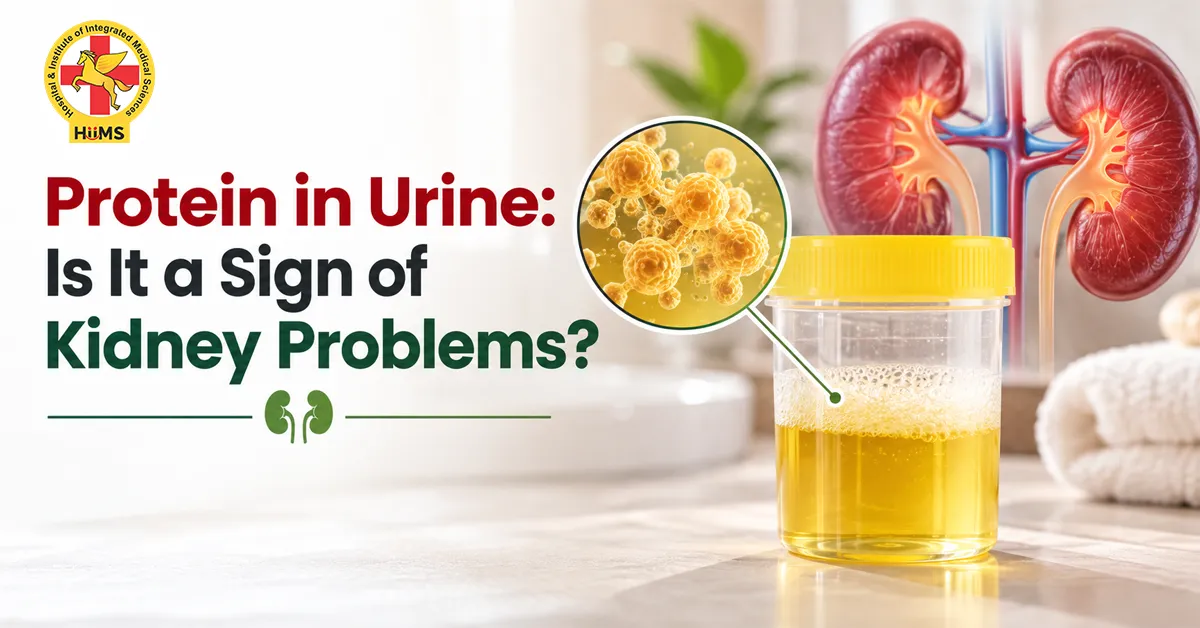

Do you have any experience with urine that looks foamy or urine with protein content while undergoing a normal medical examination? Such conditions are an indication of kidney function problems. Although some protein may be found in urine at times, its excessive levels persisting during multiple tests require special attention.
Protein in urine is also known as proteinuria. It could be an indication that your kidneys may not filter your blood properly. However, this does not necessarily indicate that there is damage to your kidneys. There are many other conditions which can result in an increase in urine protein content.
The purpose of this blog is to help readers understand what protein in urine means, what can cause it, which signs to watch for, and when to get tested.
Did you know?
According to U.S. Centers for Disease Control and Prevention, Kidney disease can develop without noticeable symptoms in its early stages.
What Does Protein in Urine Mean?
The functioning of your kidneys acts like that of a natural filter. They separate all the excess waste products from the blood while retaining the necessary components of the body, including proteins. Albumin is one of the major proteins in the blood.
In the event that there is any injury to the kidney filters, some of the protein will be lost through the urine. This condition is known as proteinuria, and if the protein involved is albumin, then it is referred to as albuminuria.
The protein in urine meaning depends on how much protein is present, whether it appears repeatedly, and what other health conditions a person may have. One abnormal test alone does not always confirm the kidney disease. Protein in urine can be temporary or may indicate an underlying kidney problem.
What Are the Common Causes of Proteinuria?
The causes of proteinuria can vary from temporary changes in the body to long-term health conditions.
1. Dehydration
If you don’t drink enough water, then the body could become dehydrated and, as a result, there may be an increase in protein in the urine for a while.
2. Heavy Exercise
The presence of protein in urine may be caused by heavy exercise for a certain period of time. In many cases, it goes back to normal after some rest.
3. Diabetes
If one has high levels of sugar in the blood for long periods of time, this may damage the very small filters of the kidneys. It can lead to protein entering the urine before any other signs have shown up.
4. High Blood Pressure
One with consistently high blood pressure may stress the kidney filters and may affect their functions.
5. Kidney Disease
There are diseases like chronic kidney disease and inflammation of the kidney’s filtering system that lead to protein leaking continuously. Such abnormal results must be professionally evaluated for their cause.
6. Pregnancy
Sometimes, the presence of protein in the urine of pregnant women can also be associated with preeclampsia, which is a condition characterised by elevated blood pressure. Protein in urine in pregnant women should always be taken seriously, especially when they experience headaches, changes in their vision and/or swelling.
For more information on what could be causing your proteinuria and what tests might be required, speak to one of our kidney health specialists.
What Are the Symptoms of High Protein in Urine?

At the early stage, the presence of high protein in urine does not cause any symptoms at all. Most cases become known when there is a routine check-up. Symptoms of more advanced cases, where protein concentration is increased, may be as follows:
- Foamy urine: Urine may look unusually frothy or bubbly. However, foamy urine alone does not confirm protein leakage.
- Swollen Face or Puffy Eyelids, Ankles, Feet, and/or Hands: It is possible to have swelling around the face or puffy eyelids, ankles, feet, and hands.
- Weakness: Some people feel general weakness and fatigue.
- Urination Changes: You will observe an increase or decrease in urination.
There are many possible causes for the above symptoms. It is important to see a doctor if these persist.
How Is Protein in Urine Tested?
Protein in the urine test is carried out to determine the amount of protein in the urine compared to what is supposed to be present. The following tests are among the tests recommended by your doctor.
Urinalysis (Dipstick): Fast and easy test that measures whether there is protein in urine. This test is frequently performed during routine visits.
Albumin to Creatinine Ratio (ACR) in Urine (uACR): Test to detect albumin with respect to creatinine in urine.
Kidney Function Blood Test: The test will require drawing a blood sample and measuring the level of creatinine in order to determine the efficiency of filtering by your kidneys. This test is widely used to calculate the estimated glomerular filtration rate, or eGFR.
When the presence of proteins is found, your doctor might choose to perform another test in order to find out whether the findings were an accident or still persist. Along with this test, your blood pressure, blood glucose and medical history will be analysed.
How Can You Support Your Kidney Health?
A healthy lifestyle will keep you in good health and reduce the definite dangers linked with kidney disease.
- Drink water sufficiently: stay properly hydrated as per your personal requirements. If you suffer from severe kidney disease or are recommended not to consume much water, follow your doctor’s recommendations.
- Have a healthy diet: Consume fruits, vegetables, whole grains, and proteins. Patients with kidney disease are supposed to get special recommendations regarding their diets, so do not adopt a restrictive diet blindly.
- Controlling blood glucose and high blood pressure: It is necessary for those who suffer from diabetes or high blood pressure to monitor their condition and follow the care guidelines.
- Careful with medication: Some medications, such as pain relievers and others, may affect the kidneys, especially if they are taken quite often. Before making any changes in your medications, talk to your healthcare provider.
- Check-ups: Those who have diabetes, high blood pressure, or a family history of kidney disease should consult their doctors about the possible tests.
How Does Ayurveda Approach Kidney Wellness?
Ayurveda emphasises diet, healthy routine, digestive process and personalised treatment according to the health condition of an individual. At Jeena Sikho HiiMS, one can speak about his/her health issues and be given advice on lifestyle and wellness care.
This could depend upon the health conditions of the individual and could involve dietary suggestions, lifestyle adjustments, and many other things as per the advice of the professional. However, it is not yet proven that Ayurvedic medications help cure proteinuria or kidney diseases. Some herbs may interact with medicines or even cause problems for the kidneys.
It is very important that you should know what causes protein in your urine. Hence, you should know the reason why it exists in your urine. It is never advisable that one stop having his/her kidney tested.
Conclusion
Protein in urine can sometimes be temporary, but repeated high levels may point to a kidney problem that needs attention. Do not rely only on the appearance of your urine to judge your kidney health. A urine test, along with other tests whenever necessary, may prove to be helpful in determining the reason behind it. Maintaining a proper diet, monitoring your body and following professional guidance can assist in maintaining your kidneys’ health. In case you have foam in your urine or any swelling, get yourself medically examined, and do not ignore the problem. You can visit Jeena Sikho HiiMS for VOPD consultations.

FAQs
Q1. Does the presence of protein in my urine always imply that I have some problems with my kidneys?
Protein can get into the urine due to dehydration, fever, or excessive physical activity.
Q2. Does a high level of protein always cause some symptoms in my urine?
No, there can be no symptoms at all, especially during the early stages of this disease.
Q3. Is foamy urine an indication of protein in my urine?
There might be other reasons behind foamy urine. Urine tests are required to confirm excessive protein presence in urine.
Q4. What is the test for checking protein in urine?
A urine dipstick test and urine albumin-to-creatinine ratio are used for testing protein presence. Additional tests of blood may be prescribed by your doctor to check on kidney functions.
Q5. Will Ayurveda help me to reduce protein presence in urine?
It might give some advice for changing lifestyle, but protein in urine cannot be treated using Ayurveda methods.