

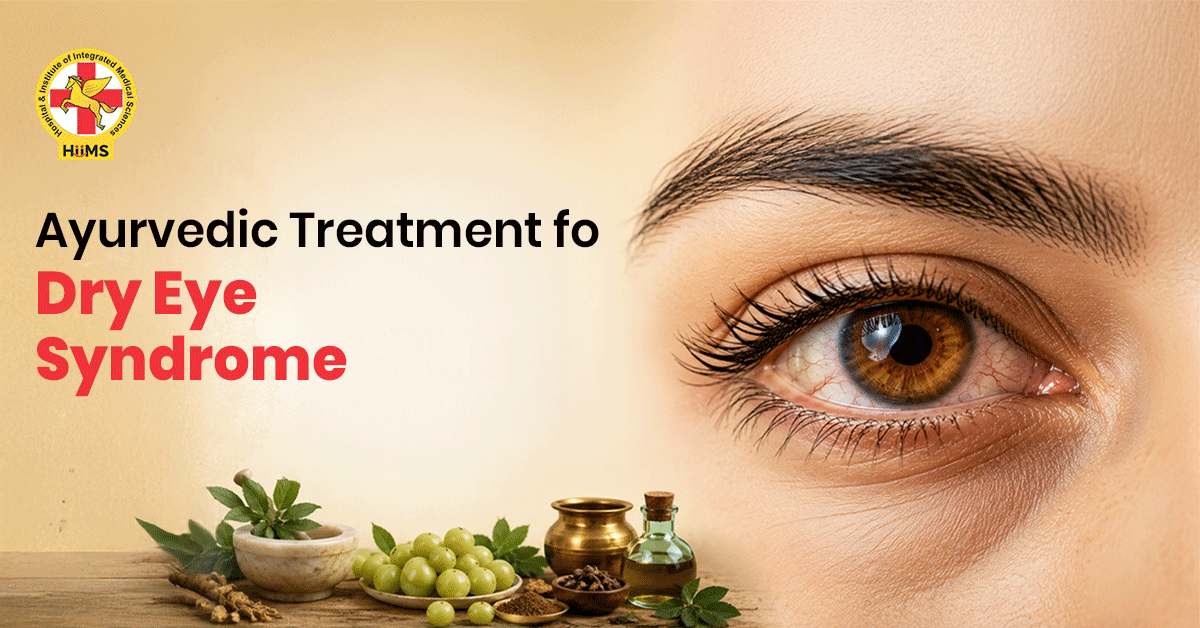
If your eyes feel gritty, tired, or burning by mid-afternoon, you’re not imagining it. Between long stretches in front of screens, air-conditioned offices, pollution, and sleep that never quite adds up to enough, our eyes are under more strain than they used to be. Eye drops help in the moment, but they don’t fix what’s actually causing the dryness, and that’s where Ayurveda takes a different approach.
Instead of treating dryness as something to mask, Ayurvedic treatment for dry eye syndrome sees it as a signal, a sign that the body’s internal moisture and heat balance has tipped out of place. The response isn’t a bottle of artificial tears; it’s a combination of the right foods, better daily habits, and, when needed, hands-on therapies designed to restore that balance from the inside out. At Jeena Sikho HiiMS, this is built into personalised plans based on each person’s constitution, rather than a one-size-fits-all protocol.
What’s Actually Happening When Your Eyes Feel Dry
Tears do more than well up when you’re emotional. They form a thin, constant film across the eye that keeps the surface lubricated, clears away debris, guards against infection, and keeps your vision clear. Dry eye syndrome treatment shows up when your eyes stop making enough of that film or when it evaporates faster than your body can replace it. You’ll usually notice it as one or more of the following:
- A gritty feeling, like there’s sand in your eye
- Burning, stinging, or redness
- Vision that blurs and then sharpens again after you blink
- Sensitivity to bright light
- Eyes that suddenly water heavily, often a reaction to irritation, not a sign of enough moisture
- Fatigue or strain during reading or screen work
Left unaddressed, this can turn ordinary things, like reading, driving, and working at a laptop, into something genuinely uncomfortable.
How Does Ayurveda View Dry Eyes?
Ayurveda associates the eyes with Alochaka Pitta, the sub-dosha tied to vision, but their moisture and movement depend heavily on Vata, the dosha governing air and dryness. When Vata is thrown off balance by things like dehydration, stress, irregular meals, or hours of screen exposure, it shows up physically as dried-out lubrication in the eyes.
So rather than treating the eyes in isolation, Ayurveda for dry eye looks at cooling excess internal heat and rebuilding moisture through the body as a whole, with diet, daily routine, and targeted therapy working together.
Diet Tips That May Support Eye Health
Tear quality has more to do with your gut and your diet than most people realise. If you’re chronically dehydrated or eating in a way that generates internal heat, your eyes will show it. A balanced diet helps nourish the body from within and may support healthy eye function, making it an important part of the natural treatment for eye infections.

What helps:
Cucumbers, leafy greens, sweet potatoes, and carrots are good staples to build meals around. Amla, or Indian gooseberry, has long been valued in Ayurveda for its antioxidant content and its specific benefits for eyesight.
Small amounts of pure cow’s ghee stirred into warm meals act as an internal lubricant, a practice known as Snehana. Walnuts, flaxseeds, and almonds soaked overnight and peeled are also worth adding for their fatty acid content.
What to cut back on:
Heavily spiced food, fried and fast food, carbonated drinks, and dry, packaged snacks all tend to generate internal heat and speed up dehydration. None of these needs to disappear entirely, but they’re worth scaling back if dryness has become a recurring issue.
Lifestyle Habits for Better Eye Comfort
A lot of dry eye discomfort comes down to environment and habit, both of which are easier to control than people assume. Try the 20-20-20 rule: every 20 minutes on a screen, look at something 20 feet away for 20 seconds, and use that pause to blink a few times fully. It sounds small, but blink rate drops dramatically during screen use, and that’s a major driver of dryness.
Keep your desk and bed out of the direct line of air conditioners, heaters, or fans; moving air pulls moisture off the eye’s surface faster than still air. Wear sunglasses outdoors when it’s windy or dusty. And protect your sleep. Most of the eye’s repair and rehydration happens overnight, so 7 to 8 hours isn’t a luxury here; it’s part of the treatment.
Ayurvedic Eye Care at Jeena Sikho HiiMS
Sometimes diet and lifestyle changes bring real improvement but don’t fully resolve chronic dryness. That’s usually when a more targeted, clinical approach comes in. As part of Ayurvedic treatment for dry eye syndrome, Jeena Sikho HiiMS follows a holistic approach that focuses on improving overall health while supporting eye wellness.
Akshi Tarpan, often considered the gold standard for this kind of treatment, involves building a ring of soft black gram dough around the eye socket to form a watertight seal, then filling it with warm, medicated ghee. Under a therapist’s supervision, you gently open and close your eyes within the ghee, allowing its fat-soluble compounds to nourish the eye tissue directly and encourage natural tear production. It’s a precise procedure, the temperature and seal both matter, which is why it’s done only under trained supervision, never at home.
For people whose dryness seems tied to broader Vata imbalance, doctors may also recommend Basti, a form of medicated enema used in Ayurveda to address the gut health that’s believed to underlie many chronic dryness patterns.

A Few More Things Worth Doing
Avoid rubbing your eyes, it’s an easy habit to fall into, but the friction can damage the eye’s surface and make inflammation worse. Regular movement and time outdoors support circulation, including blood flow to the eyes. And practices like pranayama, yoga, or meditation help regulate the nervous system, which in turn affects how well the body manages fluid balance overall.
When Should You See a Doctor?
Dry eye treatment in Ayurveda is pretty holistic; it’s all about what you eat, how you live, and taking gentle care of your eyes day to day. But that doesn’t mean you should skip the doctor altogether. This kind of approach tends to work well if you’re dealing with mild, nagging dryness over time, but if something feels really off with your eyes, that’s not the time to rely on home remedies alone; get it checked out. See an eye specialist right away if you experience sudden or severe eye pain, persistent redness, any sudden change in vision, or if symptoms keep getting worse despite consistent care at home.
Conclusion
Dry eyes have a way of turning small daily tasks into a source of frustration. But between a more thoughtful diet, better screen habits, and protecting your sleep, most people see real improvement over time, and Ayurvedic treatment for dry eye syndrome like Akshi Tarpan can add a deeper layer of relief when lifestyle changes alone aren’t quite enough. If you want a plan built around your specific constitution, the team at Jeena Sikho HiiMS offers guidance through a VOPD (Video Outpatient Department) consultation.
FAQs
Q1. What’s the best Ayurvedic approach to dry eyes?
It really comes down to your individual constitution, but most people do well with a mix of a Vata-Pitta-friendly diet, better screen habits, and therapies like Akshi Tarpan when things need an extra push.
Q2. Does Ayurveda actually relieve dry eyes, or just manage symptoms?
The goal is to help your body produce and hold onto moisture on its own, rather than replacing tears the way drops do. So the payoff isn’t immediate; it builds over weeks as diet and lifestyle changes take hold.
Q3. Which foods genuinely help with eye moisture?
Amla tops the list, along with carrots, leafy greens, soaked almonds, flaxseeds, and a little warm cow’s ghee worked into meals.
Q4. Does screen time really cause dry eyes?
It’s a big factor: people blink roughly half as often when they’re absorbed in a screen, and that gives the tear film far less chance to stay intact.
Q5. Can I try Akshi Tarpan at home?
The ghee has to sit at a precise temperature inside a sealed dough ring, which is something only a trained therapist should manage.