
Piles disease is one of those conditions people quietly deal with for months, sometimes years, before actually talking to a doctor about it. There’s a bit of embarrassment attached to it, and honestly, that keeps a lot of people stuck with discomfort that could’ve been sorted out much earlier.
Part of the problem is that most people don’t really know what’s happening inside their body, so they either ignore it, panic, or assume surgery is the only way out. None of that is fully true, and that’s exactly the gap this blog is trying to fill.
Here, we’ll go through what are hemorrhoids?, why they happen in the first place, the symptoms that are easy to miss or brush off, and how the condition progresses if it’s left untreated. We’ll also get into the different stages of piles, since that plays a big role in deciding what treatment actually makes sense for you.
And for anyone hesitant about surgery, we’ll walk through how an Ayurvedic, non-surgical approach works on piles disease, so you can make a more informed decision instead of just going with whatever feels less scary at the moment.
What Are Hemorrhoids, Really?
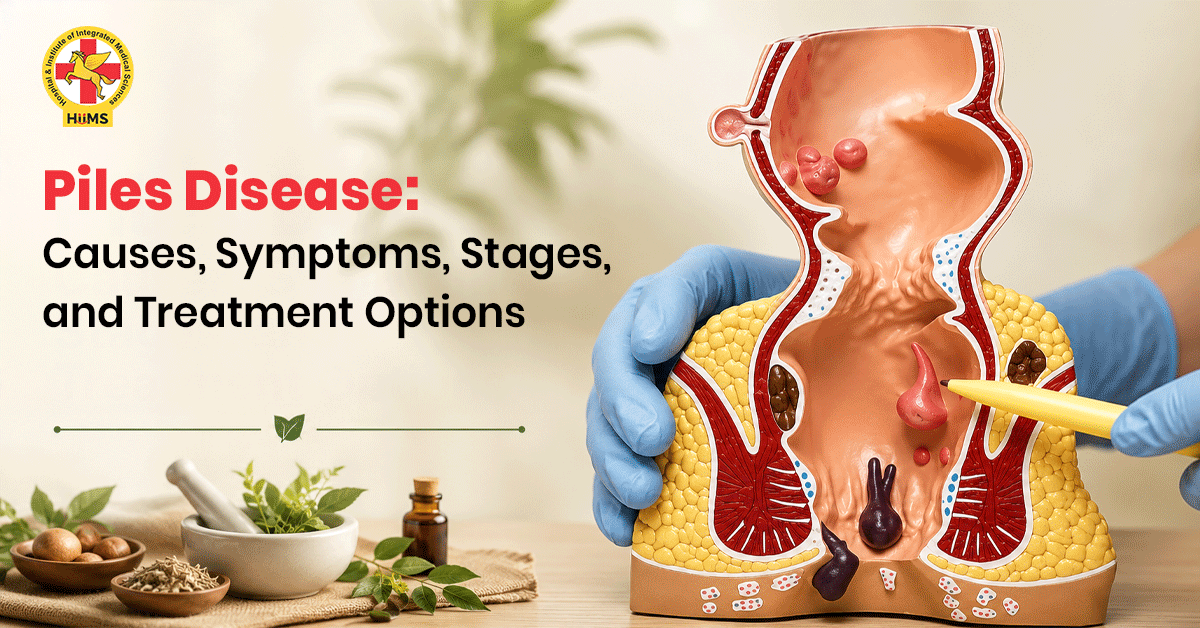
Piles, or hemorrhoids, are swollen veins that develop in and around your rectum and anus. Everyone technically has these veins, it’s only when they get inflamed and enlarged that they start causing trouble like pain, itching, or bleeding.
Types of Piles
Not all piles look or behave the same way. Broadly, they fall into a few types of piles categories:
- Internal piles — form inside the rectum, usually painless but can bleed.
- External piles — develop under the skin around the anus, often itchy and uncomfortable.
- Prolapsed piles — internal hemorrhoids that bulge out through the anus.
- Thrombosed piles — when a blood clot forms inside an external hemorrhoid, causing sudden, sharp pain.
What Causes Piles?
Piles disease usually builds up over time because of constant pressure on the veins in that area. The usual culprits are the following:
- Chronic constipation: straining hard to pass stool puts direct pressure on rectal veins.
- A diet low in fibre, too much maida, fried food, and processed stuff and too little raw fruit and veggies.
- Not drinking enough water leads to harder stool, which means more straining.
- Sitting for long hours weakens the muscles around the pelvic area over time.
- Other contributors are being overweight, heavy weightlifting, and pregnancy, all of which add extra pressure on those veins.
Symptoms You Shouldn’t Ignore
What are the symptoms of piles? Symptoms differ a bit depending on whether the piles are internal or external.
- Bright red blood during or after passing stool, usually painless
- Hard, tender lumps around the anus
- Persistent itching or irritation
- A feeling like your bowels haven’t fully emptied even after you’ve been to the toilet
- Occasional mucus discharge
If any of this sounds familiar, it’s worth getting checked rather than hoping it resolves on its own.
The Different Stages of Internal Piles
Doctors usually grade internal piles from 1 to 4 based on how far they’ve progressed:
- Grade 1 — small, stay inside, may bleed slightly but you won’t feel a lump
- Grade 2 — come out a bit during bowel movements but slide back in on their own
- Grade 3 — come out and need to be pushed back in manually
- Grade 4 — stay outside permanently and can’t be pushed back in
The earlier the stage, the easier and less invasive the treatment tends to be, which is exactly why catching it early matters.
How Jeena Sikho HiiMS Approaches Piles Treatment?
At Jeena Sikho HiiMS, the focus stays on treating piles disease without surgery wherever possible. Instead of just managing the symptoms, the approach leans on Ayurveda, gut healing, and lifestyle correction to work on what’s actually causing the problem. A few things this usually includes:
- Diet correction — shifting towards a fibre-rich, plant-based diet with plenty of raw vegetables and hydrating fruits, since this alone eases a lot of the strain that causes piles in the first place.
- Sitz baths — a warm water soak with Ayurvedic herbs that helps relax the area and bring down swelling.
- Kshar Sutra therapy — a well-known, minimally invasive Ayurvedic technique where a medicated thread is tied around the pile mass. The herbs on the thread gradually shrink the hemorrhoid until it falls off on its own, without the recovery time or trauma that comes with regular surgery.
For people who’ve been putting off treatment out of fear of surgery, this kind of approach tends to feel a lot more manageable.
When to Actually See a Doctor?
Occasional mild bleeding or discomfort often settles down with fibre, water, and a few lifestyle tweaks. But get it checked without delay if you notice heavy or ongoing bleeding, severe pain, fever, or if a lump suddenly turns painful and firm these can point to complications that need prompt attention rather than home remedies.
If piles have been bothering you for a while and you’d rather explore a non-surgical, Ayurvedic route, it helps to get a proper evaluation first of how far along the piles are, whether there’s bleeding, and what’s been triggering it before deciding on the right treatment path.
Conclusion
Piles disease is common, treatable, and honestly nothing to feel awkward about. Most cases respond well once you fix the basics, more fibre, more water, less sitting around, and catching things early instead of waiting for the discomfort to become unbearable. If home care isn’t cutting it anymore, going the Ayurvedic and non-surgical route can offer real relief without the fear and downtime that usually comes with surgery.
If you’d like to get your condition evaluated properly and explore Ayurvedic treatment options, you can book a VOPD Consultation from home.

FAQs
- Can piles go away on their own?
Mild, early-stage piles sometimes settle down with better diet, more water, and less straining. But if they keep coming back or get worse, they usually need proper treatment rather than just waiting it out. - Is surgery the only option for piles?
A lot of people assume surgery is inevitable, but many cases, especially in the earlier stages, respond well to non-surgical methods like Kshar Sutra therapy, diet correction, and lifestyle changes. - Does bleeding from piles always mean something serious?
Not always, but it should never be ignored either. Bright red bleeding during bowel movements is common with piles, though it’s worth getting checked to rule out anything else going on. - What foods should I avoid if I have piles?
Try cutting back on maida, fried and processed food, and spicy meals, since these tend to worsen constipation. Loading up on fibre-rich fruits, vegetables, and enough water usually helps more than anything else. - How long does Kshar Sutra treatment take to show results?
It varies depending on the size and grade of the piles, but most people notice the hemorrhoid shrinking gradually over a few weeks, without the pain or recovery time that comes with traditional surgery.