


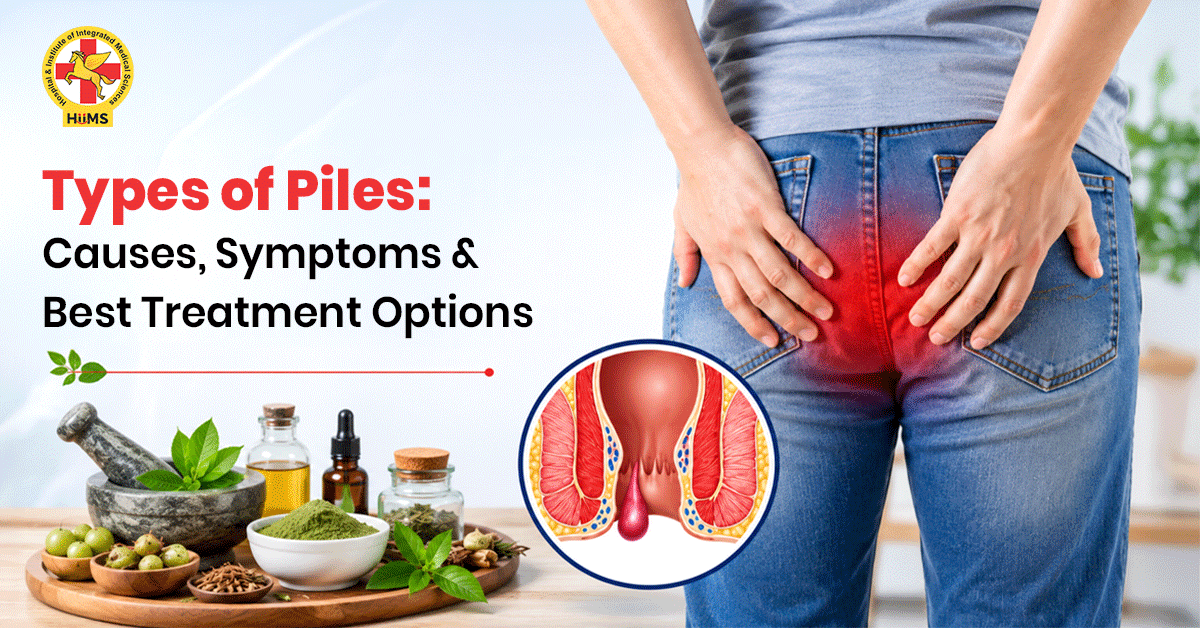
A mild discomfort during a lengthy meeting or conversation, an unexpected trace of blood in the restroom, or a constant itch, these minor signs are often overlooked until they become more serious. What most people don’t realise is that piles aren’t a single, one-size-fits-all condition.
Knowing the different types of piles before jumping into any treatment can save weeks of confusion, wrong remedies, and unnecessary worry. The shape, location, and severity of the swelling decide how a person experiences it, and that’s exactly why two people with the “same problem” can have completely different symptoms.
In this blog, you’ll get a clear picture of how piles form, the major types of piles doctors usually identify, what triggers them, the warning signs worth noticing early, and the treatment paths that actually help, including how Ayurveda looks at the condition from the root.
What Are Piles?
Piles are swollen veins that develop in the lower part of the rectum and around the anus. Think of them as tiny cushions of blood vessels that get overworked and start bulging due to constant pressure. They aren’t uncommon or unusual. A large number of adults deal with some form of this at least once, though many never speak about it openly because of the embarrassment attached to the topic.
How Poor Digestion, Constipation and Lifestyle Contribute To Piles
Before getting into the types of piles, it helps to understand why they form in the first place. Weak digestion is often the starting point. When the gut doesn’t process food efficiently, stools become hard, bowel movements get delayed, and straining becomes a daily habit. Over months, this constant pressure weakens the veins in that region, and swelling begins. And then include a lack of exercise, inconsistent meal times, and not drinking enough water, and you set the stage for piles.
Types of Piles Explained
Internal Piles
These form well inside the rectum, away from sight, which is why many people don’t even realise they have them until bleeding shows up during a bowel movement. Internal piles are usually painless in the early stage because that area has fewer nerve endings.
Doctors generally describe them in four grades:
- Grade I – mild swelling with no bulging out
- Grade II – pushes out during motion but goes back in on its own
- Grade III – needs to be pushed back manually
- Grade IV – stays out permanently and cannot be pushed back
External Piles
Unlike the internal kind, external piles develop right under the skin near the anal opening. They’re visible, often itchy, and can turn quite uncomfortable while sitting or walking for long stretches.
Prolapsed Piles
When internal piles slip out of their original position and hang outside the anus, they’re called prolapsed piles. Depending on the grade, this can be a temporary slip or a more permanent change, and it usually brings noticeable discomfort.
Thrombosed Piles
This happens when a blood clot forms inside an external pile, causing sudden swelling, a bluish tint, and sharp pain. Among all the types of piles, this one is most likely to demand the quickest attention because the pain can be intense and sudden.
What Causes Different Types of Piles?
The causes of piles rarely come from a single habit, they build up gradually. Some of the common contributors include:
- Chronic constipation that leads to repeated straining.
- A diet low in fibre, heavy on processed food.
- Sitting for long hours without breaks, common in desk jobs and long commutes.
- Pregnancy, due to the added pressure on pelvic veins.
- Carrying excess body weight.
- Very little physical movement through the day.
- Not drinking enough water.
- Weak digestion, which Ayurveda links closely to imbalanced Vata and Pitta doshas.
When several of these factors overlap, the chances of developing piles rise sharply.
Symptoms of Piles You Should Not Ignore
Early Symptoms
The symptoms of Piles usually start quietly. You might notice a mild itch near the anus, a slight burning after you pass stool, a touch of light bleeding, or some pain during bowel movements. Most people ignore these signs, but they’re really the body’s way of asking you to pay attention.
Symptoms That May Indicate Advanced Piles
If left unattended, the condition can progress. By this point, things tend to get harder to ignore. A lump that stays out instead of slipping back in, bleeding that shows up almost every time rather than once in a while, swelling you can actually see, real trouble getting comfortable while sitting, or pain that refuses to ease off, these usually point to piles that have moved past the early stage. At this point, a proper check-up isn’t optional anymore.
Best Piles Treatment Options Based on the Condition
Lifestyle and Dietary Changes
For milder cases, simple adjustments often bring real relief. Increasing fibre intake, drinking a proper amount of water, and reducing long sitting hours can ease the pressure on swollen veins considerably.
Ayurvedic Therapies for Piles
Among the various piles treatment options, Ayurveda focuses on correcting the root imbalance rather than just managing the swelling.
- Kshar Sutra – a medicated thread tied around the pile mass to gradually reduce it.
- Basti Therapy – a herbal enema that softens stool and eases strain on the intestines.
- Herbal medicines – formulations that support healthy bowel movement.
- Digestion correction – addressing the underlying weak digestion that triggers piles repeatedly.
How Jeena Sikho HiiMS Approaches Piles Treatment Naturally
At Jeena Sikho HiiMS, doctors don’t stop at treating what’s visible, they go deeper into what’s actually causing it. Each patient sits through an individual assessment first, because no two people have the same digestion pattern or the same triggers behind their piles. From there, the plan takes shape: Panchakarma for those who need it, Kshar Sutra where it fits the case, and alongside both, honest dietary guidance and lifestyle counselling that aim at fixing bowel health for good, not just covering things up for a few weeks.
Daily Habits That May Help Lower the Chances of Piles Returning
A few consistent habits go a long way in keeping piles from coming back:
- Eating more fibre-rich foods throughout the day.
- Drinking enough water consistently.
- Avoiding long stretches of sitting without movement.
- Never delaying the urge for a bowel movement.
- Practising gentle yoga for better circulation.
- Taking regular walks.
- Maintaining steady, healthy digestion overall.
Conclusion
Every condition under the types of piles behaves differently, and recognising which one a person has makes a real difference in how quickly relief comes. Paying attention early, understanding the causes and symptoms, and choosing the right treatment path can prevent months of unnecessary discomfort. Ayurveda’s approach of improving digestion and bowel health alongside managing the swelling offers a gentler, root-level solution for many patients.
If symptoms persist or feel severe, consulting a reputable expert remains the safest step. You can also opt for a VOPD consultation (online video consultation) for your health concern with expert doctors at Jeena Sikho HiiMS.

FAQs
Q1: What are the four main types of piles?
The four commonly identified types are internal, external, prolapsed, and thrombosed piles, each varying in location and severity.
Q2: Which type of piles is the most painful?
Thrombosed piles tend to cause the sharpest discomfort since a clot forms inside the swollen tissue, leading to sudden inflammation.
Q3: Can piles go away without surgery?
Mild to moderate cases often improve with dietary changes, lifestyle adjustments, and Ayurvedic therapies without needing a surgical procedure.
Q4: What is the main cause of piles?
Chronic constipation combined with repeated straining during bowel movements remains one of the leading contributors to this condition.
Q4: Which Ayurvedic treatment is commonly used for piles?
Kshar Sutra therapy is a widely used Ayurvedic method that gradually reduces the pile mass through a medicated thread application.