
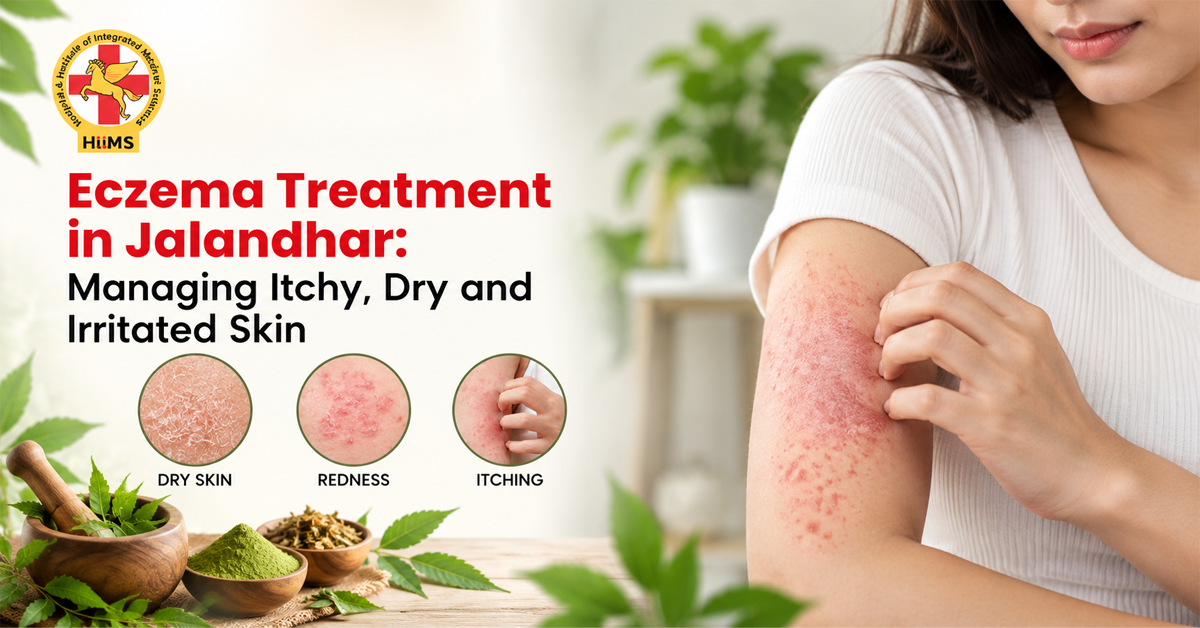
Eczema is a fairly common skin condition that can make daily life quite uncomfortable. The skin may turn dry, itchy, rough, red or irritated. For some people the symptoms show up for a few days and then settle down on their own, while others may keep getting repeated flare-ups. It can affect both children and adults, and may show up on the hands, face, arms, legs or other parts of the body. Since eczema is not contagious, being around someone with eczema will not cause you to develop it. .
Managing eczema needs more than just taking care of the affected skin. Changes in weather, sweating, dust, soaps, perfumes and stress can make sensitive skin feel worse for some people. That is why knowing your personal triggers and following a suitable daily routine can really help. Eczema treatment in Jalandhar at Jeena Sikho HiiMS follows an Ayurvedic approach that looks at the person’s skin concerns along with their food habits, lifestyle and the overall health.
Ayurveda gives a lot of importance to digestion, daily routine and overall balance while planning care for each person. Along with gentle skin care, these factors are considered together to support the healthier skin and better skin wellness in the long run.
Understanding Eczema and Its Common Signs
Eczema refers to a group of skin conditions that cause itching, dryness and irritation. Atopic dermatitis is one of the common types. The exact cause is not the same for everyone. Genes, the immune system and a weak skin barrier can all have a role.
Some common signs include:
- Dry and rough skin
- Frequent itching
- Red or darker patches
- Small bumps
- Swelling or warmth
- Cracked skin
- Thickened skin after repeated scratching
- Fluid or crusting in some cases
Repeated scratching can further irritate the skin. This is why controlling dryness and avoiding the known triggers is an important part of managing eczema.
What Can Trigger Eczema Flare-Ups?
Eczema does not always have one fixed trigger. A trigger for one person may not be a trigger for another. Common triggers include fragrances, harsh soaps, detergents, wool, sweating, extreme temperatures, dust, pollen and stress.
A person may notice changes in the skin during very hot weather, when sweating increases, or during colder and drier days. Instead of changing several things at once, it is better to observe the skin and notice what seems to make the itching or dryness worse.
Keeping a small record of flare ups can also help. Note the food eaten, products used, weather, stress and activities before the symptoms became worse.
Eczema Treatment: A Gentle Approach to Skin Care
Good skin care is an important part of managing eczema. The skin needs moisture because eczema can weaken the skin barrier and allow moisture to escape more easily. Keeping your skin well moisturised can help to prevent dryness and protect it.
A simple routine can include:
- Take a short bath with comfortably warm water instead of very hot water.
- Avoid the strong soaps and products with heavy fragrance.
- Apply a gentle moisturiser soon after bathing while the skin is still slightly damp.
- Wear loose and comfortable cotton clothes.
- Keep your nails trimmed to protect the skin from scratches.
- Choose fragrance free laundry products when possible.
- Try to protect your skin from extreme heat and cold.
The American Academy of Dermatology also recommends short baths or showers and applying moisturiser soon afterwards to help retain moisture.
How Ayurveda Looks at Skin Health
Ayurveda gives importance to fresh food, timely meals, proper sleep, good digestion and a healthy daily routine. An Ayurvedic practitioner may consider these factors before suggesting the suitable herbs, oils or therapies according to individual needs.
Ayurvedic care uses traditional herbs and preparations to support skin wellness. The right approach may vary according to the person’s skin condition and the overall health.
At Jeena Sikho HiiMS Jalandhar, skin wellness is approached by considering the person’s food habits, digestion, lifestyle and skin concerns together. The focus is on personalised Ayurvedic care along with healthy daily habits.
Food and Daily Habits for Healthier Skin
Food can affect people with eczema differently. There is no need to remove many foods from your diet without knowing what is causing the problem. A balanced diet, along with noticing your own food triggers, can be a more practical approach.
Some simple habits can support overall skin health:
- Include fresh seasonal fruits and vegetables.
- Choose simple home cooked meals more often.
- Include adequate protein and healthy fats.
- Limit highly processed and very sugary foods.
- Drink enough water throughout the day.
- Maintain regular meal timings.
- Give enough importance to sleep and relaxation.
Stress can also be linked with the eczema flare-ups in some people. A calm daily routine, light exercise, breathing practices, and proper sleep may help a person manage stress better.
When Should You Seek Professional Guidance?
Some eczema symptoms need more attention than others. If the itching does not improve, the rash spreads, or the skin becomes cracked, starts oozing or develops a crust, it is better to have it examined. Other skin problems, including fungal infections and dermatitis, may sometimes look like eczema.
When symptoms keep returning despite following a regular skin care routine, it helps to seek proper guidance. Rather than moving from one cream or home remedy to the next, it is better to first find out what is causing the flare ups and which type of eczema you are dealing with. This way, you can follow a more suitable care routine.
Conclusion
Living with eczema can be uncomfortable, especially when the symptoms return, but proper skin care can help. By understanding the root cause, fixing digestion, and following natural care along with good daily habits, the skin can slowly become calm, soft and healthy again.
If you or your family member is struggling with itchy, dry or irritated skin, it may be time to look beyond short term creams. Jeena Sikho HiiMS Jalandhar offers a caring and natural eczema treatment to help manage such skin issues from the root. You can also book a VOPD consultation to talk to the experts from home and understand the right path for your skin.

FAQs
1.What is eczema, and how does it affect the skin?
Eczema is a skin condition that causes dryness, itching, redness and irritation on different parts of the body.
2.Is eczema contagious?
No, eczema is not contagious and does not spread from one person to another through touch.
3.What are the common signs of eczema?
Common signs include dry patches, frequent itching, redness, small bumps and sometimes cracked or thickened skin.
4.Which parts of the body are commonly affected by the eczema?
Eczema commonly appears on the hands, face, arms, legs and other exposed areas of the skin.
5.How does Ayurveda look at the skin conditions like eczema?
Ayurveda considers digestion, lifestyle, food habits and overall balance while looking at skin health.