

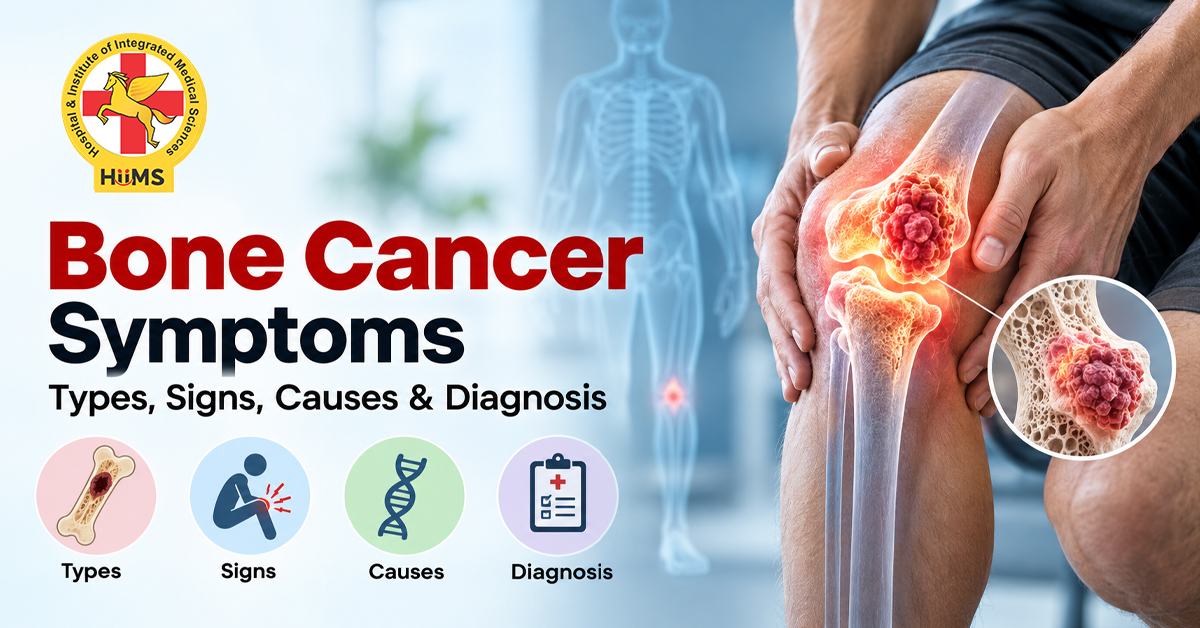
Bone cancer is a rare condition in which abnormal cells grow in the bone. It can affect people of different ages, although some types are more common in children and young adults while others are seen more often in older people. Since bone pain is common after an injury, physical activity, or joint problems, the early signs can sometimes be ignored. Knowing the warning signs can help a person seek expert advice at the right time.
The bone cancer symptoms can change from one person to another. They may depend on which type of cancer is present, which bone is affected, and how far the condition has developed. Common complaints may include ongoing pain, swelling, a lump, difficulty moving a joint, unexplained weight loss, and tiredness. These symptoms can also occur with the other health conditions and do not always indicate cancer.
At Jeena Sikho HiiMS, health and wellness are approached by looking at the person’s overall condition, daily routine, diet, digestion, and lifestyle along with the proper evaluation when needed.
What Is Bone Cancer
It happens when cells inside a bone start growing in an abnormal and uncontrolled way. This growth can weaken the bone, cause pain and, in some cases, spread to other parts of the body. Doctors usually divide this disease into two broad groups.
- A form that begins inside the bone itself, often called primary cancer.
- A form that starts somewhere else in the body and later spreads to the bone, often called secondary or metastatic cancer.
It is worth remembering that cancer which begins in the blood or bone marrow, such as leukaemia or multiple myeloma, is treated as a separate condition and is not classified in the same way.
Understanding the Different Types of Bone Cancer
There are several types of this disease, and each one behaves a little differently.
- Osteosarcoma, which is the most common type and mainly affects children and the young adults.
- Chondrosarcoma, which develops in cartilage cells and is more common in middle-aged and older adults.
- Ewing sarcoma, which often appears in the pelvis, ribs or long bones and is seen more often in younger people.
- Chordoma, a rare type that usually forms in the spine or skull base.
The long bones, such as those in the legs and arms, are commonly affected, though it can technically develop in any bone of the body.
Common Bone Cancer Symptoms You Should Not Ignore
Bone cancer symptoms can differ from person to person, depending on the size, type and exact location of the tumour. Still, certain signs tend to show up often enough that they deserve attention.
- Ongoing bone pain that does not improve with rest
- Pain that becomes worse at night or after physical activity
- Swelling or a lump near a bone or joint
- A bone that breaks easily, even after a small fall or bump
- Stiffness or reduced movement in a nearby joint
- Feeling tired most of the time without a clear reason
- Losing weight without trying
Since these warning signs can also happen with common problems like arthritis, a bone infection or a simple injury, it is easy to mistake them for something less serious.
Signs That May Appear Later
Apart from the usual signs, a few other changes may appear as the condition progresses.
- Mild fever that comes and goes
- A general feeling of being unwell
- Numbness or tingling if a tumour presses on nearby nerves
- Breathing trouble or a cough, in cases where the disease has spread to the lungs
These symptoms may not always point to something serious, but when they continue for a long time, it becomes important to speak with a qualified doctor rather than waiting them out.
What Causes Bone Cancer?
In many cases, the exact cause is not known. Researchers have found certain changes in genes that control cell growth and repair. These changes may cause cells to grow in an uncontrolled way.
Some factors may increase the risk. These include:
- Previous radiation therapy for another cancer
- Certain inherited genetic conditions
- Some existing bone conditions
- Previous treatment with certain chemotherapy medicines
- Age-related risk for particular types of tumours
It is important to understand that having a risk factor does not mean that a person will develop cancer. In fact, many people diagnosed with bone cancer do not have a known risk factor.
How Is Bone Cancer Diagnosed?
Persistent bone pain, swelling, or unusual changes may need proper evaluation. Tests such as an X-ray or MRI can help doctors look for changes in the affected bone. In Ayurveda, the practitioner looks at the person’s digestion, appetite, sleep, daily routine, pain, strength, and overall health. Pulse examination may also be part of the assessment.
At Jeena Sikho HiiMS, this approach focuses on understanding the person’s health as a whole. If cancer is suspected, proper testing remains important.
Managing Health After a Bone Cancer Diagnosis
When a person is dealing with bone cancer, taking care of the body becomes important. Along with the care advised according to the condition, attention to food, daily routine, proper rest, emotional health, and general strength can help support overall wellbeing. At Jeena Sikho HiiMS, the approach gives importance to the person as a whole rather than focusing only on the affected bone.
Natural and Ayurvedic care may help a person to maintain strength, take better care of daily wellbeing and stay regular with a healthy routine. As every person’s health condition is different, such care should be chosen with proper guidance especially when the person is dealing with a serious condition such as bone cancer.
How a Natural Approach May Support the Body
Ayurveda looks at the body as a whole system, where diet, digestion, sleep and daily habits are all connected to overall strength and healing capacity. While bone cancer treatment must always be guided by qualified doctors, some supportive habits may help a person feel steadier during recovery.
- Eating warm, simple and nourishing food
- Following a gentle daily routine with enough rest
- Staying as active as the body comfortably allows
- Managing stress through calm breathing or light yoga, if approved by the treating doctor
- Keeping regular contact with the healthcare team for guidance
These habits are not a cure on their own, but they can support the body’s comfort and strength while proper medical care continues under supervision.
Conclusion
Bone cancer symptoms such as persistent pain, swelling, difficulty in movement, unexplained weight loss, and unusual tiredness should not be ignored when they continue for a long time. At the same time, these symptoms do not automatically mean cancer. Proper diagnosis is necessary to understand the real cause.
Jeena Sikho HiiMS provides personalized care, healthy food, daily routine and overall wellbeing for those seeking the supportive Ayurvedic wellness guidance. If you have continuing concerns you can get advice through a VOPD consultation and talk about your condition with a qualified health care professional. The goal should always be informed and responsible care.

FAQs
- What is bone cancer?
Bone cancer is a rare condition where abnormal cells grow inside a bone in an uncontrolled way. - What is the difference between primary and secondary bone cancer?
Primary cancer begins inside the bone itself, while secondary cancer spreads to the bone from another part of the body.
- Can bone cancer cause unexplained fatigue?
Yes, feeling tired most of the time without a clear reason can be one of the symptoms.
- Does Ayurveda look at the person differently while assessing health?
Yes, Ayurveda considers digestion, appetite, sleep, daily routine, pain and overall strength during assessment.
- How can daily habits support a person during bone cancer treatment?
Simple food, gentle routine, adequate rest and light activity may help support strength during this time.
Disclaimer: The information provided on this blog is for general educational and informational purposes only. It is not intended to replace professional medical advice, diagnosis, or treatment. Always consult a qualified healthcare professional before making any changes to your diet, lifestyle, or treatment plan. Individual results may vary.