

Have you ever felt your body overheating from the inside. Maybe you frequently suffer from sudden acid reflux, skin breakouts or find yourself losing your temper over tiny things.
In Ayurveda, these are clear signs of imbalanced pitta dosha. Pitta is the biological energy governed by the elements of fire and water. It controls your digestion, your metabolism, your body temperature and even how well your mind works. When Pitta is balanced you feel energetic, clear, and vibrant. But when internal heat rises too high, it leads to discomfort and inflammation.
The easiest way to keep your internal fire steady and calm is through your plate. By choosing the right cooling, wholesome foods for Pitta Dosha, you can easily maintain vibrant health through every season of the year.
Recognizing Pitta Imbalance: Causes and Symptoms
Your body responds naturally to what you put into it and to the environment around you.
Eating overly spicy or fried food, skipping meals, drinking too much coffee, working under intense pressure and holding onto anger all cause internal heat to build up.
When this happens, you will start noticing distinct pitta dosha symptoms.
- Heartburn, sour burps, acid reflux or frequent loose stools.
- Sudden acne, rashes, redness, or inflammatory skin flare ups.
- Excessive sweating, unpleasant body odour, and feeling thirsty all the time.
- Irritability, impatience, frustration and a short temper.
What to Eat and Avoid for Pitta
Since Pitta is hot, sharp, and intense, your food should be cooling, heavy, and mild.
Foods that Calm Pitta
Focus on foods that carry sweet, bitter, and astringent tastes. Sweet foods nourish and build strength. Bitter foods cool inflammation, astringent foods tone and cleanse your system.
Best Foods for Pitta Dosha
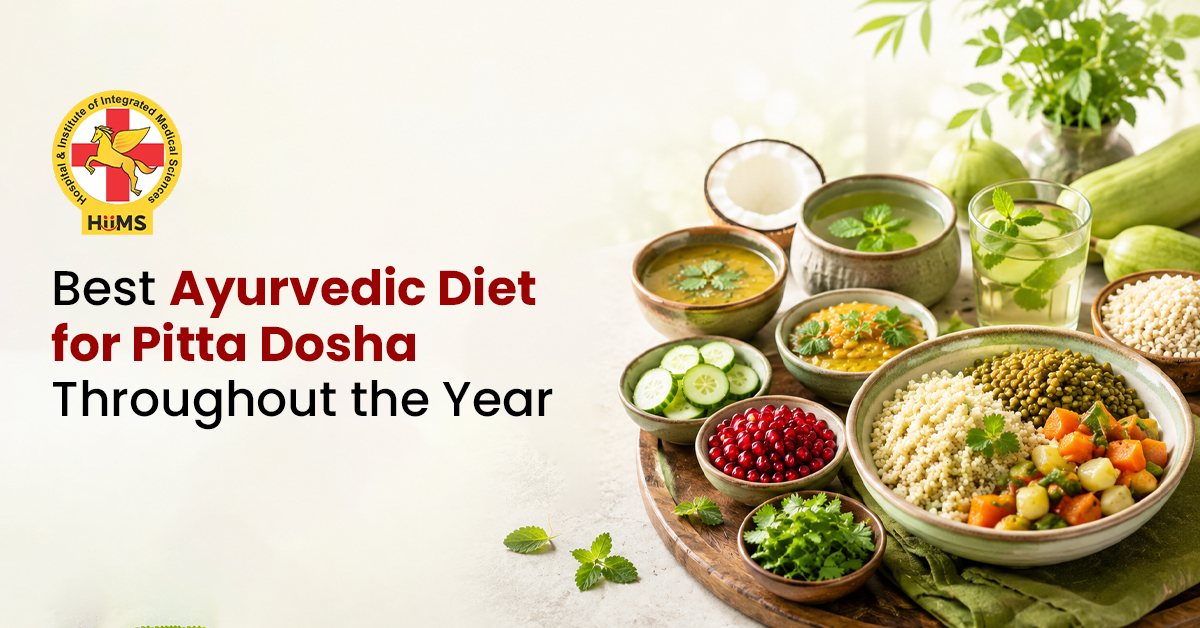
- Grains & Dairy: White basmati rice, oats, barley, fresh milk, sweet buttermilk and organic Ghee.
- Fresh vegetables: Cucumbers, bottle gourd, zucchini, leafy greens, broccoli, cauliflower & sweet potatoes.
- Sweet Fruits: Ripe mangoes, sweet apples, melons, pears, pomegranates and soaked raisins.
- Cooling herbs: Fresh coriander, mint, fennel seeds, cardamom, coconut oil.
Foods to Limit or Avoid
To protect your gut, avoid foods that add heat. Avoid extremely spicy chillies, deep-fried snacks, fermented items like vinegar or sour yogurt, salty pickles, alcohol and excessive caffeine.
Seasonal Diet Guide for Pitta Dosha
Your nutritional needs change as the weather shifts. Changing your meals with the seasons stops your body from accumulating heat.
Summer (Peak Pitta Season)
When the weather outside is scorching, your internal heat naturally rises. Focus heavily on hydrating and cooling foods for Pitta Dosha. Drink fresh coconut water, eat watermelon, cucumber salads and drink water infused with coriander or mint throughout the day.
Monsoon
Humidity during the rains can weaken your digestive fire and cause acid buildup. Keep your meals warm, light, and easy to digest. Avoid raw salads during this time. Instead, eat cooked vegetables seasoned lightly with fennel, cumin, and a spoonful of ghee to keep your gut comfortable.
Autumn
As the sun stays strong after the rains, accumulated summer heat tends to flare up. Autumn is the official time for Pitta Shaman (calming Pitta). Eat sweet grains, boiled squash, sweet apples, and take a daily teaspoon of A2 cow ghee to soothe your system.
Winter
Winter naturally cools down your environment, allowing your internal fire to digest richer foods. Enjoy warm, nourishing soups, root vegetables, and whole grains cooked with healthy fats. Just be careful not to overdo hot chilli peppers or heavy spices while trying to stay warm.
Daily Habits to Keep Your Internal Fire Cool
Diet is the foundation, but small daily lifestyle adjustments help maintain long term balance.
- Sip Room-Temperature Water: Avoid drinking cold water directly from the fridge. Ice water actually dampens your digestive fire and causes sluggishness. Instead, drink room-temperature water or herbal tea made with fennel and cardamom.
- Eat in a Peaceful Environment: Avoid arguing or watching stressful news while eating. Also do not eat food while rushing through work. Anger and stress release stress hormones that raise the acidity during meals.
- Night Routine: Before going to bed, massage a few drops of cooling coconut oil into the soles of your feet. This simple Ayurvedic practice helps to draw out excess heat and promotes deep restful sleep.
Conclusion
Managing your health does not require complicated, restrictive diets. By simply choosing the right foods for Pitta Dosha and paying attention to seasonal shifts, you can keep your energy high, your skin clear and your mind at peace. Whenever you feel heat, acidity or irritation rising, slow down and nourish yourself with simple, cooling meals.
If you want to know your dosha, you can book Prakriti parikshan with Ayurvedic experts at Healing with Acharya Manish. They can provide you with a personalised diet and wellness plan that’s right for your unique body.

FAQs
- Can I drink ice cold water to cool down excess Pitta?
No. Ice cold water shocks your stomach and slows down digestion. It is much better to drink room-temperature water infused with cooling herbs like mint or fennel. - Is ghee good for Pitta dosha?
Yes. Ghee is considered one of the best natural substances in Ayurveda to cool down excess body heat and soothe the digestive tract. - How long does it take to balance Pitta with diet?
With consistent cooling meals, proper hydration and stress management, most people begin feeling lighter and calmer within 1 to 2 weeks. - Are raw salads good for a Pitta diet?
Raw salads are great during hot summer months because of their cooling nature, but they should be reduced during the monsoon or winter when digestion needs warmer, cooked food. - How do I know if my Pitta body type is out of balance?
You will notice signs like heartburn, skin redness or breakouts, feeling excessively hot and experiencing sudden bursts of anger or frustration.