
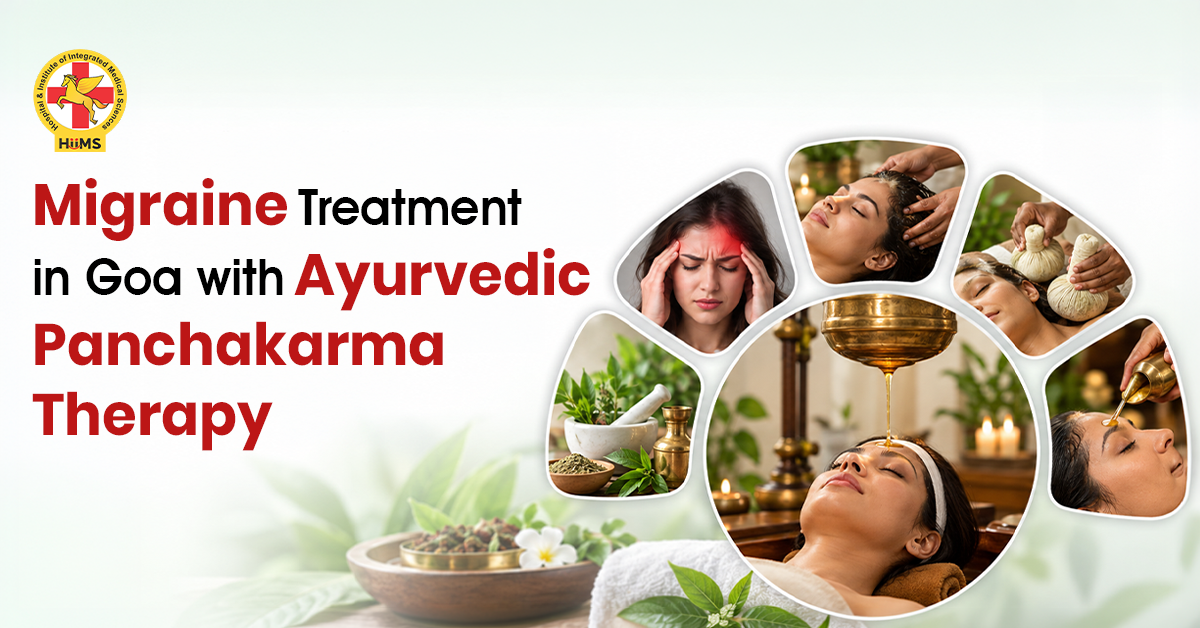

A migraine goes beyond a normal headache. A migraine attack can be accompanied by a pulsating feeling, vomiting, photophobia or phonophobia and the desire to lie still. Migraines can come rarely for some and frequently for others, and they tend to interfere with their activities, sleep, and work.
Triggers could be stress, improper food intake, poor sleep habits, dehydration, hormonal variations, and certain foods. Understanding your triggers and living a healthy life will protect you from getting frequent headaches.
There is Ayurvedic migraine treatment in Goa that works on a personalised basis through diet and lifestyle. Panchakarma therapy is one of the approaches considered in Ayurvedic care for certain migraine cases.
What Is Migraine?
Migraine is a neurological disorder which is responsible for causing headaches of either moderate or severe intensity, accompanied by a throbbing or pulsing pain. Such a headache could occur either on one or on both sides of the head and could persist for hours or even days.
Along with headache, a person may experience nausea, vomiting, sensitivity to light and sound, dizziness or visual changes. Some people experience an aura before or during an attack. Not everyone with a migraine has the same symptoms.
When the headaches become frequent, identifying possible triggers and getting appropriate guidance becomes important for long-term management.
Common Migraine Symptoms
Migraine can affect people differently, but some common symptoms include:
- Throbbing or pulsating headache
- Pain on one or both sides of the head
- Nausea or vomiting
- Sensitivity to bright light
- Sensitivity to loud sounds
- Dizziness or weakness
- Blurred vision or visual disturbances
- Difficulty concentrating
- Increased sensitivity to smells
Maintaining a headache diary is another helpful tool. Tracking your sleep patterns, eating habits, and writing a headache diary. Tracking down sleeping habits, food intake, stress, and other activities could reveal the pattern behind such attacks.
What Causes Migraine?
There is no one trigger for migraines; several different things might contribute to a migraine attack. Genes may also be a factor here, which means that a person who comes from a family with a history of migraines might be at a greater risk of suffering from migraines themselves.
Some of the more common triggers are:
- Stress and pressure
- Insufficient or inadequate sleep
- Missing meals
- Dehydration
- Too much time looking at screens
- Bright light and strong smells
- Hormonal changes
- Food and drink
- Changes in schedule
- Fatigue
Identifying your own triggers might prove crucial when it comes to migraine relief treatment in Goa.
Ayurvedic Treatment for Migraine in Goa
Ayurveda views health through the balance of the body’s doshas, digestion, lifestyle and individual constitution. In contrast to applying a consistent regimen on everybody, personalised Ayurveda therapy could be adopted based on an individual’s symptoms, routine, fitness levels and general well-being.
An Ayurvedic treatment for migraines in Goa may comprise dietary modifications, lifestyle changes, herbal medication, relaxation techniques, and proper use of Ayurvedic therapy.
This will ensure well-being and enable an individual to practise some habits that could lessen the chances of suffering from a migraine attack.
How Can Panchakarma Therapy Help With Migraine?
Panchakarma is a traditional Ayurvedic system of therapies that is used as part of personalised Ayurvedic care. It is not a single procedure. Different therapies may be selected according to a person’s symptoms, digestion, lifestyle, strength and overall health.
In cases where one is planning on using Panchakarma therapy for migraines, an Ayurvedic practitioner could do an assessment to determine which therapies can be used. The Ayurvedic therapies often recommended for migraines include:
- Shirodhara: Warm herbal oils or suitable fluids are applied to the forehead in a steady flow. This is traditionally done to help one achieve relaxation and mental calmness.
- Nasya: Medicated oils and herbs are applied through the nose under expert guidance. This is traditionally done in Ayurveda when there are issues involving the head and neck areas
- Abhyanga: Massage of warm oil which may help one to relax, improve circulation and relieve muscle tension of the head, neck and shoulder regions.
- Swedana: Herbal steam or sweating therapy may be used after suitable Ayurvedic procedures to support relaxation and circulation.
- Shiro Abhyanga: A specialised head massage using suitable herbal oils, traditionally used to relax the scalp, head and neck area.
- Panchakarma like Vamana or Virechana therapies: For certain people, traditional Panchakarma therapies can be contemplated in accordance with Ayurvedic evaluation and according to the strength and state of health of the individual. These should be conducted only under the guidance of a qualified Ayurvedic physician.
These therapies are not for all; the specific combination would depend on individual evaluation. They should never be done independently at home, particularly Panchakarma therapies that need proper preparation and guidance.
The treatment of migraines by Ayurveda at Jeena Sikho HiiMS Goa is customised as per individual evaluation. As per the condition of the individual, specific therapies can be done along with diet, lifestyle, yoga, pranayama, and herbs.
Do you need customised migraine treatment in Goa? Look for guidance by Jeena Sikho HiiMS Goa according to your symptoms, lifestyle and health status. Have an appointment to understand which type of ayurveda treatment suits you best.

Diet and Lifestyle Tips for Migraine
Along with professional guidance, simple daily habits may help manage migraine triggers.
Have Your Meals On Time
Not eating meals on time could be the reason behind the headache for certain individuals. Try to keep your meal timings constant.
Stay Hydrated
Lack of sufficient water could lead to headaches. Make sure you drink plenty of water every day, especially during summer or after workout sessions.
Stick To a Routine When Going To Sleep
Irregular sleep timings could make a difference for certain migraine patients. Make sure you have constant sleep timings and proper sleep duration.
Manage Your Stress Level
Being stressed is one of the most common reasons behind migraines. A little bit of yoga, breathing techniques, or meditation will help in this matter.
Identify Personal Triggers
Not every person has the same migraine triggers. A headache diary can help you notice whether attacks are linked to particular foods, sleep patterns, stress or environmental factors.
Natural Treatment for Migraine: What Should You Know?
People often search for a natural treatment for migraine because they want to reduce their dependence on quick relief measures. However, natural does not automatically mean suitable for everyone.
Herbal supplements or Ayurvedic treatment might have interactions with other medications or may not be recommended in the certain medical situations. Hence, discussing with an expert is always recommended before resorting to such natural remedies.
A personalised treatment strategy including Ayurveda treatments along with good food and proper rest can serve as a more practical approach towards recurrent migraines.
When Should You Seek Medical Help?
It should be noted that not all headaches can be classified as migraines. One is advised to see a doctor if one suffers from acute headaches or develops them after a head trauma, or along with the symptoms like confusion, loss of consciousness, convulsions, muscle weakness, trouble speaking and visual disturbances.
One should go to see a doctor if one experiences headaches frequently, their pattern changes or they seriously affect his/her life.
Proper diagnosis is required before the chronic migraine treatment or any other specialised treatment is started.
Conclusion
Recurring migraine can affect much more than your head. It can interfere with work, sleep, concentration and everyday activities. Along with the identifying personal triggers, maintaining regular meals, proper hydration, healthy sleep and stress management can support better daily wellbeing.
If you are considering Ayurvedic migraine treatment in Goa, then Panchakarma therapy could be one such way of treating yourself through personal Ayurveda consultation in Goa. Jeena Sikho HiiMS Goa offers you expert advice based on Ayurveda treatments as per your requirements.

FAQs
1. What is the best Ayurvedic treatment for the migraine?
There is no single Ayurvedic therapy that is best for everyone. Depending on the individual assessment, care may include diet, lifestyle changes, herbal support and suitable Ayurvedic therapies such as Panchakarma.
2. Will Panchakarma therapy work for all patients suffering from migraines?
Not necessarily. The Panchakarma treatments must be chosen based on a person’s health status, symptoms, strengths, and other characteristics. Only a professional will know whether or not the therapy is recommended for each patient.
3. Is there any guarantee that Ayurveda can permanently cure migraines?
It might occur that migraines recur, and therefore it is not reasonable to assume that migraines can be permanently cured by any method whatsoever.
4. What should I avoid if I suffer from migraines?
There are different triggers for different individuals. For instance, hunger, dehydration, lack of sleep, stress, or some particular foods may provoke the attacks in some people. To understand one’s own triggers, it is advisable to keep a headache diary.
5. Where should I go if I want to treat migraines with Ayurveda in Goa?
Patients who seek migraine Ayurveda treatment can turn to an appropriate centre like Jeena Sikho HiiMS Goa.