
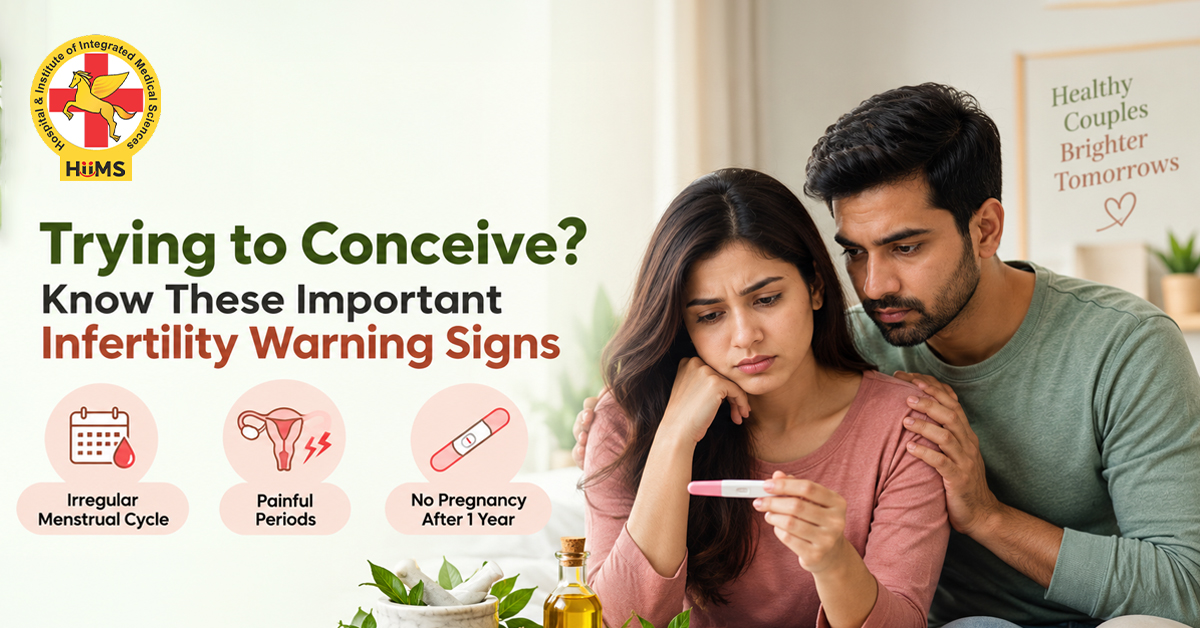

Trying to conceive can bring a mix of excitement and questions. One month passes, then another, and you may start wondering whether something is affecting your fertility. Sometimes there are no obvious signs at all. In other cases, the body may show small changes such as irregular periods, pelvic pain, sexual problems, or changes in reproductive health.
These infertility warning signs do not automatically mean that you have infertility. Many can have other causes. However, knowing what to watch for can help you seek the right guidance at the right time.
What Is the Main Sign of Infertility?
The main sign of infertility is difficulty getting pregnant despite regular, unprotected intercourse. For most couples, evaluation is recommended after 12 months of trying. If the woman is 35 or older, evaluation is generally recommended after six months. Earlier assessment may be advised when there are known fertility concerns or certain reproductive health problems.
There may be no other clear infertility symptoms, which is why delayed conception itself should not be ignored.
Early Signs of Infertility in Women
Certain menstrual and reproductive changes may point to problems that can affect ovulation or conception.
1. Irregular or Absent Menstruation
Menstruations which are irregular, too spaced out, or completely absent could mean there is a problem with the ovulation. PCOS can cause the ovulation problems, making conception more difficult.
2. Extremely Severe Painful Menstruation
This is where menstrual pain becomes very severe, sometimes to the extent that one’s normal activities are affected. Sometimes this kind of pain is connected with disorders such as endometriosis and could have some effects on fertility.
3. Persistent Pelvic Pain
Any pelvic pain that keeps on persisting should not be ignored. This pain is usually associated with some disorders related to the reproductive system.
4. Sudden Hormonal Changes
These include things such as excessive growth of body hair, severe acne breakouts in adults, extreme weight gain/loss and menstrual irregularities. These are among the female infertility symptoms worth discussing with a healthcare professional.
5. Repeated Pregnancy Loss
More than one miscarriage may be a reason for fertility evaluation. There can be several possible causes, so testing is important instead of assuming that infertility is the only explanation.
Experiencing infertility signs? Book your doctor’s appointment today. 
Infertility Warning Signs in Men
Fertility problems can affect infertility in men and women. Male infertility may have no obvious symptoms apart from difficulty causing a pregnancy.
1. Sexual Problems
Sometimes sexual problems like low libido, erectile dysfunction, and difficulty ejaculating can be related to some hormone or reproductive problem.
2. Pain in Testicles, Enlargement, or Lumps in Testicles
Pain in the testicles, enlargement of the testicles, lumps in testicles, or small-sized testicles should be considered since there may be some conditions that can affect the production of sperm.
3. Problems Related to Ejaculation
Low sperm count and the problems while ejaculating might affect conception.
4. Previous Injuries or Operations on the Testicles
Past injuries or operations done on the testicles owing to certain infections, cancer treatments, and operations for the removal of hernias can influence ejaculation and sperm production.
5. Difficulty Causing a Pregnancy
For many men, the only noticeable sign is that their partner is not becoming pregnant despite regular attempts. This is why both partners should be considered during a fertility evaluation.
When Should You See a Fertility Doctor?
Knowing when to see a fertility doctor can prevent unnecessary delays. Women under 35 are generally advised to seek evaluation after 12 months of trying. At 35 or older, evaluation is generally recommended after six months. Women over 40 may benefit from more immediate assessment.
You may need help sooner if you have irregular or absent periods, endometriosis, repeated miscarriages, known fertility problems, or certain medical histories.
What Happens During Infertility Treatment?
Infertility treatment varies with respect to the cause of infertility. It could involve an evaluation involving a detailed medical history, ovulation studies, physical examination, and semen study of the male. This will then be followed by the process of medication, procedure, or possibly even assisted reproduction, based on your evaluation.
In Jeena Sikho HiiMS Goa, we offer our infertility treatment services, along with customised suggestions for you regarding diet, lifestyle, stress management, and many more.
Conclusion
Not every period change, pelvic symptom, or sexual health concern means infertility. However, the need for persisting changes and difficulties in conception cannot be ignored. Since conception is dependent on both parties, it would be wise to evaluate both males and females. In this respect, Jeena Sikho HiiMS provides personalised guidance through VOPD that will help you in understanding your well-being and suitable support methods.

FAQs
1. What can be considered the initial symptom of infertility?
Some of the factors that would make a person opt for the test are irregular periods, painful menstruation, pelvic pain, hormone imbalances, difficulties during sex, and failure to conceive.
2. Is it possible to have no symptoms of infertility?
There would only be one symptom, which is the inability to conceive despite engaging in unprotected intercourse.
3. Can there be differences between symptoms of infertility in men and women?
There can be differences where women will exhibit symptoms like irregular periods and those relating to ovulation, while men will present sexual symptoms or sperm-related problems.
4. When is it time for a couple to seek assistance with fertility?
It takes at least one year of trying to conceive unsuccessfully, although this period is shortened when the woman is over 35 years.
5. Can infertility be treated?
Infertility can normally be solved in many cases, although it depends on the causes of infertility.