


Joint pains can hinder even simple actions such as walking, going up and down stairs, relaxing or performing tasks in the household. This kind of joint pain may occur in one’s knees, shoulders, hips, wrists, or many others. Joint pains and stiffness arise as a result of factors such as age, trauma, arthritis, or even certain medical disorders.
Panchakarma treatment for joint pain is an ayurvedic method which involves the use of therapies according to the health needs of each particular individual. The various therapies used might comprise of oil massage, oil application, and heat-based therapies. Those who seek Panchakarma treatment in Nagpur can opt to visit Ayurvedic centres such as Jeena Sikho HiiMS.
But benefits of Panchakarma treatments can be different for different people and situations. In this case, an expert practitioner should examine the person first before prescribing him/her some treatment. Also, a medical diagnosis is necessary, especially if there is a persistent joint ache.
Know more about Panchakarma treatment
What Is Panchakarma Treatment for Joint Pain?
Panchakarma is a group of traditional Ayurvedic procedures intended to support the body’s balance through selected cleansing and therapeutic practices. In Ayurveda, joint discomfort may be understood in relation to factors such as aggravated Vata, according to the person’s symptoms and constitution.
In cases of joint pain, an Ayurveda specialist can suggest certain local treatments or even go for a more complex Panchakarma therapy depending on the patient’s evaluation. This depends on certain criteria like age, overall health state, mobility, the joint itself, and the nature of the disorder.
Panchakarma should not be considered a permanent solution for arthritis or joint damage but rather a supporting detox therapy for fast recovery. Research on Ayurvedic approaches for osteoarthritis has shown some promising findings, but many studies have limitations. You can read more in this overview of Ayurvedic medicine and scientific evidence.
Key Panchakarma and Ayurvedic Therapies for Joint Pain
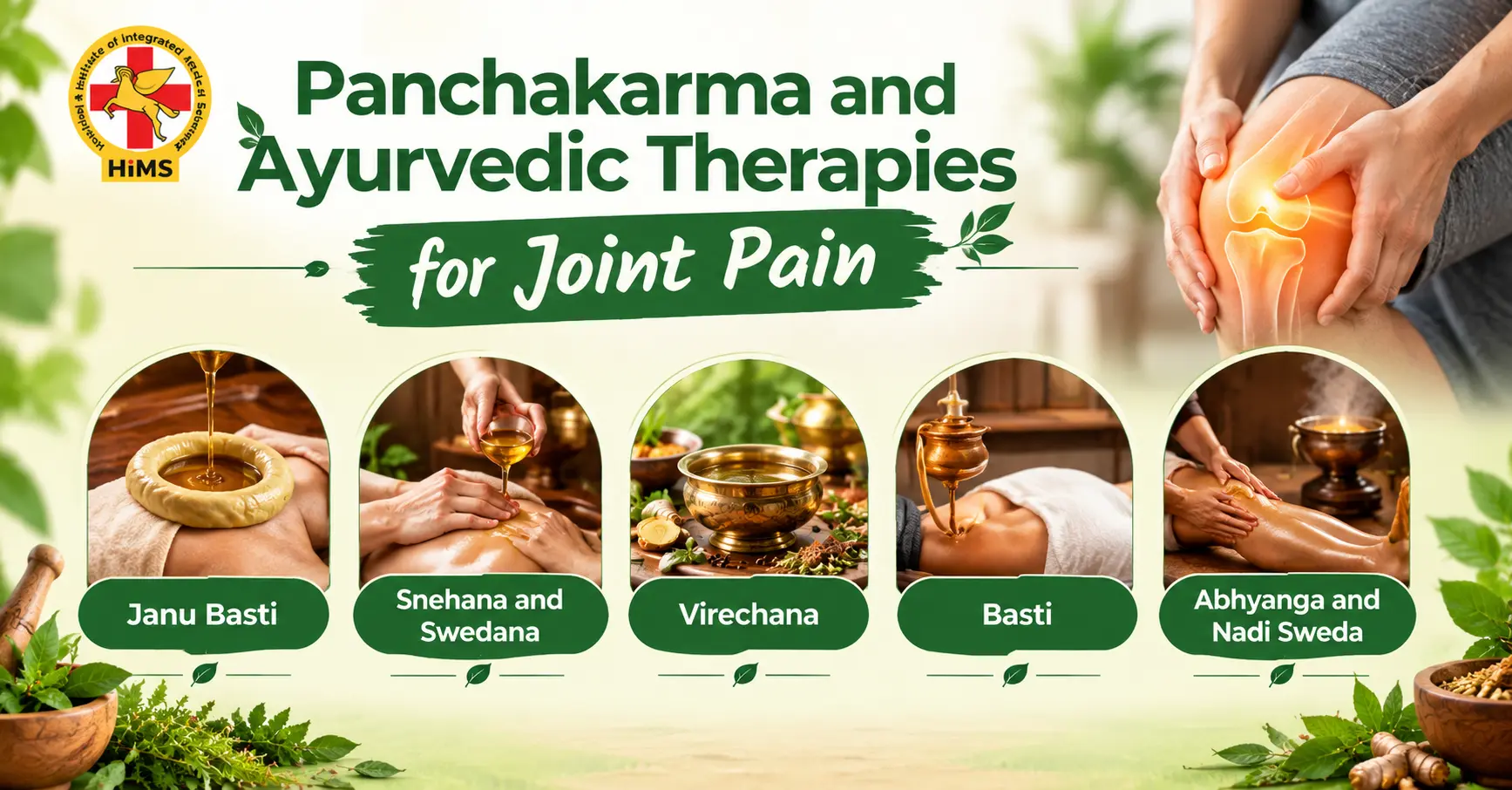
The following traditional therapies may be considered by an Ayurvedic practitioner, depending on the person’s condition and suitability.
1. Janu Basti
Janu Basti is a localised Ayurvedic procedure commonly associated with knee care. A dough ring is placed around the knee, and warm medicated oil is retained within it for a prescribed period.
The procedure is traditionally used to provide warmth and comfort around the knee. Its suitability depends on the person’s symptoms and medical condition. The oil temperature, duration, and method should be determined by a trained practitioner.
2. Snehana and Swedana
Snehana includes the application of oils or any other lubricant substances in Ayurvedic treatment. Swedana is defined as the use of heat therapy or sweating.
In such cases, when necessary, these can form part of the wellness programme of individuals who have muscle tension and stiffness in the joints. Proper selection of the type of oil and heat levels needs to be considered, especially for those who have sensitive skin and others.
3. Virechana
Virechana is a traditional Ayurvedic procedure involving therapeutic purgation. It is selected according to Ayurvedic assessment rather than being routinely recommended for every person with joint pain.
Because it can cause fluid loss and other complications, it requires professional supervision. It may be unsuitable for people with dehydration, certain chronic conditions, or general weakness.
4. Basti
Basti is a technique in Ayurveda where medicated substances are given via the rectal route. Basti is usually referred to in Ayurveda in connection with diseases associated with Vata. Basti treatment needs individual assessment and should always be done under supervision. It should not be tried at home or in place of any other form of treatment.
5. Abhyanga and Nadi Sweda
Abhyanga is the practice of massage using oils, while Nadi Sweda refers to the use of steam or heating to specific locations. Gentle massage could be of benefit in helping a patient to relax, depending on the situation. However, massage or heat therapy may not be advisable where there is acute swelling or injury.
Want to know more about panchakarma therapy. Book a free consultation today.
How Is a Panchakarma Plan Selected?
A suitable plan begins with an assessment rather than choosing therapies based on symptoms alone.
- First consultation: The therapist reviews the signs and symptoms, the medical history of the patient, the medicines being used by the individual and past history of injuries and activities.
- Condition awareness: Joint pain could have several causes for that. On the basis of the symptoms and medical facts, one may perform tests, including blood tests and scans.
- Choosing the therapy: The practitioner takes into account the state of health of the patient and decides whether local Ayurvedic treatments or other measures need to be applied.
- Dietary and lifestyle changes: Mild physical activities, good diet, sufficient sleep and changes in activity could be part of the whole treatment process.
- Follow-up: Monitoring progress and any side effects is necessary; therapies should be changed or stopped if causing any unpleasant feelings.
There is no single Panchakarma schedule or duration that suits everyone.
Natural Remedies and Daily Habits for Joint Comfort
In addition to the professional advice, there are some habits that can be considered as joint pain treatment methods.
Safe physical activity: Choose the appropriate walking or stretching exercises recommended by your doctor.
Diet: Consume various vegetables, fruits, cereals, and good protein.
Weight loss: If you have extra weight, go for gradual weight reduction, as it will reduce the joint load.
Proper Sleep: Introduce sleep along with some exercise, and don’t overwork the painful joints all the time.
Prescription: Use medications prescribed by your physician and undertake the physiotherapy as prescribed by your doctor.
Avoid starting herbal supplements or stopping prescribed medicines without professional advice.
Panchakarma Treatment for Joint Pain at Jeena Sikho HiiMS Nagpur
The pain relief in Jeeva Sikho HiiMS Nagpur is done by Ayurveda and a holistic approach. Those who would like to get themselves treated with the help of Panchakarma Therapy in Nagpur can get in touch with the health experts at the clinic for consultation.
The treatment process can comprise an evaluation of joint pain, selection of appropriate Ayurvedic treatments, and advice on food and lifestyle. The treatment process would vary from patient to patient according to the health professional’s assessment. Patients should provide information about their diagnosis, ongoing medications, past treatments, and test results to the health professionals.
Ayurvedic care should complement appropriate medical evaluation, not delay diagnosis or replace essential treatment for inflammatory or degenerative joint conditions.
Conclusion
Panchakarma treatment for joint pain offers a traditional Ayurvedic approach that may be considered as part of an individually planned wellness programme. Therapies such as Janu Basti, Snehana, Swedana, and Abhyanga are selected according to the person’s needs and health status.

There is no guarantee that these benefits will be provided, and clinical evidence in support of many Panchakarma treatments is still lacking. Should you be considering Ayurvedic pain management in Nagpur, you can consult a specialist and have a medical examination if necessary. You can visit Jeena Sikho HiiMS Nagpur or book a VOPD consultation to know more.
FAQs
Explain the treatment for joint pain by using Panchakarma therapy?
Panchakarma therapy is an ancient technique derived from Ayurvedic Medicine that uses selective therapies for joint pain and for overall wellness. The therapies used would depend on the state of health of the individual.
Does Panchakarma therapy decrease joint stiffness?
Some Ayurvedic therapies may help some patients reduce joint stiffness but this will depend on each person as results may vary. Persistent stiffness needs to be evaluated by a doctor.
What is the duration of the Panchakarma therapy for the joint pain?
There is no fixed duration for this therapy. The duration of the treatment will depend on the patient’s condition, his or her medical history, and the therapies suggested.
Is it safe for elderly people with joint pain to practice Panchakarma?
Not all people may benefit from this treatment. Elderly people need to be examined first before undergoing Panchakarma treatment.
Which Ayurvedic therapies are used for joint pain?
Common therapies that are traditionally used to treat the joint pain in Ayurveda include Janu Basti, Abhyanga, Snehana, and Swedana.

Leave a comment