

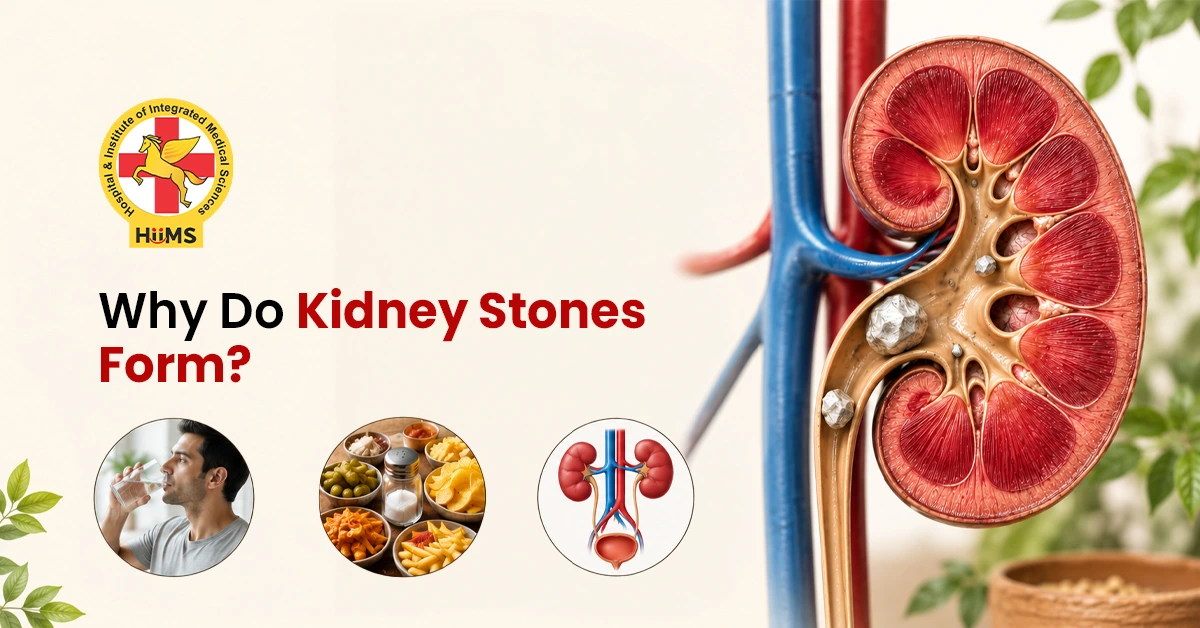

Most people never think about their kidneys until pain shows up out of nowhere, usually late in the evening or right after a meal that seemed to be perfectly normal. That sudden, intense discomfort makes it feel like the stone appeared overnight, but that is very rarely how it actually happens.
Stones build up quietly over weeks or months, formed mostly by everyday habits that nobody pays attention to until it is too late. Learning about kidney stones causes early gives you a real chance to change those habits before the pain ever starts.
In this blog, we’ll get to know why kidney stones form in the first place, their common causes and if they can be prevented naturally.
Kidney Stones Do Not Form Overnight
A kidney stone is simply a hard clump of minerals and salts that separate out of urine instead of passing through the body smoothly. Under normal conditions, your kidneys filter these minerals continuously, and urine carries them away without any difficulty.
Actually, the problems start when urine turns concentrated, meaning there is too little water compared to the waste it needs to carry. Once that balance finishes, tiny crystals start bonding together, and this is where the real causes of kidney stones show up.
It is a slow, quiet process that often stretches across several months before anything feels wrong, which is exactly why so many people only ask what causes kidney stones after they already have one.
The Most Common Everyday Habits That Lead to Kidney Stones
Not Drinking Enough Water
Water plays a bigger role in this than most people realize. When fluid intake is reduced, urine becomes darker and thicker, giving minerals more opportunity to bond together instead of flushing out. This single habit is considered the biggest trigger behind what causes kidney stones, especially for people who work outdoors or simply forget to drink through a busy day.
Too Much Salt and Processed Foods
Extra sodium forces the kidneys to push out more calcium into urine, and that additional calcium becomes raw material for future stones. Packaged snacks, instant foods, and restaurant meals are usually loaded with hidden salt, making this one of the lesser-known kidney stone risk factors people overlook.
High Animal Protein Intake
Diets heavy in meat, eggs, and seafood raise uric acid levels in the body. Higher uric acid disturbs the natural balance of urine, creating an environment where crystals form more easily. This is one of the clearer causes of kidney stones, particularly for people who eat very little fiber alongside their protein.
Family History and Previous Stones
If a parent or sibling has had stones, the chances of developing one yourself go up noticeably. People who have already passed a stone once are also far more likely to develop another, which makes this one of the more persistent kidney stone risk factors to watch.
Early Signs Your Body Should Not Ignore
Not every stone indicates an issue with pain immediately, but most give some kind of warning. Pain along the side or lower back that comes and goes is usually the first clue. Burning during urination, blood mixed into urine, needing to urinate more often than usual, and mild nausea often follow.
Recognizing these kidney stone symptoms early allows treatment before a small stone grows large enough to block the urinary tract. Very small stones sometimes cause no symptoms at all and pass unnoticed, which is why regular check-ups are so important for anyone with history of normal occurrences.
Can Kidney Stones Be Prevented Naturally?
Prevention works best when it becomes part of daily routine rather than something remembered only after pain returns.
- Drinking water regularly through the day, rather than in one or two large amounts, keeps urine diluted.
- Limiting salty, packaged food reduces the load on the kidneys.
- Home-cooked, balanced meals give the body more stable nutrition without the hidden sodium of processed options.
- Holding urine for long periods of time, common among people with busy schedules, should be avoided.
- Staying physically active supports circulation and digestion, both of which influence how well the body clears waste.
- Good digestion in particular deserves attention, since natural treatment methods like Ayurveda has long connected weak digestive fire with the buildup of toxins that eventually affect the kidneys.
Also, you can opt for seasonal Ayurvedic care, taken under proper guidance, can support this balance further as part of long-term kidney stone prevention, alongside the everyday habits mentioned above, which together lower overall kidney stone risk factors over time.
Conclusion
Kidney stones do not usually form because of one single mistake. They build slowly from a combination of dehydration, diet, weak digestion, and sometimes genetics, all working together over time.
Understanding the real kidney stones causes gives you the power to act before pain forces the issue. Small, consistent changes in water intake, food choices, and daily routine, supported by an Ayurvedic approach that strengthens digestion and balance, can meaningfully lower the chances of future stones.
Still, persistent pain or recurring symptoms should never be ignored, and a timely health evaluation at a good hospital remains the safest first step whenever kidney stone causes turn out to be more than just an interest.

FAQs
Q1. What is the most common reason kidney stones develop?
>>>>>>>>>>>>>>>>>>>>>>>>>>>>>>>>>>>>Low water intake is at the top of the list, since concentrated urine gives minerals the chance to clump together over time.
Q2. Which foods increase the chances of kidney stones?
Salty packaged foods, red meat, and oxalate-rich vegetables like spinach are the main dietary contributors people overlook.
Q3. How much water should someone drink to lower the risk of stones?
Spreading water intake evenly through the day, roughly eight to ten glasses, keeps urine diluted enough to reduce crystal formation.
Q4. Which early kidney stone symptoms should not be ignored?
Persistent back or side pain, burning during urination, and blood in urine deserve prompt healthcare attention.
Q5. How does Ayurveda look at kidney stone formation?
Ayurveda connects stone formation to weak digestion and internal imbalance, focusing on strengthening the body’s natural processing ability.

Leave a comment