


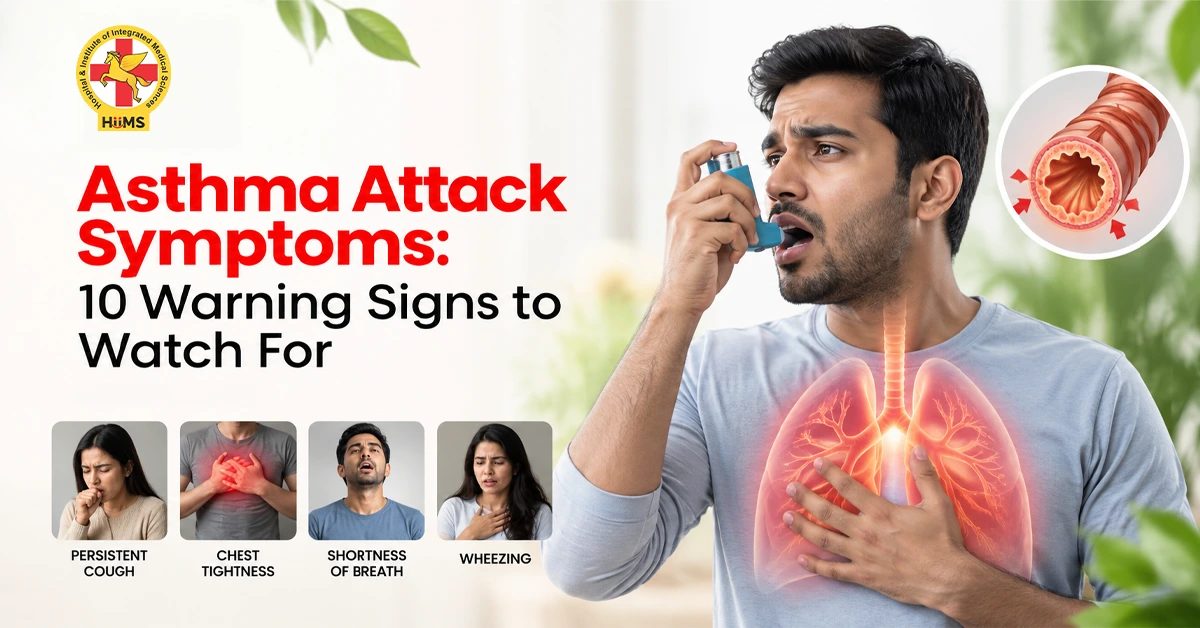
Most asthma attacks don’t hit out of nowhere. There’s usually a build-up, small signs that show up hours or even a day before things get serious, and catching them early can make a real difference in how the whole episode plays out. Roughly 25 million people in the US live with asthma, according to CDC data, and knowing your own asthma attack symptoms genuinely changes how prepared you are when your body starts sending warning signals.
This blog walks through the ten signs worth watching for, what actually triggers an attack, and how a more natural, root-cause approach fits alongside your regular treatment.

Why Recognising Asthma Attack Symptoms Early Matters
Warning signs can show up anywhere from a few hours to nearly two days before a full attack begins, and they’re not always dramatic. Sometimes it’s just a bit more coughing than usual, or feeling a little more tired than the day warrants. Catching these asthma attack symptoms while they’re still mild gives you a real head start on treatment, rather than scrambling once breathing has already become difficult.
If your asthma has been feeling harder to manage lately, you can talk to the team at Jeena Sikho HiiMS about a more personalised, natural approach alongside your current treatment.
Here are the 10 early signs of asthma attack:
1. Frequent Coughing, Especially at Night
A cough that shows up more at night or early morning, sometimes enough to wake you up, is often one of the very first signs something’s off with your airways.
2. Wheezing When You Breathe
That high-pitched whistling sound, especially when you breathe out, means your airways are getting narrower. Never ignore a slight wheeze.
3. Shortness of Breath
Feeling like you can’t quite get a full breath even during light activity, is a classic early warning. Shortness of breath that shows up without much exertion is worth paying close attention to.
4. Chest Tightness or Pressure
When the airways are inflamed and start to swell, there is often a feeling of the chest being squeezed or heavy.
5. Unusual Fatigue
When your body is working harder just to get enough oxygen it is using up more energy and you will feel drained for no apparent reason.
6. Trouble Speaking in Full Sentences
If you find yourself needing to pause mid-sentence just to catch a breath, that’s a sign things have moved beyond mild discomfort.
7. Rapid, Shallow Breathing
Breathing faster than normal, especially paired with any of the other signs on this list, often means an attack is actively progressing.
8. Needing Your Rescue Inhaler More Often
If you’re reaching for your inhaler more frequently than usual, or it’s not giving you the same relief it used to, that’s a signal your asthma isn’t as controlled as it should be.
9. Signs of Allergies or a Viral Illness
Sneezing, a runny or stuffy nose, itchy throat, or dark circles under the eyes often show up alongside asthma flare-ups, since infections and allergies are common triggers.
10. Bluish Lips or Fingernails
This one’s a genuine emergency sign. If lips or fingernails start turning blue or grey, it means oxygen levels have dropped seriously low, and you need immediate medical help.
What Triggers an Asthma Attack?
Understanding your own asthma attack triggers helps you avoid a good chunk of flare-ups before they even start. Common ones include:
- Dust, pollen or animal dander
- Cold weather, or rapid change of weather
- Strong odours, smoke or air pollution
- Respiratory tract infections like colds or flu
- Stress or excessive physical exertion
How Do You Tell Normal Breathlessness From Real Asthma Breathing Problems?
This is where a lot of people get confused, especially if they’re newly diagnosed or unsure whether their asthma is well-controlled. Feeling short of breath after a hard workout is common, but this should pass after a few minutes.
Genuine asthma breathing problems tend to stick around, worsen with triggers, and often come paired with wheezing or chest tightness rather than fading on their own. If you’re unsure, tracking your peak flow readings over a few days can help spot a pattern your doctor can act on.
How Does Ayurveda Approach Asthma Differently?
Ayurveda links asthma, referred to as Tamaka Shwasa, to an imbalance mainly involving Vata and Kapha dosha, along with weak digestion contributing to mucus buildup over time.
At Jeena Sikho HiiMS, this usually translates into a combination of Panchakarma-based therapies like Vamana, herbal formulations using ingredients like Vasa, Tulsi, and Mulethi, and our CAAT breathing protocol, which focuses on lung capacity and correcting breathing patterns over time. The idea is to work on the underlying imbalance alongside your existing treatment, rather than replacing anything your doctor has already prescribed.

Conclusion
Asthma attacks rarely come without some kind of warning, and learning to spot yours early is genuinely one of the most useful things you can do for your own safety. If you’ve been noticing these signs more often, or feel like your current treatment isn’t giving you the control you need, you can book a VOPD consultation with Jeena Sikho HiiMS and talk through a more personalised, natural approach alongside whatever you’re already doing.
FAQ’s
Q1. How long before an attack do warning signs usually show up?
They can appear anywhere from a few hours to about 24-48 hours before a full attack, though this varies quite a bit from person to person.
Q2. Is coughing at night always a sign of asthma?
Not always, but frequent nighttime coughing in someone with diagnosed asthma is often an early sign that symptoms aren’t well controlled.
Q.3 When should I go to the emergency room instead of using my inhaler?
If you are not getting relief from your rescue inhaler, or if you have bluish lips or are so short of breath that you cannot talk, get emergency help right away.
Q4. Can Ayurvedic treatment help alongside my current asthma medication?
Many people combine both, but it’s best to keep your treating doctor informed so everything stays properly coordinated.
Q5. Do all people with asthma have the same warning signs?
No, early warning signs can differ from person to person and may even change between different attacks for the same individual.