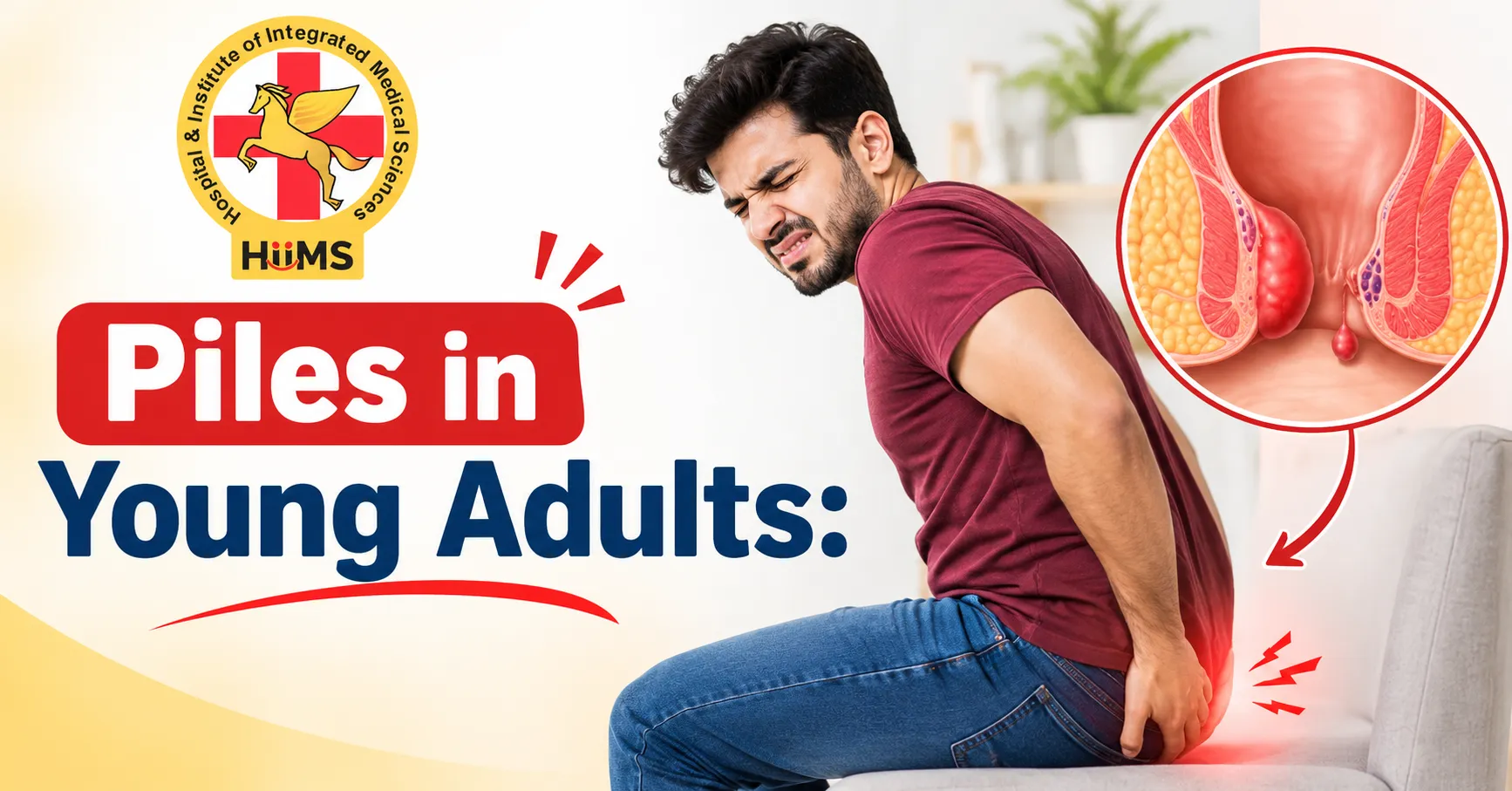

People tend to think that piles are an issue that only occurs among elderly individuals. This notion is not true because there are many cases of Piles in 20s and 30s or younger adults. Nevertheless, many young adults do not want to admit that they have such symptoms.
Piles, also known as the hemorrhoids, are the result of enlarged veins in and around the lower rectum and the anal region. Piles can give rise to symptoms of pain, itching, discomfort while passing stool, and even blood in some cases. Although piles are normally associated with old age, there are other factors as well that may lead to their formation.
In this blog, we explore the causes of piles in young adults, early-stage pile symptoms, common lifestyle triggers, ways to manage the discomfort and when you should consult a doctor.
What Are Piles?
Inside and around your anus, there are small cushions of blood vessels. They help control stool. When too much pressure is put on these veins, they swell up and get irritated. That swelling is what we call piles.
There are two main types. Internal piles form inside the rectum and are usually not painful, but they can bleed. External piles form under the skin around the anus. These can itch, hurt, and feel like a lump.
Common Causes of Piles
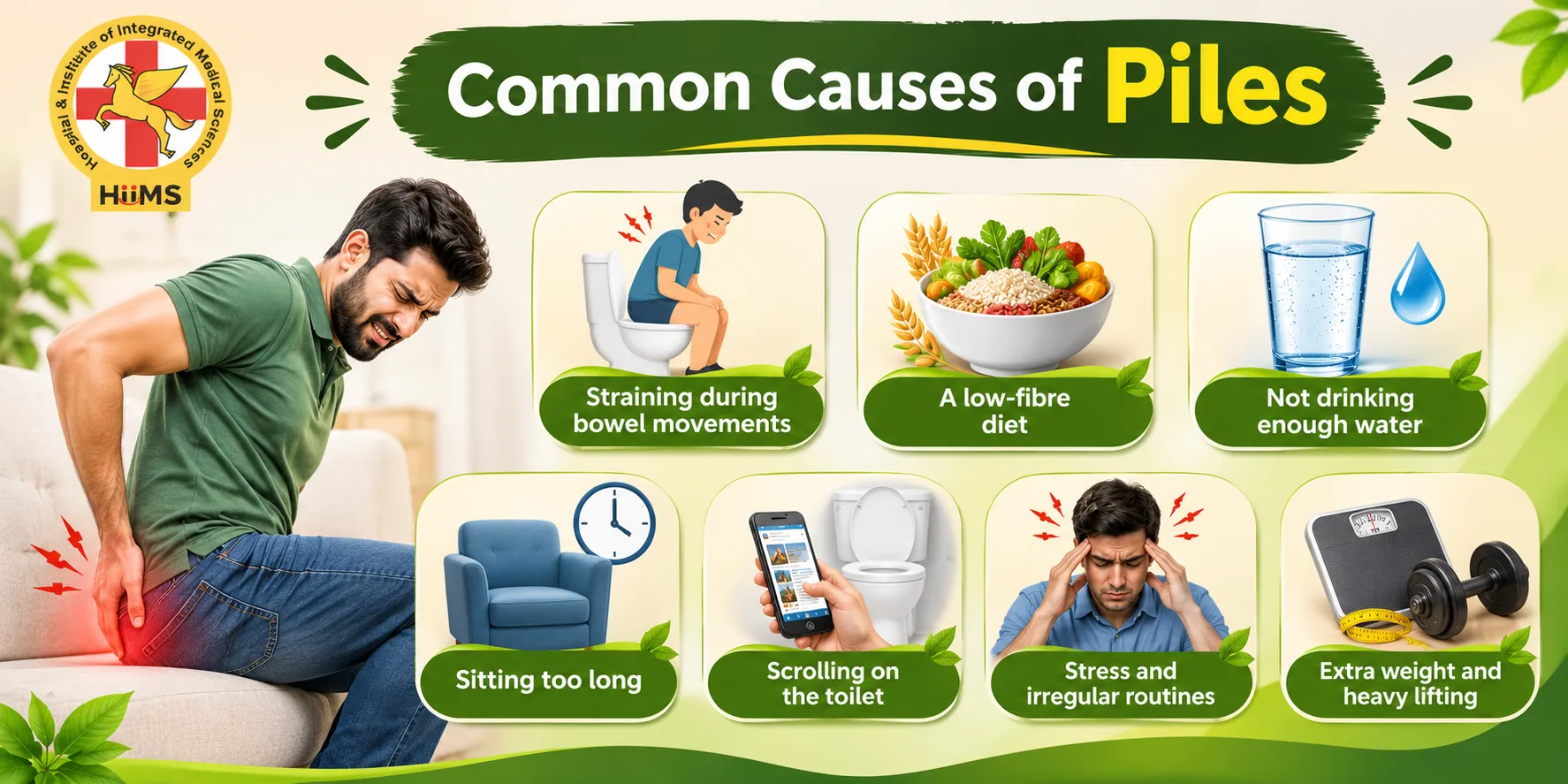
Let us start with the common causes of piles. Almost all of them come down to one thing: extra pressure on the veins in the lower rectum.
Straining during bowel movements. Pushing hard to pass stool is the number one trigger. Straining, sitting for long periods on the toilet, and chronic constipation or diarrhoea are among the main reasons hemorrhoids develop.
A low-fibre diet. Fast food, packaged snacks, white bread, and very few vegetables or fruits make stool hard and dry. Hard stool means more straining. A review of 7 trials published in the American Journal of Gastroenterology found that adding fibre cut the risk of ongoing symptoms by almost half and reduced bleeding by about 50 per cent.
Not drinking enough water. When your body is short on water, stool turns dry and tough to pass.
Sitting too long. Long hours at a desk or in front of a screen slow down the gut and keep pressure on the pelvic area.
Scrolling on the toilet. Sitting on the toilet for a long time lets blood pool in the veins of the anus. A 2025 study in PLOS ONE found that people who used a phone on the toilet had a 46 percent higher chance of having hemorrhoids, and they were far more likely to sit for more than five minutes. One thing to keep in mind: everyone in that study was over 45, so we cannot say the same number applies to younger people. Still, cutting down toilet time is a simple habit worth changing.
Stress and irregular routines. Skipping meals, poor sleep, and ignoring the urge to go can all upset digestion and lead to constipation.
Extra weight and heavy lifting. Being overweight, especially around the belly, raises pressure inside the abdomen. Lifting heavy weights with poor form does the same.
Alcohol and smoking. Alcohol can dehydrate you and worsen constipation, while smoking affects blood flow and tissue health.
Why Are Piles in Your 20s and 30s Rising?
The causes of piles in young adults are mostly built into modern life. Many of us work at desks for eight to ten hours. Lunch is often something quick and packaged. Water bottles stay full while coffee cups get emptied. Gym sessions can involve heavy lifting without proper breathing. And the phone goes with us everywhere, including the bathroom.
Put together, these habits keep steady pressure on the veins in the lower rectum.
Piles in Young Men
Piles in young men are often linked to heavy lifting at the gym, long hours of sitting at work or while driving, drinking alcohol, and eating out a lot. Holding your breath and pushing hard during a heavy lift raises the pressure in your belly sharply, and that pressure travels down to the veins near the anus.
Piles in Young Women
Piles in young women have a few extra triggers. Pregnancy is a big one, because the growing uterus presses on the veins in the pelvis, and hormonal changes can make constipation worse. Pushing during childbirth can also bring on piles. Apart from this, women often face the same everyday causes as men: low fiber, little water, long sitting hours, and stress.
If you are pregnant or have recently had a baby, speak with your doctor before using any cream or medicine for piles.
Early Stage Piles Symptoms
Catching the problem early makes it much easier to manage. These are the early-stage piles symptoms to look out for:
- Bright red blood on toilet paper or in the toilet bowl after passing stool. It is often painless.
- Itching or irritation around the anus.
- Mild discomfort or a feeling of fullness after a bowel movement.
- A small, soft lump near the anus that may be tender.
- Mucus discharge or a feeling that your bowels have not emptied fully.
In later stages, an internal pile may slip out of the anus, or a blood clot may form and cause sudden, severe pain.
Simple Habits That Help
You do not need anything complicated. A few steady habits can make a real difference:
- Eat more fiber. Add fruits, vegetables, whole grains, pulses, and salads to your meals.
- Drink enough water throughout the day.
- Do not sit on the toilet for long. Leave your phone outside. Go when you feel the urge, and do not hold it in.
- Move often. Stand up and walk for a few minutes every hour. A daily walk helps your gut too.
- Do not strain. If stool is not coming, get up and try again later.
- Lift smartly. Breathe out while lifting any heavy object and do not hold your breath.
- Keep your weight in check and limit alcohol and smoking.
A warm bath for ten minutes can ease itching and pain.
When to See a Doctor
Bleeding from the anus is not always from piles. Other problems, like anal fissures, infections, or conditions of the bowel, can look similar. So do not assume it is “just piles.”
See a doctor if:
- Bleeding keeps happening or is heavy
- Pain is severe
- Symptoms last more than a week despite home care
Conclusion
Piles are no longer a problem only for older people. The common causes of piles, such as low fiber, little water, long sitting hours, straining, and long toilet sessions, are part of daily life for many young adults. That is why piles in 20s and 30s are becoming more common, whether you are a young man lifting weights or a young woman going through pregnancy.
The good news is that most of these causes can be changed. Eat more fiber, drink water, move through the day, and keep toilet time short. Pay attention to the early stage piles symptoms and do not let embarrassment stop you from getting checked. If bleeding or pain continues, see a doctor.

Frequently Asked Questions
Q1. Can young people really get piles?
Yes. Low-fiber food, long desk hours, constipation, and long toilet sessions are all common at a young age.
Q2. Is bleeding during a bowel movement always a sign of piles?
No. Piles are a common reason, but anal fissures and other bowel problems can cause bleeding too. If bleeding is repeated or heavy, get it checked by a doctor.
Q3. Can piles go away on their own?
Mild piles often settle in a few days to weeks with more fiber, water, and less straining. If they stay or return, see a doctor.
Q4. Does sitting for long hours cause piles?
It can add to the risk, as it slows your gut and keeps pressure on the pelvic area. Walk for a few minutes every hour.
Q5. Are piles in young women linked to pregnancy?
Pregnancy is a common trigger because of pressure on pelvic veins and constipation. Check with your doctor before using any treatment during pregnancy.
Leave a comment