

The skin is the largest organ in the human body. It is one of the major organs responsible for safeguarding humans against the harmful effects of the environment. The skin, throughout the course of the day, comes into contact with the sun, pollutants, dust, and various other elements.
Damage to skin cells over long periods of time may eventually result in skin cancer. Knowledge about types of skin cancer will assist you in detecting any abnormal change at its onset and consulting your doctor right away.
Skin cancer may occur to anyone, though not everyone is at equal risk of developing skin cancer. Frequent exposure to the sun, fair skin, and family history of skin cancer are among the most common causes of skin cancer.
Fortunately, most cases of skin cancer are detected early, hence the importance of early diagnosis and treatment. This blog will provide you with the details on skin cancer types, skin cancer symptoms, skin cancer risk factors, and ways of reducing skin cancer risks.
What is Skin Cancer?
Skin cancer develops when skin cells begin to grow in an uncontrolled way. This usually results from frequent injuries to the DNA of skin cells caused by ultraviolet light, which is produced by the sun or artificial sunlamps used in tanning salons.
But it can also occur in parts of the body where there is little or no exposure to sunlight.
The disease might start as an unusual spot, mark, or mole that is not like other parts of the skin. Although not all abnormalities are skin cancer, they should be investigated by a doctor.
What are the Types of Skin Cancer?
Knowledge about different types of skin cancer could help one recognise signs and seek medical consultation when needed.
Basal Cell Carcinoma
The most common skin cancer type is basal cell carcinoma. It starts developing in the basal cells of the outermost layer of skin.
This cancerous growth tends to develop in the places of skin that are often exposed to sunlight, for instance, the face, neck, ears, and hands. It might look like a shiny nod, an unhealed wound, or a pink spot.
The thing is that this cancer is relatively slow-growing and tends to spread to other organs seldomly. Nevertheless, it can damage the tissues that are near.
Squamous Cell Carcinoma
Squamous cell carcinoma starts in the squamous cells that form most of the outer layer of the skin.
It may appear as a rough, scaly patch, a firm red bump, or an open sore. It commonly affects the face, scalp, lips, ears, and hands because these areas receive more sunlight.
Early treatment often gives good results, but delaying treatment may increase the chance of the cancer spreading.
Melanoma
Melanoma is considered the most serious among the different types of skin cancer because it can spread to other parts of the body if it is not detected early.
It develops in melanocytes, the cells that produce melanin, which gives skin its natural colour.
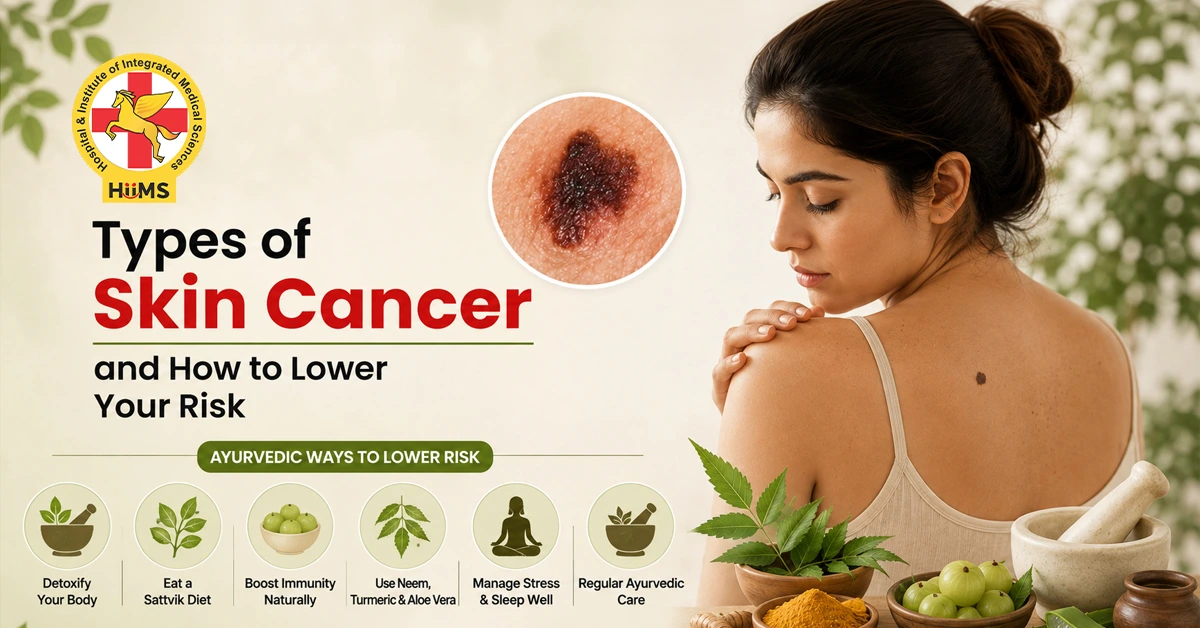
Melanoma may develop from an existing mole or appear as a new dark spot. Warning signs include changes in size, colour, shape, or border of a mole. Any mole that starts bleeding, itching, or changing quickly should be checked by a doctor.
Rare Types of Skin Cancer
Though not very frequent, there are some other types of skin cancers, such as:
Merkel cell carcinoma
Sebaceous gland carcinoma
Dermatofibrosarcoma protuberans
Cutaneous lymphoma
Such cancers are rare, but they do need to be attended to urgently and diagnosed properly.
What are the Common Skin Cancer Risk Factors?
There are several things which can raise the risk of getting skin cancer. Some of the common skin cancer risk factors include:
- Constant exposure to ultraviolet rays of the sun
- Prior occurrence of sunburns
- Pale skin which gets sunburned easily
- Light-coloured eyes or hair
- Numerous moles
- Family history of skin cancer
- Weak immune system
- Age above 50 years
- Chemical exposure
- Use of tanning beds
The presence of one or more risk factors does not necessarily mean that a person would get skin cancer.
Signs That Should Not Be Ignored
Skin cancer may look different from person to person, but some warning signs include:
- A new mole or skin growth
- A sore that does not heal
- A mole changing in colour, shape, or size
- A rough or scaly patch
- Persistent itching or bleeding from a skin lesion
- A shiny bump or waxy-looking growth
If any of these changes continue for several weeks, it is important to consult a qualified healthcare professional.
Skin Cancer Prevention Tips
While not every case can be prevented, following good skin cancer prevention habits may help lower the risk.
- Apply the sunscreen lotion before going out in the sun with an appropriate SPF value.
- Do not expose yourself to the sun at peak hours if possible.
- Wear full-sleeved shirts, use sunglasses, and wear a wide-brimmed hat.
- Do not use tanning beds for your skin treatment.
- Have regular skin examinations for any irregularities that may arise.
- Visit the doctor if you are at higher risk for skin problems.
- Adopt a healthy diet.
- Stay well hydrated.
Can Ayurveda Support Overall Skin Health?
The key philosophy behind Ayurveda is that it revolves around balancing the body through the right diet, timings, and way of life. Despite Ayurveda not being considered an alternate remedy for skin cancer, it may assist in enhancing one’s health and skin through a holistic way of life.
At Jeena Sikho HiiMS, experienced Ayurvedic doctors offer personalised tips on lifestyle, eating, yoga, stress relief, and the overall wellness of individuals based on their needs. Individuals having skin problems must get medically examined prior to considering the tips for wellness.
Conclusion
Knowing the types of skin cancer can help you recognise early warning signs and understand the importance of timely medical care. Skin protection from too much sun exposure, skin examination, and practising healthy living techniques are just some of the ways through which one can reduce their chances of having damaged skin.
Small or unusual changes in the skin must not be overlooked, particularly if the change remains for some time or gets worse.
It would be best to see a healthcare expert if there is an abnormal growth of a new mole or sore in the skin that does not seem to go away. This will be vital in ensuring that skin cancer is detected early enough.

FAQs
Q1. Which type of skin cancer is the most dangerous?
Melanoma is generally considered the most serious because it has a higher chance of spreading to other parts of the body if not diagnosed early.
Q2. Whom do skin cancer risks affect more?
Individuals exposed to the sun frequently, fair-skinned individuals, those who have family members suffering from skin cancer, and individuals having lots of moles or weakened immune systems.
Q3. Is it possible for skin cancer to appear without sun exposure?
Yes, though sun exposure is the major cause, skin cancer may still appear on areas which are not much exposed to the sun.
Q4. What steps could I take to prevent myself from getting skin cancer?
To prevent yourself from skin cancer, protect yourself from ultraviolet rays, apply sunscreen, don’t use tanning salons, use appropriate clothing and inspect your skin frequently.
Q5. When should I consult a doctor regarding a mole?
If you see any change in the shape, colour and size of a mole or if it bleeds or hurts and is different from other moles.