

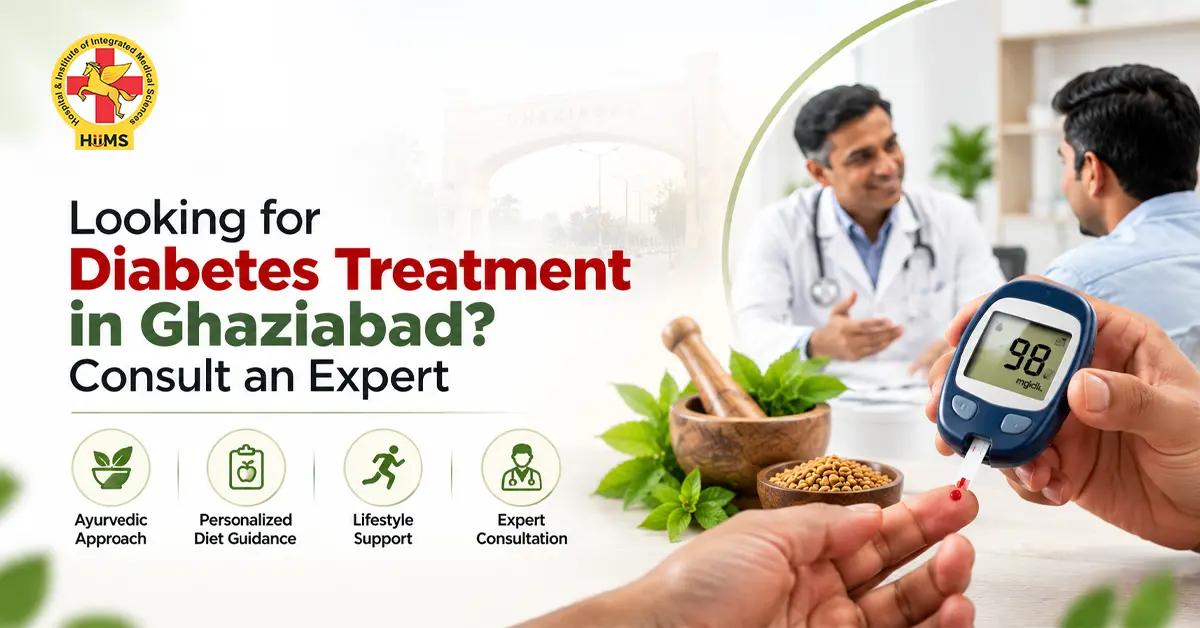

Blood sugar is much easier to manage when you check it early. Small changes in food and daily routine can also help. Still, many people don’t know where to begin. What is raising their blood sugar? And what are the options?
In fact, diabetes is very common in India today. The ICMR-INDIAB study found that about 11 in every 100 adults have it. That is close to 10 crore people. Another 15 in every 100 have prediabetes.
Busy city routines, late meals and long hours of sitting make this worry common in Ghaziabad too. So more families now look for diabetes treatment in Ghaziabad that goes beyond tablets. This blog explains the types, the signs, the usual treatment, and how Ayurveda sees blood sugar.
What Is Diabetes?
When you eat, your body turns food into sugar. A hormone called insulin then moves this sugar from the blood into your cells. Diabetes means your body makes too little insulin or can’t use it well. As a result sugar stays in the blood.
There are three main stages to know:
- Type 1: The body makes little or no insulin. So people with type 1 always need insulin.
- Type 2: This is the most common type. Food, weight and daily habits play a big role in it.
- Prediabetes: Sugar is higher than normal but not yet in the diabetes range.
Confused by your sugar reports? Book a consultation with our experts and get guidance for better diabetes management.
Signs and Causes of High Blood Sugar
Early signs are easy to ignore because they build up slowly. So watch for these changes:
- Passing urine often: The kidneys try to flush out extra sugar through urine.
- Feeling very thirsty: Because you lose more water, your body keeps asking for more.
- Tiredness: Sugar can’t reach the cells well. As a result, you feel low on energy.
- Blurred vision: High sugar can change the eye’s lens for a while.
- Tingling in the feet: Over time, high sugar can harm the small nerves.
Too much sugar and white flour, late meals, and little exercise are common causes. Besides these, weight gain, stress, poor sleep, and family history raise the risk.
If these signs keep coming back, get a fasting sugar and HbA1c test. After that, regular blood sugar monitoring shows how your body responds to food. Once the tests confirm diabetes, doctors usually start with a standard plan.
Usual Diabetes Treatment and Its Limits
The usual plan depends on the type. Type 1 diabetes treatment in Ghaziabad, anywhere, always includes insulin. On the other hand, type 2 diabetes treatment in Ghaziabad often starts with tablets like metformin. Doctors also give diet and exercise advice. Later, the doctor may add insulin if needed.
These medicines help control sugar and they are important. Still, they have limits. For example, many people take them for life, and the dose may go up over time. Some face side effects like low sugar spells or an upset stomach. Also, tablets lower sugar, but they don’t change the food and habits behind it.
That is why many people look for supportive care. This care works on diet, digestion, and routine, along with their medicines.
How Ayurveda Looks at Diabetes
Ayurveda calls diabetes Prameha. It calls the advanced form Madhumeha. Ayurveda links it to Kapha and Meda (fat) going out of balance. When digestion is weak, a state called mandagni, waste builds up. In turn, it slows down the body’s work.
So Ayurveda looks at the root cause, not just the sugar number. The goal is to improve digestion and balance food and routine. This eases the load that keeps sugar high.
Yoga is a key part of this way of life. A year-long trial from Bengaluru followed 162 adults with type 2 diabetes. One group followed a yoga-based lifestyle plan. Their HbA1c dropped about 1.25% more than in the group that did regular exercise. However, many people left the study before it ended.
The Jeena Sikho HiiMS clinic in Ghaziabad follows this same root-cause idea.
Want to know how Ayurveda supports blood sugar balance? Talk to our team.
Diabetes Treatment in Ghaziabad: The Integrated Approach at Jeena Sikho HiiMS Clinic
Jeena Sikho HiiMS Clinic, Ghaziabad follows an integrated approach for root-cause diabetes care. It brings together Ayurveda, Naturopathy and modern science. For anyone looking for diabetes care in Ghaziabad, this goes beyond sugar numbers. Instead, it looks at digestion, diet, weight, stress, and sleep.
What This Integrated Approach Includes
First, doctors look at the full picture. This means your reports, digestion, diet, sleep, weight, and other health issues.
Diabetes diet plan: The diet is a pH-balanced diet, mostly plant-based. A simple rule helps: eat raw food first, like fruit, salad, or soup, and then the regular meal. A small study in Diabetes Care tested this idea. Eating vegetables and protein before carbs lowered sugar after meals by about 29 to 37%.
Herbal support: Ayurveda has long used Gudmar, Vijaysar, Jamun, Karela, Methi, Amla, and Neem for sugar balance.
Neem Karela Therapy: This simple foot therapy uses fresh neem leaves and karela. Ayurveda values both of these bitter herbs. You gently churn this herbal paste with your feet. Traditionally, people use it to support sugar balance and better blood flow.
Panchakarma: These are classic cleansing methods that help the body’s own detox. The doctor picks the right one after a check-up.
Lifestyle balance: A short walk after meals, yoga, deep breathing, and fixed meal and sleep times keep the body in balance.
What You Can Get at the Ghaziabad Clinic
At this diabetes clinic in Ghaziabad, you can visit the OPD for a consultation with Ayurvedic doctors. First, the doctors perform nadi parikshan to determine your body type. Then you get diet and lifestyle guidance that suits you. You can also buy herbal medicines at the clinic’s own store. They also provide regular follow-ups to help track your sugar levels.
Some patients need more than OPD care. For example, you may need Neem Karela Therapy, Panchakarma, or more specialised support. In that case, the doctor may refer you to a suitable HiiMS hospital. The choice depends on your health and needs. Together, the clinic and the HiiMS hospitals help you follow one clear plan. Want to explore Ayurvedic diabetes care? Book an appointment with Jeena Sikho HiiMS Ghaziabad experts. Book an Appointment
Conclusion
Diabetes often rises quietly with signs like thirst, tiredness, and frequent urination. Tablets and insulin help control sugar, but food and daily habits matter just as much. Ayurveda adds a root-cause view based on digestion, diet and routine. For diabetes treatment in Ghaziabad, the Jeena Sikho HiiMS clinic follow an integrated approach. It help provide supportive care using natural therapies, diet and lifestyle guidance.
Explore Ayurvedic care today. Book a VOPD (video consultation) with Jeena Sikho HiiMS to connect with Ayurvedic experts and receive a personalised care plan from home.

FAQs
1. What is a normal blood sugar level?
A fasting sugar below 100 mg/dL and an HbA1c below 5.7% are normal. Higher numbers may point to prediabetes or diabetes.
2. Where can I get blood sugar treatment in Ghaziabad?
You can visit Jeena Sikho HiiMS Clinic, Ghaziabad for a consultation, a diet plan and herbal medicines. The doctors follow a root-cause approach.
3. How do I choose the best diabetes doctor in Ghaziabad?
Look for a doctor who checks your overall health gives a clear diet and follow-up plan and works along with your current medicines.
4. Can Ayurvedic care be taken along with insulin or metformin?
Yes, it can work alongside them. Keep taking your medicines as advised and share all reports with your doctor.
5. What are the Ghaziabad clinic timings?
The OPD is open Monday to Saturday, 9 AM to 6 PM. It stays closed on Sundays.
Leave a comment