


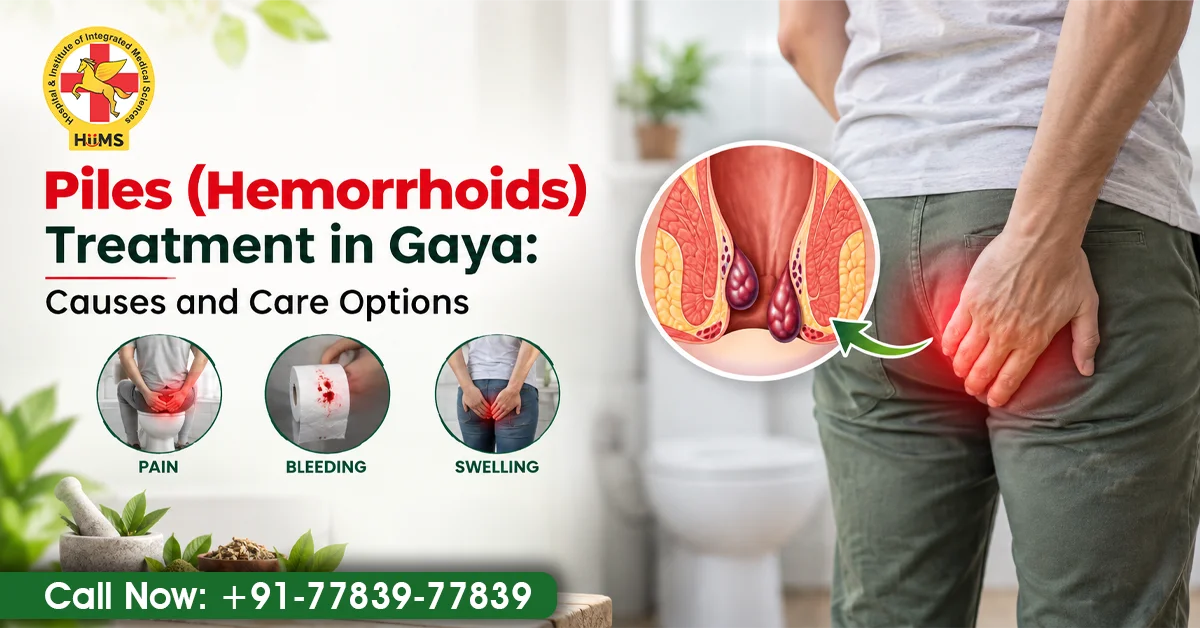
Piles can turn an ordinary visit to the toilet into something a person starts worrying about. Burning, itching, pain, swelling, or a few drops of blood may appear first, and many people simply wait for the discomfort to settle. The trouble is that repeated straining, constipation, long sitting hours, and irregular eating can keep putting pressure on the veins around the anus.
Understanding the piles causes and noticing early piles symptoms can help a person seek suitable care before the problem begins affecting everyday comfort. If you are looking for piles (hemorrhoids) treatment in Gaya, it is worth getting your symptoms checked properly so you can understand what may be causing the problem.
This blog explains how piles develop, what signs deserve attention, and which care options may be considered.
What Are Piles and How Do They Develop?
Piles, also called hemorrhoids, are swollen and inflamed veins around the anus or in the lower rectum. They can be internal, when they develop inside the rectum, or external, when they form under the skin around the anus. These veins can come under extra pressure when a person strains while passing hard stools. Constipation, spending a long time on the toilet, prolonged sitting and certain daily habits may add to the problem over time.
This is why piles are not always linked to one particular food or one bad day. A person’s bowel pattern, activity level, hydration, pregnancy, weight and routine may all have a part in the picture.
Piles Symptoms You Should Not Ignore
The first signs can be easy to put aside, especially when the discomfort appears only during or after passing stool. Common piles symptoms include bleeding during bowel movements, itching or burning around the anus, swelling, pain and a noticeable lump. Some people may also feel that the bowel has not emptied properly or experience irritation around the area. These symptoms can vary according to whether the hemorrhoids are internal or external, so recurring or unusual symptoms deserve proper assessment.
Bleeding should not automatically be assumed to be piles. If it keeps returning, becomes heavier, or occurs along with significant pain or other unusual changes, a healthcare professional should assess it. Early attention can also help identify the right piles treatment options instead of allowing the problem to continue without understanding its cause.
Understanding the Common Piles Causes
There is usually more than one reason behind piles, and looking at everyday habits can make the picture clearer. According to the National Institute of Diabetes and Digestive and Kidney Diseases, factors linked with hemorrhoids include straining during bowel movements, spending a long time on the toilet, chronic constipation or diarrhoea, a low-fibre diet, pregnancy and frequent heavy lifting.
Constipation and Straining
Hard stools often require extra effort to pass. Repeated straining increases pressure around the rectal veins and can aggravate existing swelling. Managing constipation therefore becomes an important part of hemorrhoid treatment.
Long Sitting Hours and Less Movement
Spending most of the day at a desk, behind the wheel, or in front of a screen leaves little room for movement. Regular walking breaks and simple physical activity can help maintain healthier bowel habits.
Low-Fibre Eating
Meals built mostly around refined or processed foods may provide too little fibre for comfortable bowel movements. Fruits, vegetables, whole grains and other fibre-rich choices can help make the daily diet more bowel-friendly.
Not Drinking Enough Water
When fluid intake remains low, stools may become harder and more difficult to pass. Drinking enough water throughout the day can complement dietary changes.
Pregnancy, Weight and Physical Strain
Pregnancy can increase pressure in the pelvic area, while excess weight, repeated heavy lifting, or persistent coughing may also increase abdominal pressure. These factors can become relevant when assessing individual piles causes.
Irregular Toilet Habits
Delaying bowel movements, rushing when the urge comes, or sitting on the toilet for unnecessarily long periods can make bowel habits less comfortable. Small routine changes often become an important part of natural treatment for piles.
How Ayurveda Looks at Piles
In Ayurveda, piles are described as Arshas, and the condition is considered in relation to digestion, bowel movement and the balance of the body. Instead of looking only at the swollen area, an Ayurvedic practitioner may consider food habits, constipation, daily routine and the person’s overall constitution while deciding on care.
This approach is particularly relevant when the same bowel problems keep returning. At Jeena Sikho HiiMS Gaya, consultations are personalised, with doctors considering individual health needs before suggesting a treatment plan.
Piles Treatment Options at Jeena Sikho HiiMS Gaya
The right approach depends on the person’s symptoms, severity and overall health. Piles (Hemorrhoids) treatment in Gaya at an Ayurveda-focused centre may involve dietary guidance, lifestyle correction, medicines and selected therapies rather than following one fixed plan for every patient.
Basti Therapy
Basti is an Ayurvedic therapy that uses medicated preparations administered under professional supervision. Depending on the person’s condition, it may form part of a broader plan aimed at supporting bowel regularity and digestive health.
Kshar Sutra Therapy
Kshar Sutra uses a specially prepared medicated thread and is an established Ayurvedic procedure for selected anorectal conditions. Its use should follow proper examination and professional advice rather than being considered suitable for every type or stage of piles.
Herbal Medicines and Formulations
Ayurvedic practitioners may recommend formulations according to a person’s bowel pattern, digestion and symptoms. Herbs such as Triphala, Haritaki and Amla may be considered as part of personalised care, rather than as one remedy that works in the same way for everyone.
Warm-Water and Local Care
Warm-water practices may help ease local irritation and discomfort for some people. Such measures can complement professional hemorrhoid treatment, particularly when combined with better bowel habits and appropriate hygiene.
If recurring discomfort is making daily life difficult, getting an assessment early can make the next step much clearer. At Jeena Sikho HiiMS Gaya, patients can discuss their symptoms with an Ayurvedic doctor and understand which care approach may suit their condition.
Choosing the Right Piles Doctor in Gaya
Choosing a piles doctor in Gaya should not be based only on promises of quick relief. A useful consultation should give you space to explain your bowel habits, symptoms, food pattern and daily routine, while the doctor assesses whether the symptoms are actually related to piles.
Persistent bleeding, increasing pain, a growing swelling or symptoms that keep returning deserve proper attention. A detailed assessment can help distinguish piles from other conditions that may produce similar symptoms and can guide more appropriate piles treatment options.
If you are experiencing piles symptoms, connect with an Ayurvedic doctor at Jeena Sikho HiiMS Gaya to discuss your concerns and understand suitable care options based on your needs.

Natural Treatment for Piles: Daily Habits That Are Important
Along with professional care, everyday choices can make bowel movements easier and reduce unnecessary strain. A fibre-rich diet, adequate water intake, regular walking and avoiding prolonged sitting can support better bowel habits. It is also useful to respond to the natural urge to pass stool instead of repeatedly holding it.
Sitting in warm water for a while may ease some of the discomfort, and staying gently active can help you maintain regular bowel movements. These simple steps can be useful alongside proper care, but they should not replace a medical check-up when bleeding, pain or other symptoms continue. Following a suitable natural treatment for piles plan under professional guidance can help connect treatment with practical changes at home.
Conclusion
Piles can become easier to manage when the signs are understood and the reasons behind them are not ignored. Paying attention to piles causes, improving bowel habits, and seeking guidance for persistent piles symptoms can prevent a small problem from taking over daily life.
If you are looking for piles (hemorrhoids) treatment in Gaya, Jeena Sikho HiiMS Gaya provides an Ayurveda-based approach that looks at your symptoms along with your food habits, digestion and daily routine. Since every person’s condition can be different, the treatment plan also needs to be chosen accordingly.
You can also book a VOPD consultation with the expert doctors at Jeena Sikho HiiMS and discuss your health concerns from the comfort of your home.

FAQs
1. What are the common signs of piles?
Bleeding during bowel movements, itching, burning, swelling, pain and a lump around the anus are commonly noticed signs.
2. What usually leads to piles?
Constipation, repeated straining, low-fibre eating, prolonged sitting, pregnancy and irregular bowel habits can contribute to piles.
3. Can piles be managed with lifestyle changes?
Improving fibre intake, hydration, movement and toilet habits can support symptom management, particularly when combined with suitable professional guidance.
4. When should I consult a piles doctor?
Persistent bleeding, increasing pain, recurring swelling or symptoms that interfere with daily activities warrant an appropriate medical assessment.
5. What does Ayurvedic care for piles focus on?
Ayurvedic care may consider digestion, bowel habits, food, lifestyle and individual health needs while selecting suitable medicines or therapies.