



The well-being of one’s heart depends very much on how they lead their life. It includes food selection, exercise, rest, stress level, body weight, and regular visits to a doctor. Thus, heart wellness may include aspects that go beyond medications.
That is why the majority of people seeking help with heart diseases seek knowledge that goes beyond medication. For many Indians, the daily routine makes heart care more difficult. An unhealthy diet, saltiness, lack of sleep, spending much time sitting down, stress, and absence of exercise can be factors that influence one’s wellness negatively. In such circumstances, creating healthy habits becomes an important step in maintaining heart wellness.
The goal of this blog is to give knowledge about heart wellness and how Ayurveda can improve heart health.
Did You Know? Heart Health in Numbers
According to the World Health Organization, the cardiovascular diseases caused an estimated 19.8 million deaths worldwide in 2022. They accounted for around 32% of deaths globally, while the heart attacks and strokes made up a major share of these deaths.
The Indian context also deserves attention. Research from the ICMR India State Level Disease Burden Initiative identified factors such as high blood pressure, high blood sugar, high cholesterol, unhealthy diet, and excess body weight among important contributors to disease burden in India.
These figures do not mean that every person with these risk factors will develop heart disease. Instead, they show why the regular health checks and healthy daily habits deserve attention.
In case of any persistent issues with your heart, you could try Jeena Sikho HiiMS. A heart specialist can examine your medical history, dietary habits, lifestyle, and concerns to provide a suitable plan for the well-being.

How Conventional Care Approaches Heart Conditions?
The conventional healthcare starts by diagnosing the health condition of the patient as well as his/her risk for heart disease. This will involve conducting several tests, including blood pressure tests, blood tests, ECGs, echocardiograms and others, depending on their symptoms and past medical history.
The treatment plan will be based on the results of the tests done. For instance, he/she will be put on medication. Someone with a serious blockage or other cardiac problem may need a procedure based on medical assessment.
Therefore, people taking prescribed heart medicines should not stop or change them on their own. Any change should happen after discussion with the treating doctor.
What Ayurveda Says About Heart Wellness?
Ayurveda refers to the heart as Hridya or Hrudaya and discusses heart-related conditions under the broader concept of Hridroga. A published Ayurvedic review on Hridroga discusses the Ayurvedic understanding of heart-related conditions.
Instead of focusing solely on symptoms, Ayurveda focuses on other factors like Aahar or food, Vihar or way of life, sleep, activity, digestion, individual nature and Dosha balance.
Such an approach may be useful in developing an individual programme of well-being. Yet Ayurvedic therapy must not be regarded as an alternative to cardiological diagnostics and emergency care.
Research into Ayurvedic approaches for cardiovascular health is developing. A recent review of Ayurvedic approaches for coronary artery disease discusses traditional Ayurvedic concepts and their possible relevance to cardiovascular care while highlighting the need for further clinical research.
How Jeena Sikho HiiMS Approach Heart Care?
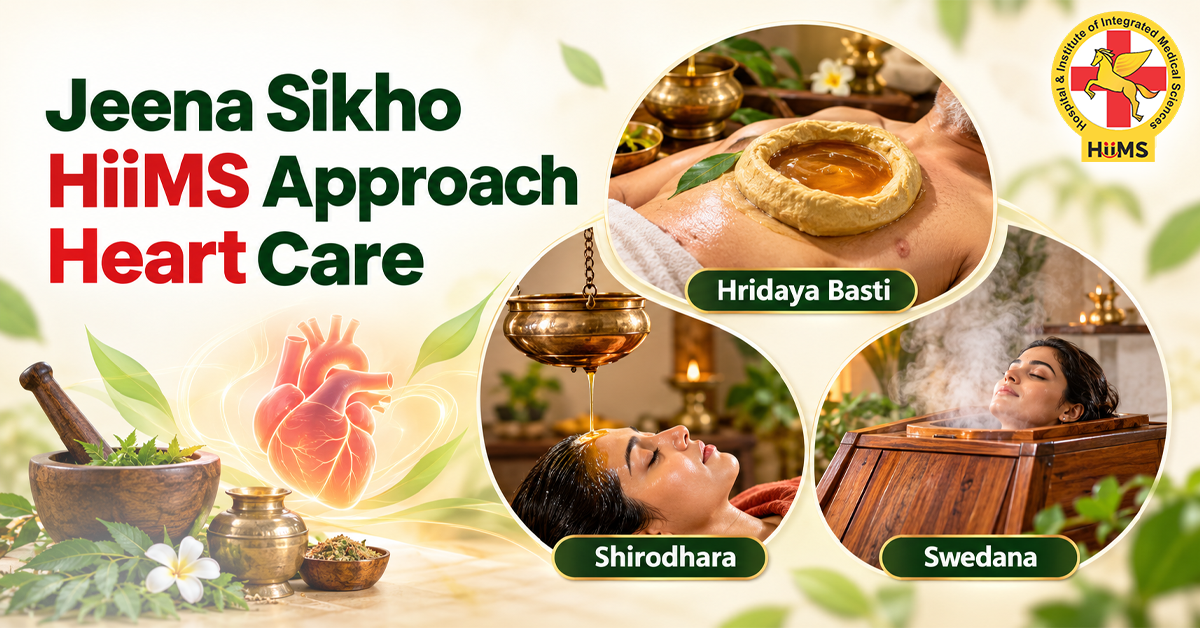
Jeena Sikho HiiMS follows an integrative approach that brings together the Ayurvedic heart care principles, lifestyle guidance, diet, and selected therapies according to individual needs.
Hridaya Basti
Hridaya Basti involves placing warm medicated oil over the chest area for a specific period. It is used as a supportive Ayurvedic therapy within a personalised wellness plan.
Shirodhara
Shirodhara involves a gentle stream of warm oil over the forehead. Traditionally, it forms part of Ayurvedic relaxation and wellness practices.
Swedana
Swedana uses the controlled warmth or steam to encourage sweating. Practitioners may include it as part of a broader Ayurvedic care plan when appropriate.
These therapies should be selected only after considering the person’s health condition. They should not replace emergency care, prescribed medicines, or necessary medical investigations.
Daily Habits for Better Heart Health
A healthy heart lifestyle is characterised by reasonable behaviours and not radical shifts.
Pick your food based on high quantities of vegetables, fruits, whole grains, nuts, legumes, and proteins. Simultaneously, minimise the intake of deep-fried foods, excessive salt, processed foods, and added sugars.
Exercise is important as well. Walking, yoga, stretching, and other appropriate forms of activity can be included in one’s daily schedule. In case a person already has some heart disease, the intensity of physical exercises needs to be discussed with the physician.
One should pay attention to sleep as well. It is recommended to have a regular sleep schedule and to try to relax before bed.
For natural heart care, avoid assuming that every herbal product or supplement is automatically safe. Some herbs can interact with the medicines. Therefore, discuss supplements with a qualified healthcare professional, especially if you already take the cardiac medicines.
Conclusion
Wellness of the heart relies on some important aspects in life, such as diet, exercise, sleep, stress levels, body weight, and health check-ups. Ayurvedic medicine presents a wider approach to the lifestyle through looking at diet, habits, digestion, body type, and balance.
At Jeena Sikho HiiMS, some therapies may include Hridaya Basti, Shirodhara, and Swedana based on the needs of the patient.

For personalised guidance, you can explore a VOPD consultation with Jeena Sikho HiiMS and discuss your health history, lifestyle, and wellness goals with the appropriate practitioner.
FAQs
1. Can Ayurveda help maintain heart health?
Ayurveda helps maintain heart health via customised diet, regime, stress relief and chosen therapies.
2. Is it appropriate for everyone to use Ayurvedic therapy for heart disease?
Treatment must be individual and must take into account the state of health.
3. What is included in the Ayurvedic treatment for the heart?
It may include dietary, regime, stress reduction and Ayurvedic therapies.
4. Does natural heart care substitute the prescribed medications?
No, natural care methods do not substitute prescribed medication. Do not reduce or stop the prescription of your physician without his approval.
5. What kind of food can be consumed for heart health under Ayurveda?
Vegetables, fruit, grains, pulses, nuts, etc. are considered healthy. Salt, frying, processed products and excessive amounts of sugar are harmful.

Leave a comment