

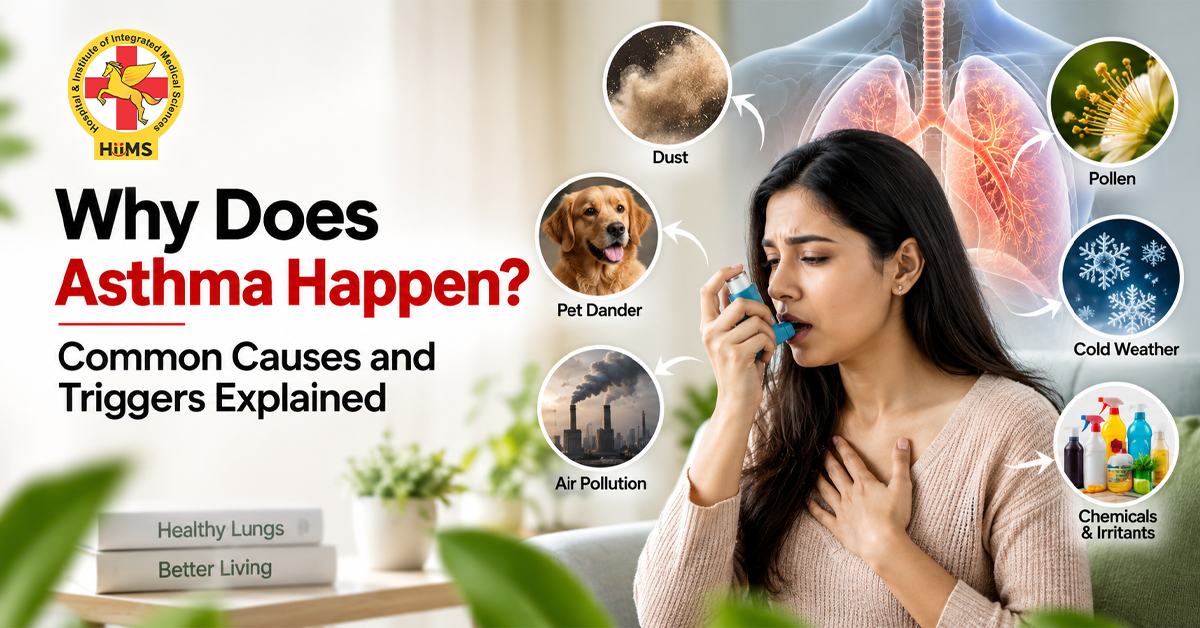
Have you ever noticed a dry cough returning at night, a whistling sound while breathing, or a sudden feeling that you cannot take a full breath after being around dust? These experiences can be confusing, especially when they appear on some days and disappear on others. So, asthma is not always linked to one clear reason.
Several things can influence how sensitive the airways become, including family history, allergies, infections, air pollution and other environmental exposures. Then there are everyday triggers that can suddenly make breathing symptoms worse, even when a person feels fine beforehand. Understanding this difference makes it easier to look at the condition from the right angle instead of treating every breathing symptom as the same problem.
In this blog, we will look at the major asthma causes, common asthma triggers, symptoms to notice and the traditional Ayurvedic perspective on breathing health.
What Is Asthma and What Happens in the Airways?
Asthma is a long-term breathing condition in which the airways can become swollen, narrow and more sensitive than usual. When a sensitive airway reacts to an irritant or trigger, the muscles around it may tighten and more mucus may form, leaving less room for air to move freely. This can lead to asthma symptoms such as coughing, wheezing, chest tightness and shortness of breath. These symptoms can come and go, which is why understanding what makes the airways reactive is an important part of understanding the condition.
What Causes Asthma? Understanding the Factors Behind It
There is no single explanation for the causes of asthma. Instead, several factors may come together over time and influence how a person’s respiratory tract responds to the surrounding environment.
Family History and Genetic Factors
A family history of asthma or allergies can make a person more likely to develop sensitive airways. This does not mean that asthma will definitely occur, but inherited traits can be one part of the picture. Looking at family history can therefore help doctors understand why breathing problems may appear in some people but not others.
Allergies and Sensitive Airways
Some people have airways that react strongly to substances such as pollen, house dust mites, mould or animal dander. Allergic conditions such as hay fever can also occur alongside asthma. In these cases, exposure to a particular substance may lead to inflammation and make breathing symptoms more noticeable.
Early-Life Factors and Respiratory Infections
The lungs continue developing during childhood, so early-life conditions can influence later respiratory health. Certain viral respiratory infections, exposure to tobacco smoke and other forms of air pollution have been linked with a greater likelihood of developing asthma.
Pollution, Smoke and Workplace Exposure
Daily surroundings are important too. Tobacco smoke, traffic pollution, chemical fumes, industrial dust and certain workplace substances can irritate sensitive airways. For someone who spends long hours around dust, chemicals or fumes, noticing when and where breathing problems occur can provide useful information during a medical evaluation.
If coughing, wheezing or breathlessness keeps returning, do not try to identify the cause through guesswork alone. At Jeena Sikho HiiMS Patna, you can discuss recurring breathing concerns with a healthcare professional and understand what evaluation may be appropriate for your individual situation.
Common Asthma Triggers to Avoid in Everyday Life
The factors behind developing asthma and the things that bring on symptoms are not exactly the same. A trigger can set off symptoms in someone whose airways are already sensitive. Learning your personal pattern can make everyday precautions much easier.
Dust, Mould and Indoor Allergens
Dust mites, mould and pet dander can become troublesome, particularly inside closed rooms. Regular cleaning, keeping damp areas dry and paying attention to bedding and other dust-collecting surfaces may help people who notice symptoms around these exposures.
Pollen and Outdoor Exposure
Grass, trees and other plants release pollen that can affect people with allergic sensitivity. Symptoms may become more noticeable during particular seasons or after spending time outdoors when pollen levels are high.
Smoke, Pollution and Strong Smells
Tobacco smoke, vehicle fumes, incense, perfumes, paint fumes and strong cleaning products can irritate the respiratory tract. Not every person reacts to the same smell, so noticing which exposures come before symptoms can be useful.
Cold Air, Exercise and Infections
Cold or dry air can bother sensitive airways, while physical activity may bring on symptoms in some people. Colds and other respiratory infections can also make breathing symptoms worse. This is why common asthma triggers to avoid can vary considerably from one person to another.
How Can You Recognise Asthma Symptoms?
Knowing the usual pattern of asthma symptoms can help a person decide when professional advice is needed. Common signs include repeated coughing, especially at night or early in the morning, wheezing, chest tightness and shortness of breath. Symptoms may appear during exercise, after exposure to an allergen, during cold weather or with a respiratory infection.
What Does Ayurveda Say About Asthma?
Ayurveda has traditionally described breathing difficulties under the concept of Tamaka Shwasa. From this perspective, Vata and Kapha are considered important in understanding the pattern of breathing difficulty, while digestion, daily routine, food habits and individual constitution are also taken into account.
This traditional perspective is different from the modern medical explanation of asthma, so the two should not be presented as identical. An Ayurvedic assessment generally considers the person’s wider health pattern before suggesting dietary, lifestyle or therapeutic measures.
When Should You Consult a Doctor for Asthma Symptoms?
Repeated wheezing, night-time coughing, chest tightness or breathlessness should be discussed with a healthcare professional, particularly when the episodes are becoming more frequent or interfere with daily activities or sleep. Sudden or severe difficulty in breathing requires prompt medical attention rather than waiting for symptoms to settle on their own.

An Integrated Approach to Asthma Care at Jeena Sikho HiiMS
At Jeena Sikho HiiMS, the focus begins with understanding the root cause of the problem instead of looking at breathing symptoms alone. Once the underlying factors are understood, the care approach brings together Ayurveda and other suitable systems to create an integrated plan based on the person’s individual health needs.
Conclusion
Understanding asthma starts with recognising that its development and its day-to-day triggers are two related but different parts of the picture. Family history, allergies, early-life factors, pollution and workplace exposure may contribute to airway sensitivity, while dust, smoke, pollen, cold air, infections and exercise can bring symptoms forward. Ayurveda adds a traditional perspective through Tamaka Shwasa and an individual view of diet, routine and body balance.

At Jeena Sikho HiiMS, you can discuss your breathing concerns with expert doctors and explore an integrated care approach suited to your health needs. You can also opt for a VOPD consultation to speak with an expert doctor from home and understand the next appropriate step for your care.
FAQs
Q1: What are the main causes of asthma?
Family history, allergies, early-life factors, air pollution, tobacco smoke and certain workplace exposures can contribute to the likelihood of developing asthma.
Q2: What can trigger asthma symptoms?
Dust, pollen, mould, smoke, strong smells, cold air, infections and physical activity can trigger symptoms in some people.
Q3: Can asthma start during adulthood?
Asthma can begin at different ages, including adulthood, even though many cases first appear during childhood.
Q4: Which symptoms should I watch for?
Repeated coughing, wheezing, chest tightness and shortness of breath are common signs that deserve proper medical evaluation.
Q5: What does Ayurveda consider in asthma care?
Ayurveda traditionally considers concepts such as Tamaka Shwasa, Vata, Kapha, digestion, diet, routine and the individual’s overall health pattern.