
When we talk about blood pressure, high blood pressure usually gets all the attention. However, having low blood pressure can be just as frustrating and exhausting. If you often feel suddenly dizzy, fight constant fatigue or feel lightheaded when you stand up too fast, you might be dealing with low blood pressure.
The good news is that you do not always need complex treatments to manage this condition. Your body is sending a clear signal that it needs proper nourishment. In many cases, your kitchen is your very first line of defense. Making deliberate, simple changes to what you eat and drink can completely change how you feel every day. Let us look at how choosing a proper diet for low blood pressure can help you regain your energy and stabilize your numbers naturally.
What is Low Blood Pressure
Blood pressure is the force of your blood pushing against the walls of your blood vessels as your heart pumps it around. When you have low blood pressure, it means this pushing force is much weaker than it should be. Doctors generally call this condition hypotension.
When the pressure drops too low, your blood moves much slower through your body. Because of this slow movement, vital organs like your brain do not get enough oxygen-rich blood right away. This sudden drop is exactly what triggers that familiar feeling of weakness, blurred vision, or lightheadedness when you try to go about your day.
Why Does Your Blood Pressure Drop
Dehydration: When you don’t drink enough water, your body becomes dehydrated. This shrinks your total blood volume and your pressure will drop.
Nutritional gaps: Lack of essential vitamins, particularly iron and Vitamin B-12, prevents your body from making enough healthy red blood cells.
Long Gaps Between Meals: Skipping meals or fasting for too long takes energy resources out of your body, pulling your blood sugar and pressure down at the same time.
Post-Meal Blood Shift: Sometimes, after you eat a very large meal, your body directs a massive amount of blood to your stomach to help digest the food, leaving less blood flowing through the rest of your body.
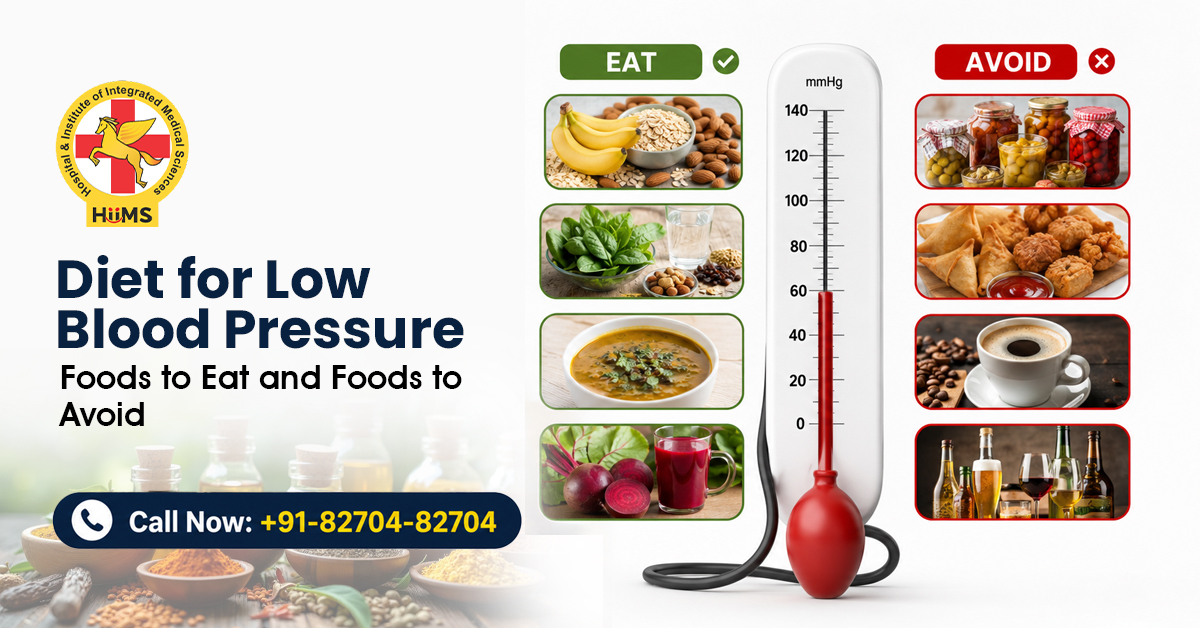
Foods to Eat: What to Include in Diet for Low Blood Pressure
When managing this condition, your primary goal is to naturally increase your blood volume and improve circulation. Here are the best foods for low blood pressure that you should add to your daily meals:
Healthy Sodium (Salt) Sources
While people with high blood pressure need to cut out salt, your body actually needs a healthy amount of sodium to lift your numbers. Instead of eating processed junk foods, add a pinch of high-quality rock salt to your drinking water, or enjoy a bowl of warm vegetable broth. Snacking on lightly salted, roasted fox nuts (makhana) is also a great option.
Hydration
Since dehydration directly shrinks your blood volume, keeping yourself hydrated is absolutely critical. Drink plenty of plain water throughout the day. Fresh coconut water and home-prepared buttermilk are also fantastic options in a diet for low blood pressure because they are packed with natural minerals that stabilize your system.
Soaked Nuts and Dried Fruits
Eating almonds, raisins, and figs that have been soaked in water overnight is an excellent way to fight weakness. Soaking these items makes them incredibly easy for your stomach to digest, allowing your body to quickly absorb the nutrients that build healthy blood cells.
Iron-Rich Plant Foods
To keep your blood strong and prevent anemia, fill your plate with iron-rich foods. Pomegranates, beetroot juice, dark leafy greens like spinach, and whole lentils are perfect for keeping your energy levels high.
Licorice Root Tea (Mulethi)
This traditional herbal tea is well-known for helping the body manage stress and gently lifting low blood pressure back to a safe, comfortable level.
Foods to Avoid in Low Blood Pressure Diet
Just as important as knowing what to eat is knowing what to keep off your plate. Certain items can cause your numbers to crash or make your dizziness much worse. A proper hypotension diet should always exclude the following items:
Large, Heavy Carbohydrate Meals
Eating giant portions of heavy foods like white rice, white bread, pasta, or massive plates of potatoes can trigger a sudden drop in pressure. When you eat a huge amount of heavy carbs, your body has to work extra hard to digest them. This forces blood to pool heavily around your abdomen, making you feel instantly dizzy or sleepy right after your meal.
Dehydrating Drinks
Completely cut out highly sugary sodas, packaged energy drinks, and alcohol. Even though they are liquids, they actually act as diuretics, meaning they flush water out of your system rapidly. This leaves you more dehydrated than before and causes your blood pressure to drop even further.
Low-Sodium Processed Snacks
Many health snacks sold in stores are labeled “zero-sodium” or “low-salt.” While these are great for people with high blood pressure, they are the opposite of a healthy diet for low blood pressure. Avoiding salt entirely when your numbers are already low will only prolong your fatigue and dizziness.
Ice-Cold Food and Iced Drinks
Try to limit your intake of frozen desserts, ice creams, and heavily iced drinks. Consuming very cold items shocks your digestive fire and slows down your internal blood circulation, making it harder for your body to maintain a steady, balanced pressure.
Daily Habits to Keep Your BP Balanced
Choosing the best diet for hypotension is only half the battle; how and when you eat matters just as much. Along with your food choices, practicing these simple, mindful daily habits will help keep your numbers steady throughout the day:
- Eat warm and freshly cooked food, cold or stale food slows down your internal energy and digestion leading to physical weakness.
- Always eat at a calm and quiet place without the phone or TV so that your body can properly absorb the nutrients and keep your system balanced.
- Do not stand up too quickly after a meal, always give your body a few seconds to adjust to gravity before you stand all the way up.
- Keep a water bottle or a warm thermos near you at all times so you can continuously sip water throughout the day to keep yourself hydrated. Avoid drinking cold water, warm water helps to keep smooth blood circulation.
Conclusion
Managing low blood pressure does not have to be a lifelong struggle with chemical pills. By simply following a diet for low blood pressure, staying mindful of what you put on your plate, avoiding dehydrating triggers, and following simple, Ayurvedic eating habits, you can naturally bring your body back into perfect balance.
If you feel any symptoms of low blood pressure, you can connect with the experts using VOPD (video consultation) and get guidance from Jeena Sikho HiiMS Hospital Lucknow doctors. They can help you in managing Blood pressure and guide you towards natural recovery.

FAQs
1. Is rock salt better than regular white salt for low blood pressure?
Yes, in Ayurveda, Saindhava Lavana (Rock Salt) is preferred because it balances all three doshas and provides essential trace minerals without causing water retention.
2. Can I use soaked raisins to instantly help with low blood pressure and weakness?
Yes, eating raisins soaked overnight along with their water in the morning helps build blood health, boosts energy, and stabilizes blood pressure.
3. Why do I feel dizzy right after eating a big lunch?
Your body directs extra blood to your digestive system after heavy meals, which temporarily lowers the blood pressure in the rest of your body.
4. Can low blood pressure cause unexpected hair loss or skin dryness?
Yes, slow blood circulation reduces the flow of oxygen and nutrients to your skin and hair roots, causing dryness and thinning.
5. How many glasses of water should a person with low blood pressure drink daily?
You should drink at least 8 to 10 glasses of fluids daily to keep your blood volume from shrinking and dropping your pressure.