
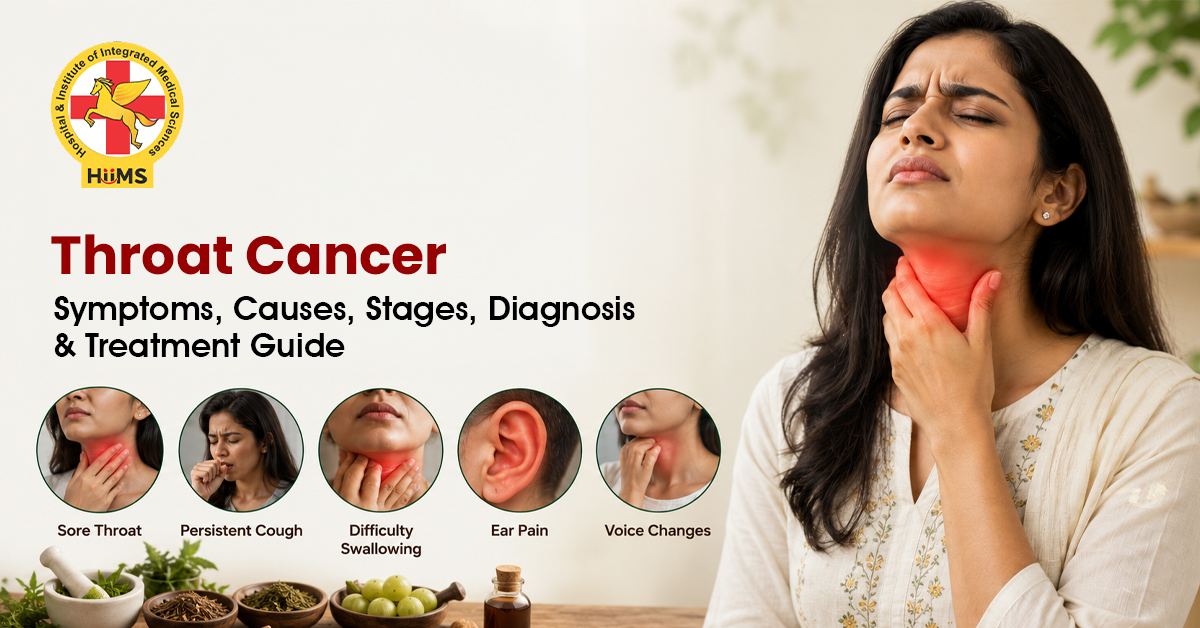
Sometimes people notice a slight hoarseness in their voice that would not go away, even after weeks of rest and home remedies. They brush these problems off as a seasonal throat issue until their doctor recommends further tests. Such examples are quite common, and they show why one needs to know more about throat cancer, both from the patient’s and the family members’ perspectives. One can have throat cancer without even knowing about it because it usually occurs gradually, producing easily misdiagnosed symptoms.
This guide is going to cover early symptoms, causes, stages, diagnosis, and treatments of throat cancer. We will also look at how supportive lifestyle care, including Ayurvedic practices, can play a role alongside medical treatment. The goal here is simple: to help you understand this condition clearly, without medical jargon, so you or a loved one can make informed decisions and know when it is time to see a doctor.
Early Signs and Throat Cancer Symptoms
Recognizing the symptoms of throat cancer early can make a real difference in how quickly a person seeks help. Common signs include persistent hoarseness, a sore throat that does not heal, difficulty swallowing, unexplained weight loss, and a lump felt in the neck. Some people also notice ear pain that has no clear cause, or a constant feeling of something stuck in the throat. Since these early signs of throat cancer often resemble common throat infections, many people delay a visit to a doctor. If any of these symptoms last more than two to three weeks, it is worth getting checked rather than waiting it out.
Common Throat Cancer Causes and Risk Factors
Understanding throat cancer causes helps in recognizing who may be more vulnerable. Long-term tobacco use, whether smoked or chewed, remains one of the most significant contributors. Consumption of alcohol regularly, along with the smoking of tobacco, further raises the risk level. There are other risks associated with the development of throat cancer, such as long-term exposure to specific types of viruses, poor dieting for many years, and sometimes the presence of family history with similar forms of cancer. Age is an important factor, and most of the cases occur among adults who are more than 50 years old.
In some instances, even throat cancer among adults less than this age group occurs, due to growing risk factors in life. Long-term tobacco use, whether smoked or chewed, remains one of the most significant contributors. Alcohol and tobacco use can increase the chances even more. The additional throat cancer risk factors include prolonged exposure to certain viruses, malnutrition for a long period, and, in some cases, genetic factors due to similar types of cancer in the family. Age can be another factor since throat cancer occurs mostly in people above 50 years of age, although throat cancer in adults under 50 years old does occur.
Understanding Throat Cancer Stages
The staging of throat cancer by a doctor depends on the extent of spread, which ranges from stage 1, where it affects only the throat, to stage 4, whereby the cancer may spread to neighboring areas or different parts of the body. Staging helps the physicians to choose the best treatment approach for the patients and provides the patients with some idea of what is expected. Early-stage cancers usually respond well to treatment.
How Throat Cancer Diagnosis Works
The throat cancer diagnosis process usually begins with a physical examination, followed by imaging tests to confirm the presence of cancerous cells. Doctors may also use an endoscope, a thin tube with a camera, to closely examine the throat area. This step-by-step process helps determine both the exact location and stage of the cancer, which then guides the treatment plan. Getting a proper diagnosis quickly, rather than relying on guesswork, is one of the most important steps a patient can take.
Throat Cancer Treatment Approaches
When a diagnosis is made, the medical practitioners will recommend a suitable treatment depending on the stage and where the disease is located in the body. Such treatment could be through surgery, whereby the affected part is cut off, cancer cells could be targeted, or medicine could be prescribed for more serious stages of the disease. Mostly, a combination of these methods is often adopted for treatment by the medical practitioners. With regard to the survival rates of the disease, it is notable that early treatment increases the survival rate. This explains why an early medical checkup after observing the symptoms is necessary. Even after treatment, continued consultations with the medical practitioner will be important.
Throat Cancer Prevention and Daily Habits
While not every case can be prevented, certain habits meaningfully lower risk. Avoiding tobacco in all forms, limiting alcohol intake, and maintaining a balanced diet rich in fruits and vegetables are widely recommended for throat cancer prevention. Regular checkups, especially for those with known risk factors, also help catch any early changes sooner rather than later.
The Jeena Sikho HiiMS Approach
Jeena Sikho HiiMS is aware of the impact that a diagnosis of throat cancer has on someone’s quality of life and understands that supportive care should go hand-in-hand with medical treatment, but not be an alternative to it. It starts with a consultation to get a better idea of one’s diet, lifestyle, and constitutional makeup. Based on this information, our specialists will suggest a customised diet plan that includes easy-digesting food and healthful herbal juice based on their strengths and appetite.
Yoga routines, according to their energy levels and traditional herbal formulas aimed at providing good general well-being, may also be suggested. Additionally, for some patients, practices based on the Panchakarma method can also become a part of their wellbeing program if this is what their doctors recommend.
Conclusion
Understanding throat cancer symptoms, causes, and treatment options can help patients and families make timely, informed decisions. Alongside medical care, thoughtful lifestyle support can make daily life more manageable. If you would like guidance on supportive care that works alongside your treatment, Jeena Sikho HiiMS offers VOPD consultations. Reach out at +91 82704 82704 or 📧 care@jeenasikho.com to know more.

FAQs
Q1. What is the first sign of throat cancer?
Some of the first signs include hoarseness, a sore throat that won’t go away, and trouble swallowing food. One needs to see a doctor if they experience any of these symptoms for more than two to three weeks.
Q2. Why does throat cancer occur?
The factors that cause throat cancer include prolonged smoking and alcohol consumption, some viruses, and malnutrition.
Q3. How can throat cancer be staged?
Throat cancer can be classified into four stages depending on the size and extent of metastasis of the tumor, starting from stage 1 cancer, localized in the throat area, to stage 4 cancer, which has metastasized beyond the throat area.
Q4. What are the steps in diagnosing throat cancer?
The diagnosis process usually includes a physical examination and imaging, as well as an endoscopy to visualize the throat tissues.
Q5. Can supportive therapy improve one’s condition while undergoing treatment for throat cancer?
There can be beneficial supportive care during the treatment that may include a special diet and yoga.