


Your kidneys are strong organs. In fact, they can keep working even after they lose a good part of their strength. But it also means damage can grow quietly for years.
Kidney disease is also more common than most people think. An Indian study called SEEK examined 5,588 adults across 13 centres. About 17 in every 100 had long-term kidney disease. Yet fewer than 8 in 100 of them knew it.
Diabetes, high BP, and painkiller use are common in Kurukshetra too. So seeing a kidney specialist in Kurukshetra early can make a big difference. This blog explains the early signs, why an early check-up matters, and how Ayurveda supports kidney health.
Why Kidney Problems Often Go Unnoticed
Kidneys have a large reserve. Because of this, they keep doing their job even when part of them is damaged. Most people feel fine in the early stages as a result.
Instead, early changes usually show up only in blood and urine tests. There is rarely any pain. Also, many people blame tiredness or mild swelling on age, heat, or work stress. Still, the body does give small signals if you know what to look for.
Not sure if your kidney reports are normal? Learn more about complete information regarding kidney diseases.
Early Signs of Kidney Disease You Should Not Ignore
The early signs of kidney disease are often mild. Taken together, though, these symptoms of kidney problems give a clear warning.
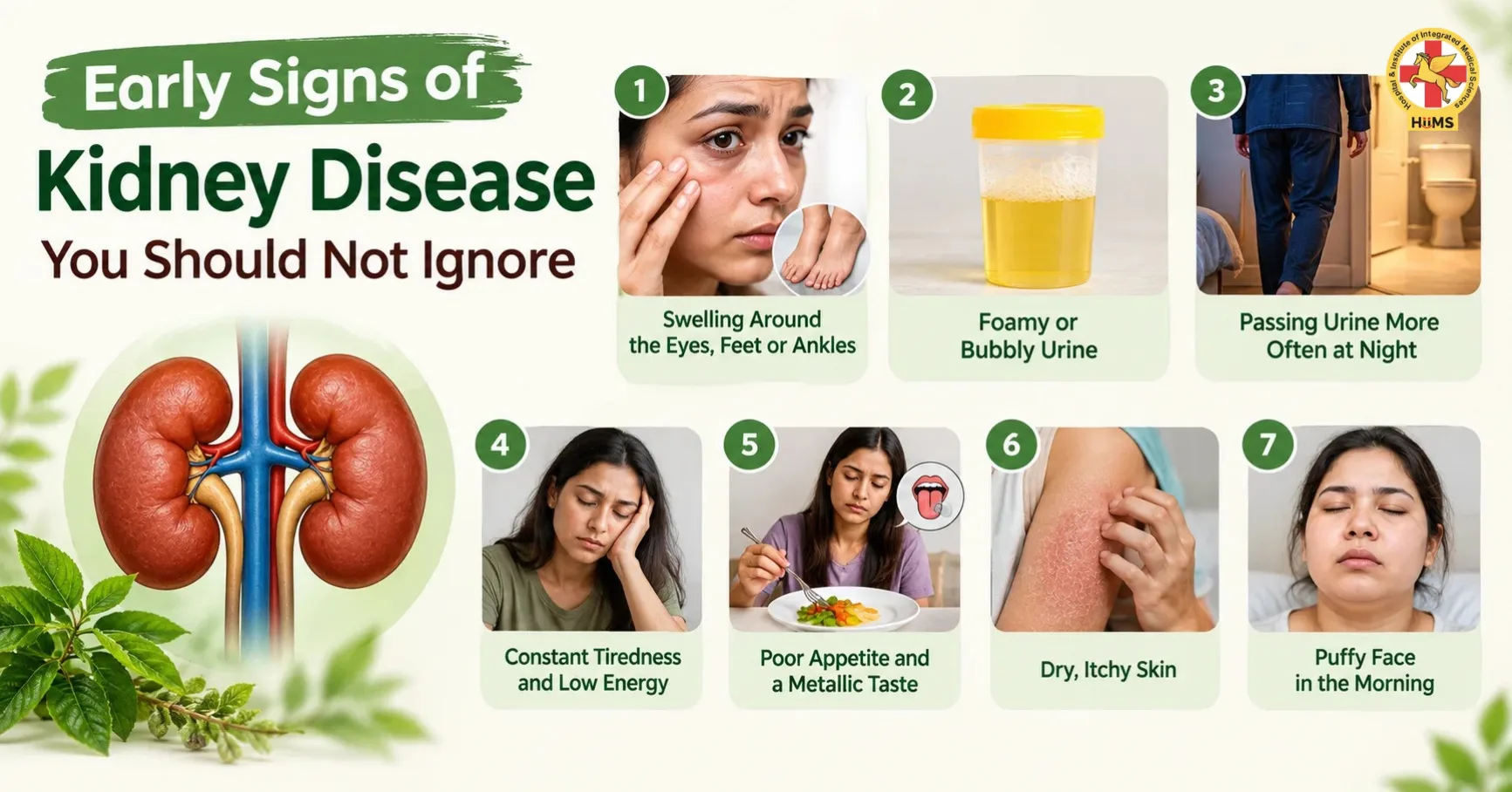
1. Swelling Around the Eyes, Feet or Ankles
Weak kidneys can’t remove extra salt and water well. So the fluid collects in the body. At first, you may notice it around the ankles or under the eyes.
2. Foamy or Bubbly Urine
Healthy kidneys keep protein in the blood. When the filters get damaged, protein leaks into the urine. As a result, the urine may look foamy, like soapy water.
3. Passing Urine More Often at Night
Getting up again and again at night to pass urine can be an early sign. Usually it shows the kidneys are finding it hard to concentrate urine.
4. Constant Tiredness and Low Energy
When the kidneys slow down, waste builds up in the blood. Also, weak kidneys make less of the hormone that helps form red blood cells. Both can leave you feeling tired all the time.
5. Poor Appetite and a Metallic Taste
Waste in the blood can change how food tastes. For example, some people notice a metallic taste in the mouth. Others simply lose interest in food.
6. Dry, Itchy Skin
Healthy kidneys keep minerals in balance. When this balance slips, the skin can turn dry and itchy.
7. Puffy Face in the Morning
A swollen face after waking up, especially around the eyes, can point to protein loss. Because it settles during the day, people often ignore it.
One sign alone may not mean much. However two or more together are a good reason to get tested. If you ignore these signs, they can slowly turn into kidney failure symptoms, like very little urine and breathlessness. That is why acting early matters so much.
Why Early Consultation with a Kidney Specialist in Kurukshetra Matters
An early check-up gives you time and choices. Here is how it helps:
- It finds the cause: The doctor can see whether diabetes, BP, stones, infections or medicines are behind the problem. Treating the cause protects the kidneys from more harm.
- It helps slow the damage: In the early stages, diet and lifestyle changes can make a real difference. Later on, there are fewer options.
- It stops harmful habits: For example, many people take painkillers often without knowing the risk. An early visit helps you stop this in time.
- It gives you time to plan: You can make changes calmly, instead of in a rush during a crisis.
In addition, some people should get checked even without any signs. This includes people with diabetes or high BP, people with a family history of kidney disease and those over 40. Regular painkiller users should also get tested.
Three simple tests can show early kidney damage:
- Serum creatinine and eGFR: They show how well your kidneys filter the blood.
- Urine routine: It checks for protein, blood or infection in the urine.
- Urine albumin (ACR): It picks up even small amounts of protein loss.
Along with these tests, Ayurveda helps you understand why the kidneys are under strain.
Want to know which kidney tests you need? Our team can guide you.
How Ayurveda Looks at Kidney Health
Ayurveda calls the kidneys Vrikka. Urine flows through the Mutravaha Srotas, or urine channels. Similarly, Ayurveda links kidney problems to Vata and Kapha going out of balance. When agni, or digestive fire, is weak, waste called ama builds up. In turn, it blocks these channels.
Some early research supports this view. A study in the journal AYU followed 100 people with long-term kidney failure. Diabetes was not the cause in any of them. After one month of Ayurvedic care, their creatinine, urea, and urine protein levels went down.
Ayurvedic care works best along with your ongoing treatment. Jeena Sikho HiiMS in Kurukshetra builds its kidney care on this root-cause idea.
Kidney Treatment in Kurukshetra at Jeena Sikho HiiMS
Jeena Sikho HiiMS brings early, root-cause kidney care to Kurukshetra. It is an integrated hospital that combines Ayurveda, Naturopathy, and modern science. Before planning care, the kidney specialist in Kurukshetra checks your reports, pulse, tongue, and digestion.
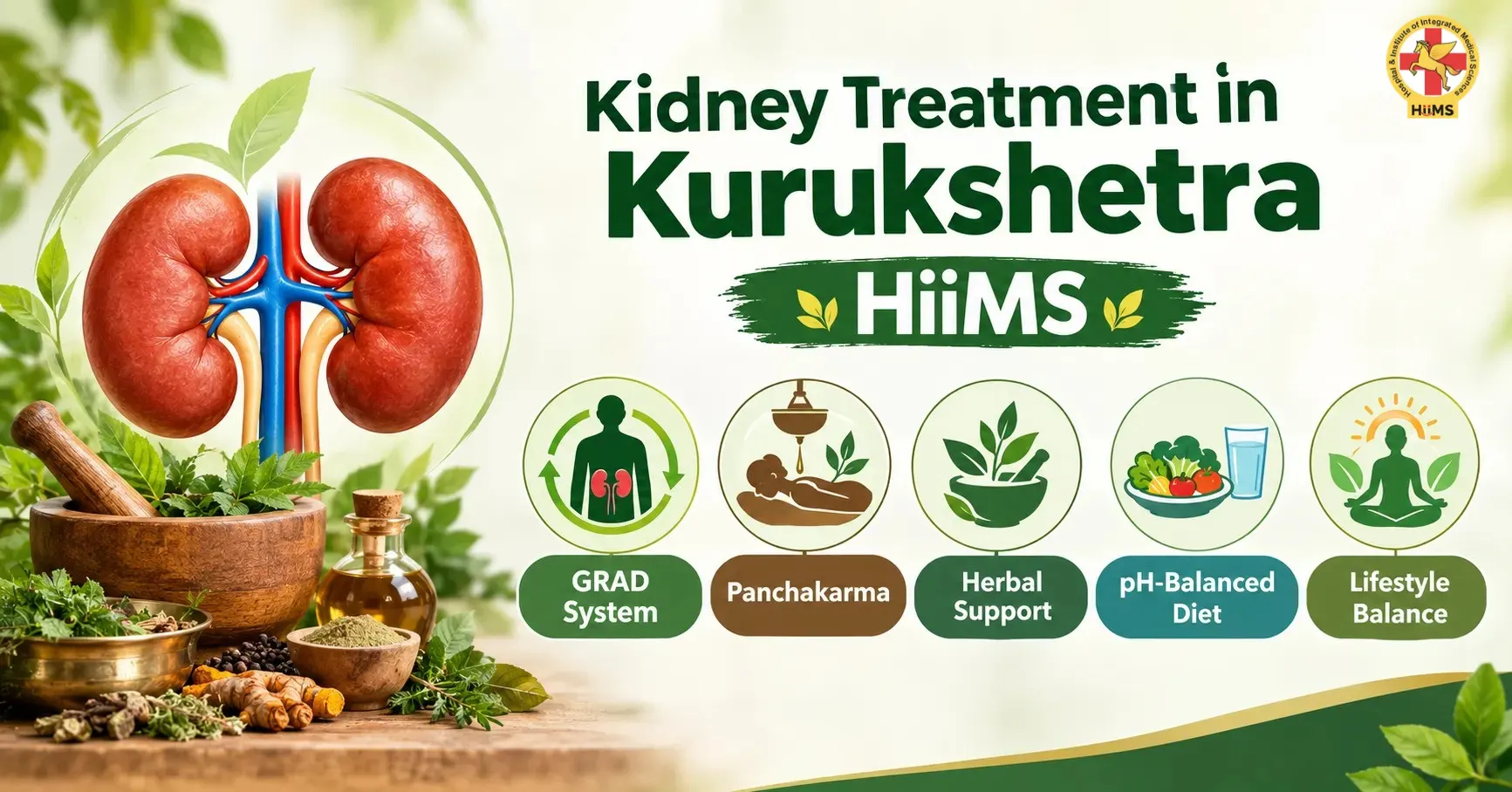
GRAD System
GRAD combines hot water immersion, head-down tilt, and a pH-balanced diet. Hot water immersion supports blood flow, while head-down tilt aims to send more blood to the kidneys. Meanwhile, the diet helps ease their daily load.
Panchakarma
Panchakarma includes five classic therapies: Vamana, Virechana, Basti, Nasya, and Raktamokshana. Together, they help clear ama and restore balance to the doshas. The doctor picks the therapy that suits each patient.
Herbal Support
Ayurveda has long used Punarnava, Gokshura and Varuna for kidney health. These herbs support healthy urine flow and the urinary tract. Of course, you should take them only under a doctor’s guidance.
pH-Balanced Diet
The diet stays fresh, simple, and mostly plant-based. Light vegetables like lauki and tori are easy to digest. Also, less salt helps control swelling and BP, and the doctor tells you how much water to drink.
Lifestyle Balance
Gentle yoga and pranayama help reduce stress. Fixed times for meals and sleep keep the body in rhythm. Finally, avoid painkillers without advice, and get your kidney tests done regularly.
The doctor makes every plan after an assessment, and results vary from person to person. So don’t stop dialysis or medicines without your doctor’s advice.
Conclusion
Kidney damage often grows quietly, with mild signs like swelling, foamy urine and tiredness. An early visit to a kidney specialist in Kurukshetra help find the cause and slow the damage. Simple tests like eGFR and urine albumin can catch problems early. Ayurveda adds a root-cause view through diet, herbs, Panchakarma and daily habits.
Get your kidneys checked early with Jeena Sikho HiiMS Experts. Book an appointment to consult HiiMS Ayurvedic experts.
FAQs
Q1. What are the first signs of kidney disease?
Swelling around the eyes or ankles, foamy urine, and passing urine often at night are common early signs. Tiredness and dry skin can also show up.
Q2. Which tests show early kidney damage?
Serum creatinine with eGFR, a urine routine test, and urine albumin (ACR) can catch kidney damage early, often before any symptoms.
Q3. When should I see a kidney specialist in Kurukshetra?
See one if you notice two or more early signs, or if you have diabetes, high BP or a family history of kidney disease.
Q4. Can early kidney damage be slowed with diet and lifestyle?
Yes, in the early stages, less salt, a plant-based diet, BP and sugar control, and avoiding painkillers can help slow the damage.
Q5. How can I book kidney treatment in Kurukshetra at Jeena Sikho HiiMS?
You can book a visit online or call the HiiMS helpline. You can also start with a video consultation from home.