
Cancer treatment can feel overwhelming, especially when chemotherapy or radiation is discussed. Many people then start searching for natural options and ask the same question: can reverse cancer without chemo & radiation really be possible?
The honest answer is not the same for every cancer. Cancer is not one disease, and its behaviour depends on the type, stage, location, biology and overall health of the person. Natural approaches can be useful for nutrition, strength, stress management and quality of life, but there is not enough evidence to say that a particular natural therapy can replace standard cancer treatment for all patients.
Why Are People Looking for Natural Cancer Treatment?
The interest is understandable. Chemotherapy and radiation have side effects, and patients frequently ask if there are other ways to help their bodies during cancer care.
And it’s the global cancer burden that makes this conversation matter, too. The latest IARC estimates show that 20.6 million people were diagnosed with cancer and 9.8 million died from cancer worldwide in 2024.
But looking for a natural approach should not mean ignoring the diagnosis or delaying necessary treatment. A sensible approach is to ask:
- What type of cancer is it?
- What stage is it?
- Has it spread?
- What treatments have been recommended and why?
- Which complementary approaches may safely fit alongside the treatment plan?
That is a much more useful way to think about how to fight cancer naturally.
Can Cancer Be Reversed Naturally?
Whether cancer can be treated successfully depends on many factors, including its type, stage, location, and biological characteristics. At present, individual Ayurvedic case reports cannot establish that cancer can routinely be reversed without chemo & radiation.
However, that does not mean Ayurveda has no place in cancer care. Research and published case reports have explored how personalized Ayurvedic treatment may support symptoms, quality of life, and overall well-being, particularly when it is used as part of an integrative approach.
One interesting example is a 2025 case report published in the Journal of Ayurveda and Integrative Medicine, which described long-term follow-up of a cervical cancer patient receiving conventional cancer treatment along with personalized Ayurvedic care. The full published case report provides the detailed clinical history and follow-up.
A Cervical Cancer Case with Long-term Follow-up
The reported patient was a 55-year-old woman diagnosed with stage III cervical squamous cell carcinoma in 2011. The tumour was approximately 5 × 6 cm and involved nearby structures.
She received conventional cancer treatment, including radical pelvic radiotherapy, weekly cisplatin chemotherapy, and brachytherapy. Personalised Ayurvedic medicines were also used during her overall care.
According to the case report, the patient remained clinically well for several years. In 2016, a lung lesion was detected and confirmed as squamous cell carcinoma, representing metastatic disease. She subsequently received palliative radiotherapy.
This report describes the follow-up and ongoing Ayurvedic care after this treatment. The authors reported an OS of around 14 years with 6 years of progression-free survival after the lung metastasis. These results are intriguing and warrant further investigation in the area of integrative cancer treatment. Please see the case report for complete treatment history and follow-up.
What Does Another Ayurvedic Cancer Case Study Show?
Another useful source is a 2026 AYUSHDHARA case report on palliative care in Ayurveda for cancer patients. The paper describes two male patients with chronic myeloid leukaemia (CML), who were managed with individualised Ayurvedic protocols and regular clinical and haematological follow-up. The published AYUSHDHARA case study reports follow-up periods of 12 months and two years respectively.
The treatment was not based on one single herb. The reported protocols included herbomineral formulations along with herbs such as Kanchnaar, Haridra, Shatavari, Guduchi, Gokshura and Punarnava. Dietary regulation, yoga and pranayama were also included. The treatment was modified according to symptoms, tolerance and laboratory responses.
What happened in the two cases?
Case 1:
The first patient was a 38-year-old man with findings suggestive of CML, along with splenomegaly and hepatomegaly. His reported TLC was 11,700 and haemoglobin was 12.6 g/dL. Over 12 months, the authors reported symptomatic improvement and stabilisation of haematological parameters.
Case 2:
The second patient was a 55-year-old man with CML and marked leucocytosis. His TLC was reported as 1,80,000, with haemoglobin of 10.0 g/dL. He was followed for two years under an Ayurvedic regimen. The authors reported clinical improvement, better tolerance of the chronic illness, improved energy and better overall well-being.
The authors concluded that Ayurveda may have a role in palliative cancer care, particularly for symptom relief, psychological support, quality of life and long-term supportive management. Importantly, they also stated that further systematic clinical studies are needed to confirm these observations and establish safe, standardised protocols. See the original AYUSHDHARA publication.
So, How to Fight Cancer Naturally?
This is where how to fight cancer naturally needs some clarification. Natural cancer care should not mean ignoring a diagnosis or automatically refusing necessary medical treatment.
Depending on the individual’s condition, Ayurvedic supportive care may include:
- Personalised diet and meal planning
- Yoga and pranayama
- Lifestyle and sleep support
- Ayurvedic medicines selected according to individual needs
- Symptom-focused supportive care
- Regular monitoring of health and laboratory parameters
The AYUSHDHARA case report is a good example of this broader approach because its protocols included medicines, dietary regulation, yoga and pranayama rather than relying on one intervention alone.
What Does Holistic Cancer Care Actually Mean?
Holistic cancer care means looking at the person as a whole rather than focusing only on the tumour. Nutrition, sleep, emotional health, physical strength, appetite, digestion, and treatment-related symptoms can all matter during a cancer journey.
For example, someone undergoing chemotherapy may experience fatigue, changes in appetite, digestive problems or difficulty maintaining their normal routine. Supportive approaches can focus on these areas while the cancer itself continues to be monitored and treated by the team.
This is where integrative cancer treatment can be considered. The purpose is not necessarily to replace modern treatment but to bring appropriate supportive approaches into the overall care plan.
Diet for Cancer Patients: Acharya Manish Ji’s pH-Balanced Plate System
A good diet for cancer patients is one that the body can actually digest. Acharya Manish Ji’s pH-Balanced DIP Diet uses two plates:
- Plate 1: raw seasonal fruits and vegetables, eaten first to give fiber and natural nutrients
- Plate 2: a light home-cooked meal like daliya, poha, or a millet dish, instead of heavy, oily food
The aim is to ease the digestive load. Share any diet plan with your doctor or dietitian, since needs change with treatment.
Holistic Cancer Care: Supportive Therapies Explained
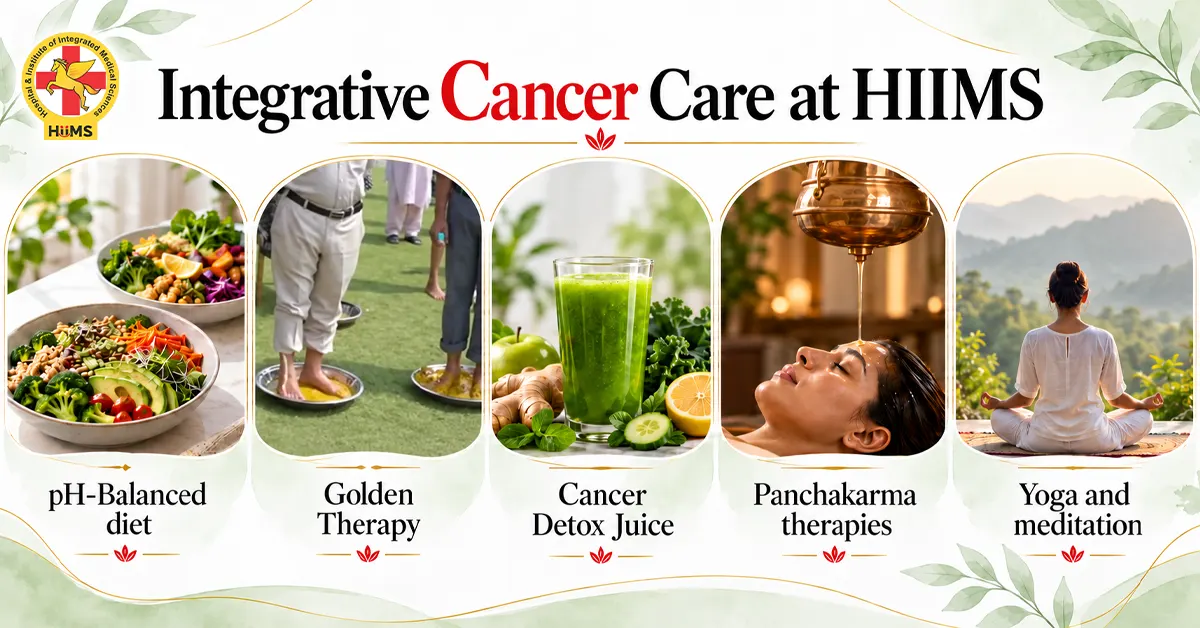
Holistic cancer care at Ayurvedic centres like Jeena Sikho HiiMS usually includes these supportive steps:
- Golden Therapy: a herbal paste of neem, banyan leaves, bitter gourd, raw turmeric, peepal leaves, and doob grass is applied and gently pressed with the feet. It is meant to support the body’s natural cleansing and ease discomfort.
- Cancer Detox Juice: a mix of green leafy vegetables, ginger, mint, coriander, curry leaves, guava leaves, raw turmeric, beetroot and amla. It is considered part of the daily routine to help with digestion and hydration.
- Panchakarma therapies: gentle options like Virechana and Basti, planned around the patient’s strength, never as a fixed routine.
- Yoga and meditation: to ease anxiety and support sleep through a stressful period.
These are positioned as supportive care for comfort, digestion, and energy. They are not a treatment that shrinks tumors.
Jeena Sikho Cancer Care Support Combo
Cancer treatment can affect appetite, digestion, bowel routine, and energy, and managing these everyday changes is an important part of supportive care. The Jeena Sikho Cancer Care Support Combo brings together six products: Can Care Juice, Gut Care Juice, Swaranfalam Amrit Sea Buckthorn Juice, Pet Yakrit Pleeha Shuddhi Kit, Pure Shilajit Capsules, and Triphala Ras Juice. They are designed to complement medical care, not replace it. This combo is not intended to prevent, treat, or cure cancer, and you should use it only with your oncologist’s approval.
How it can support you during cancer care
- Nourishment during demanding routines: Wheatgrass, moringa, amla, and sea buckthorn provide plant-based nutrients and antioxidants, which can help when eating is difficult.
- Appetite and digestion: Gut Care Juice is meant to support digestive function and comfort after meals.
- Bowel regularity: Triphala Ras Juice and the Pet Shuddhi Kit support regular bowel movements when diet or routine changes.
- Physical strength: Shilajit and ashwagandha support stamina and everyday vitality.
- Normal immune function: Vitamin C-rich fruits and traditional herbs help support the body’s normal defenses.
- Comfort and balance: The combo supports natural waste elimination and may ease occasional heaviness and bloating.

Conclusion
So, can cancer be reversed naturally without chemotherapy or radiation? The honest answer is that there is no proven natural therapy that can replace standard cancer treatment. What natural and Ayurvedic care can do is help you live better through treatment. A digestible diet, yoga, good sleep, stress support, and carefully chosen herbs can help with energy, appetite, digestion, and emotional well-being, which matter at every stage of the cancer journey.
If you’re exploring this path, make sure your cancer doctor is part of the plan. Share your reports, ask which supportive approaches are safe alongside your treatment, and check with your doctor before adding any herbal juice or medicine.
If you’d like personalised, supportive guidance, you can book a consultation with Jeena Sikho HiiMS and go through your reports with our team.

FAQs
Q1. What does holistic cancer care include?
It can include nutrition, lifestyle, yoga, stress management, symptom support, and appropriate complementary therapies.
Q2. Does Ayurveda improve anything in cancer care?
Studies indicate that Ayurveda as an add-on improves quality of life, reduces fatigue, and reduces anxiety.
Q3. Can I take herbal juices during chemotherapy?
Many people do, but check with your doctor first, since some herbs can interact with medicines.
Q4. What if I’m afraid of chemotherapy side effects?
Share that fear with your care team. Supportive care and dose adjustments can often ease side effects.
Q5. Is there a diet that treats cancer?
No diet treats cancer on its own. A light, balanced diet helps with energy and tolerance during treatment.