

When your hands are starting to shake, your shirt feels damp with sweat, or you suddenly feel weak and hungry even though you ate not long ago, your body may be asking for help. These low blood sugar symptoms can appear when the amount of glucose in the blood becomes too low.
Hypoglycemia can affect the body quickly, and the signs may change as the glucose level falls further. People taking insulin or certain diabetes medicines are more likely to experience it, although other situations can also cause a drop. Knowing what to look for can help you respond at the right time instead of ignoring an unusual feeling.
In this blog, we will look at nine signs of low blood sugar, what can cause them, and how Ayurveda and an integrated health approach can fit into long-term care.
What Does Low Blood Sugar Mean?
Low blood sugar, also called hypoglycemia, means that blood glucose has fallen below a level at which the body needs attention. A reading below 70 mg/dL (3.9 mmol/L) is generally treated as an alert level. The American Diabetes Association identifies readings below 54 mg/dL as a more serious level, while severe hypoglycemia involves changes in physical or thinking ability that make another person’s help necessary.
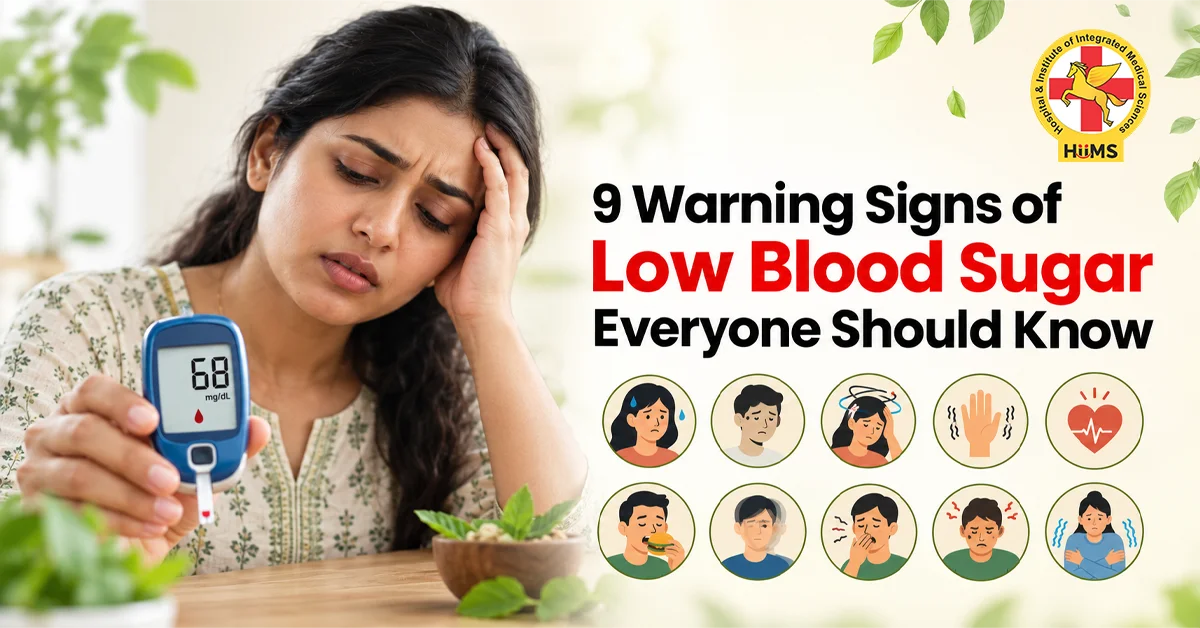
9 Warning Signs of Low Blood Sugar
A drop in glucose levels can start with a few mild changes and become more noticeable if it continues. The following symptoms of low blood sugar are among the signs people should know.
1. Shaking or Trembling
A sudden shaky feeling in your hands, arms, or even your whole body can be one of the first low blood sugar signs. When glucose falls, the body releases hormones that help raise it again, and that response can make you feel trembly or restless.
2. Sudden Sweating
Sweating for no clear reason, especially when the weather is not hot or you have not been exercising, deserves attention. It may appear along with a racing heartbeat or trembling. Night-time sweating can also occur when glucose falls during sleep. These blood sugar drop symptoms can be easy to dismiss, but noticing when they happen may help you identify a pattern.
3. Strong, Sudden Hunger
There is a difference between being ready for your next meal and suddenly feeling as though you need food right away. A sudden feeling of hunger can occur when blood glucose drops because the body is looking for more available fuel. This is one of the recognised hypoglycemia symptoms, particularly when hunger appears together with shaking, sweating or weakness.
4. Fast Heartbeat or Palpitations
Your heart may suddenly feel as if it is beating faster or harder than usual. This happens because the body’s response to falling glucose includes the release of hormones such as adrenaline. A fast heartbeat can have many causes, so it should not be treated as proof of hypoglycemia by itself. When it appears with other signs of low blood sugar, however, checking your glucose can provide a clearer picture.
5. Dizziness, Weakness or Lightheadedness
You may feel unsteady, unusually weak, dizzy, or as if you need to sit down. When glucose becomes too low, the brain may not receive the energy it needs to work normally, which can contribute to these sensations. Sit somewhere safe if you feel faint and check your blood glucose when possible. These symptoms of low blood sugar can become more noticeable as the level falls further.
6. Irritability, Anxiety or a Sudden Change in Mood
A person who is normally calm may suddenly become impatient, uneasy or unusually irritable during a glucose drop. These changes can be confusing because they may look like an ordinary mood change at first. When they appear with sweating, hunger or shaking, low blood sugar symptoms become an important possibility to consider rather than assuming the change is simply emotional.
7. Having Trouble Concentrating or Confusion
Reading the same sentence several times, struggling with a familiar task, or feeling confused about what you were doing can happen as hypoglycemia becomes more pronounced. The brain depends heavily on glucose for energy, so a substantial drop can affect attention and clear thinking. Confusion is more concerning when it appears suddenly and is accompanied by other low blood sugar signs.
8. Blurred or Unusual Vision
A glucose drop may affect how clearly you see, making words look blurred or your surroundings seem unusual. Vision changes can have many possible causes, so do not assume every episode is related to blood sugar.
9. Slurred Speech or Poor Coordination
As hypoglycemia becomes more severe, a person may have trouble speaking clearly, walking normally, or coordinating simple movements. They may also behave differently from usual or struggle with familiar tasks. These are more serious blood sugar drop symptoms and should not be put aside. If the person cannot safely eat or drink, becomes unresponsive, or has a seizure, emergency medical care is needed.
Are you noticing these signs repeatedly? Connect with Jeena Sikho HiiMS jodhpur to understand your blood sugar concerns and explore an approach suited to your health needs.

What Can Cause Blood Sugar to Fall?
Understanding the low blood sugar causes can be just as useful as knowing the warning signs. Common reasons include taking more insulin or certain diabetes medicines than prescribed, delaying or skipping a meal, eating less than usual after taking medicine, doing more physical activity than usual, and drinking alcohol without enough food. Low glucose can also occur in people without diabetes for several other reasons, so repeated episodes deserve proper medical assessment.
What Should You Do During a Blood Sugar Drop?
If your glucose is below 70 mg/dL and you are awake and able to swallow safely, the CDC recommends the 15-15 approach: take 15 grams of fast-acting carbohydrate, wait 15 minutes, and check your glucose again. Repeat the process if it remains below 70 mg/dL. Keep your usual medical plan in mind, and ask for urgent help when you cannot treat the situation yourself.
How Ayurveda Can Fit Into Long-Term Blood Sugar Care

Food, Digestion and Daily Routine
Ayurveda gives considerable attention to Aahar and Vihar, meaning food habits and daily routine. For people managing blood sugar concerns, an individual plan may look at meal timing, food choices, digestion, physical activity, sleep and other daily habits. The aim is to understand the person’s overall routine rather than follow one fixed approach for everyone.
An Integrated Approach at Jeena Sikho HiiMS
At Jeena Sikho HiiMS Jodhpur, the approach focuses on understanding the root factors behind recurring health concerns rather than looking only at the symptoms. This includes considering a person’s diet, daily routine, lifestyle and overall health condition.
As an integrated hospital, Ayurveda is considered alongside other systems of care, including naturopathy, yoga and medical assessment where required. The care plan can be built around the person’s individual needs, existing medicines and daily habits, especially when blood sugar fluctuations keep occurring.
Conclusion
Knowing your low blood sugar symptoms can make it easier to recognise a glucose drop before the situation becomes more serious. Shaking, sweating, sudden hunger, a fast heartbeat, dizziness, mood changes, trouble concentrating, blurred vision, and slurred speech can all be important clues, although symptoms differ from person to person.
If these episodes keep returning, finding out why they are happening is important instead of managing each episode separately. At Jeena Sikho HiiMS, you can discuss your concerns with experienced doctors and explore an integrated approach that considers your individual health needs. You can also opt for a VOPD consultation to speak with an expert doctor from the comfort of your home and discuss the next appropriate step for your care.

FAQs
Q1: What is considered low blood sugar?
Blood glucose below 70 mg/dL is generally considered low, although personal targets can differ depending on a person’s health and treatment plan.
Q2: What are the common signs of low blood sugar?
Shaking, sweating, sudden hunger, dizziness, weakness, a fast heartbeat, irritability, difficulty concentrating and blurred vision are commonly reported signs.
Q3: Can low blood sugar happen without diabetes?
It can occur without diabetes, with possible causes including certain medicines, alcohol, excessive gaps between meals and some health conditions.
Q4: What should I do when my blood sugar drops?
When glucose is below 70 mg/dL and you can swallow safely, the 15-15 approach uses 15 grams of fast-acting carbohydrate followed by another glucose check after 15 minutes.
Q5: When does low blood sugar need urgent attention?
Severe confusion, inability to eat or drink safely, seizures, loss of consciousness or symptoms that do not improve after initial care require urgent medical attention.