
The body often gives small signs when something is not going well inside. Increased thirst, frequent washroom visits or tiredness even after enough sleep are some common examples. These are often dismissed as just a part of daily busy life. Yet, such changes can sometimes be connected to a rise in blood sugar.
High blood sugar means that there is more glucose in the blood than the body can use properly. It can happen for different reasons and may develop slowly, especially in the people with type 2 diabetes. Some people may notice clear changes, while others may have very few symptoms. This is why knowing the common high blood sugar symptoms can help a person pay attention to their health at the right time.
This article explains seven common signs in simple language and also discusses some common factors that may raise blood sugar.
What Does High Blood Sugar Mean?
Glucose is one of the main sources of energy for the body. Most of the glucose in our body comes from the food we eat. The pancreas makes insulin, which helps carry glucose from the blood into the cells so it can be used as the energy.
When the body does not make enough insulin or does not use insulin properly, glucose can remain in the bloodstream, which can lead to high blood sugar. Type 2 diabetes is commonly linked with insulin resistance, along with other factors such as family history, excess body weight and low physical activity.
If you have been noticing repeated changes in thirst, urination, energy or vision, consider discussing them with a qualified health professional. Symptoms alone cannot confirm high blood sugar, so appropriate blood sugar testing may also be needed.

7 Common High Blood Sugar Symptoms
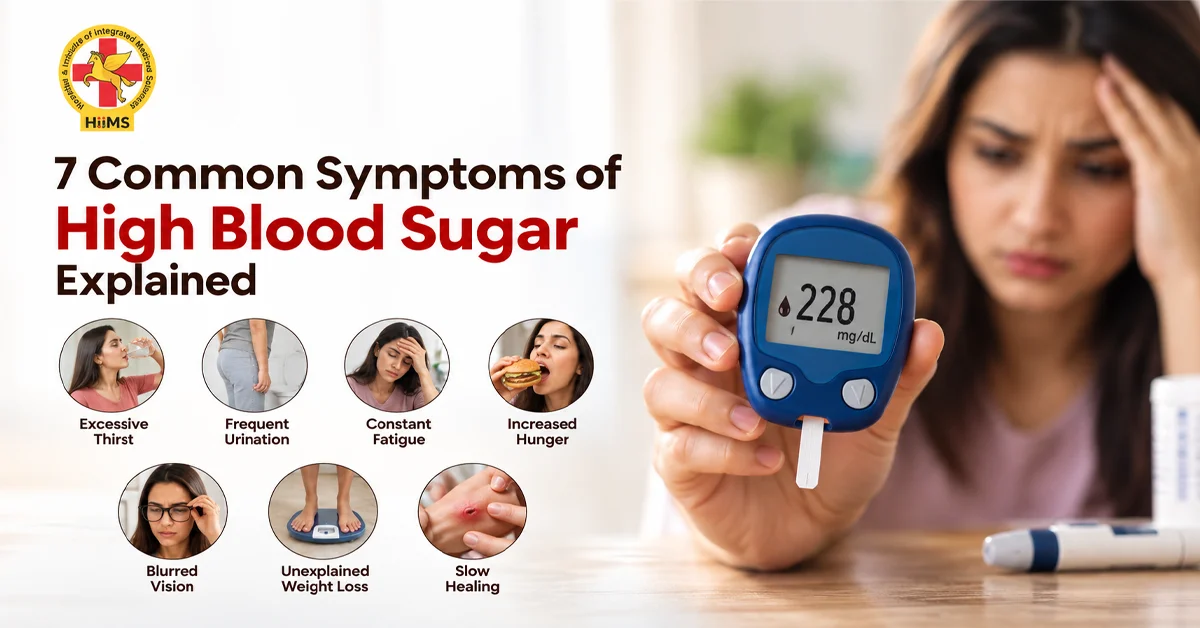
High blood sugar can show up through several changes in the body, and noticing these signs early can help you pay better attention to the health.
1. Frequent Urination
Frequent urination is one of the common high blood sugar symptoms that people notice. When blood glucose goes up, the kidneys try to push out the extra glucose through urine, which makes you visit the washroom more often, even during the night. The National Institute of Diabetes and Digestive and Kidney Diseases.s also lists frequent urination as a common symptom of diabetes.
2. Feeling Very Thirsty
Frequent urination can cause fluid loss, leading to increased thirst. Persistent thirst, especially when it occurs along with frequent urination, may be a reason to check your blood sugar and discuss the symptoms with a qualified health professional.
3. Feeling Tired or Weak
High blood glucose may affect how the body uses glucose for energy, and this can leave you feeling tired, weak or less active. But feeling tired alone does not always mean the blood sugar is high.
4. Blurred Vision
Changes in blood sugar can sometimes cause blurred vision or make it difficult to see clearly. These signs of high blood sugar need attention when they continue for some time or appear along with other changes in the body.
5. Increased Hunger
Some people with diabetes may experience increased hunger, including feeling hungry even after eating. Persistent hunger along with other blood sugar symptoms deserves attention.
6. Slow Healing of Cuts and Sores
Slow-healing cuts and sores can occur in people with diabetes. Persistent wounds, especially on the feet, should be discussed with a qualified health professional. The CDC also lists slow healing of cuts and wounds among the possible symptoms of diabetes.
7. Unexplained Weight Loss
Unexplained weight loss can be a symptom of diabetes, particularly when it occurs along with increased thirst, frequent urination or increased hunger. If unexplained weight loss occurs along with thirst, frequent urination or tiredness, it should not be overlooked.

Factors That Can Affect Blood Sugar
Blood sugar can be affected by different factors, and these can vary from person to person.
Some factors that may contribute include,
- Eating patterns that contain a large amount of refined or sugary food
• Low levels of physical activity
• Insulin resistance
• Excess body weight
• Family history of type 2 diabetes
• Physical or emotional stress
• Illness or infection
• Dehydration
• Certain medicines
• Changes in hormones
Type 2 diabetes is linked with problems related to insulin production and insulin resistance. Family history, excess weight, low physical activity and some other factors can also increase the risk. The National Institute of Diabetes and Digestive and Kidney Diseases explains these risk factors in detail.
A Natural Approach to Supporting Healthy Blood Sugar

Healthy daily habits can support overall health and may also play a role in maintaining healthy blood sugar levels. Regular movement, sensible portions, adequate sleep, good hydration and a balanced diet can support the body’s normal functions.
Ayurveda also gives importance to digestion, daily routine, food quality and individual lifestyle habits. A natural approach generally focuses on understanding the person’s routine and making practical changes that can be followed over time.
At Jeena Sikho HiiMS Kota, Ayurveda-based lifestyle guidance may focus on food habits, daily routine and individual wellness needs. These approaches should be considered alongside appropriate blood sugar monitoring and professional healthcare, not as a replacement for prescribed diabetes treatment.
Some simple habits may include,
- Choosing more whole foods and seasonal vegetables
• Including suitable sources of fibre in meals
• Limiting highly processed and excessively sugary foods
• Staying physically active according to one’s ability
• Drinking enough water
• Maintaining regular sleep timings
• Paying attention to repeated changes in the body
These habits should not be seen as a replacement for proper testing or professional guidance. If blood sugar remains high, identifying the reason is important.
When Should You Pay Attention to These Symptoms?
Having one of these symptoms does not necessarily mean that blood sugar is high, as similar symptoms can have other causes. Thirst, tiredness, hunger and weight changes can happen for many reasons. However, if several symptoms occur together, they should not be ignored. Frequent urination, increased thirst, tiredness and blurred vision can occur with high blood sugar or diabetes.
Very high blood sugar can sometimes become serious. Vomiting, abdominal pain, difficulty breathing, confusion, fainting or fruity-smelling breath require urgent expert attention. These symptoms may be linked with diabetic ketoacidosis, a serious condition explained by the NIDDK.
Conclusion
Knowing the common high blood sugar Symptoms can help you notice changes in your body instead of ignoring them as routine problems. Frequent urination, unusual thirst, tiredness, blurred vision, increased hunger, slow healing and unexplained weight loss are some signs worth noticing.
At Jeena Sikho HiiMS Kota, Ayurveda-based care gives importance to food, digestion, lifestyle and individual health needs. In case you have any concerns about your symptoms, you can go for a VOPD consultation to discuss them and know the right next steps. Keeping a check regularly, along with the proper guidance, can help you stay more aware of your health.

FAQs
1. What is considered high blood sugar?
High blood sugar means that the amount of glucose in the blood is above the person’s usual or recommended range. The target range can vary depending on the person and their health condition.
2. What are the first signs of high blood sugar?
Common symptoms people may notice include increased thirst, frequent urination and tiredness. However, some people may have mild symptoms or no noticeable symptoms at all.
3. Does high blood sugar affect eyesight?
Changes in blood sugar can sometimes cause blurred vision. Persistent or sudden changes in vision should be discussed with a qualified health professional.
4. Does Ayurveda help with blood sugar management?
Ayurveda-based lifestyle guidance may focus on food habits, daily routine and overall wellness. It should be used alongside appropriate blood sugar monitoring and professional healthcare, rather than as a replacement for prescribed diabetes treatment.
5. What lifestyle habits support healthy blood sugar?
Regular physical activity, adequate sleep, proper hydration and balanced meals can support overall health and healthy blood sugar management.